Day three of our Greek adventure brought us to a place that spoke directly to my nurse’s heart—the ancient city of Epidaurus. As our tour bus wound through the sun-drenched Peloponnese landscape, I had no idea I was about to step into the birthplace of holistic healthcare, a UNESCO World Heritage Site that would bridge my two greatest passions: medicine and history.
The Sanctuary of Healing
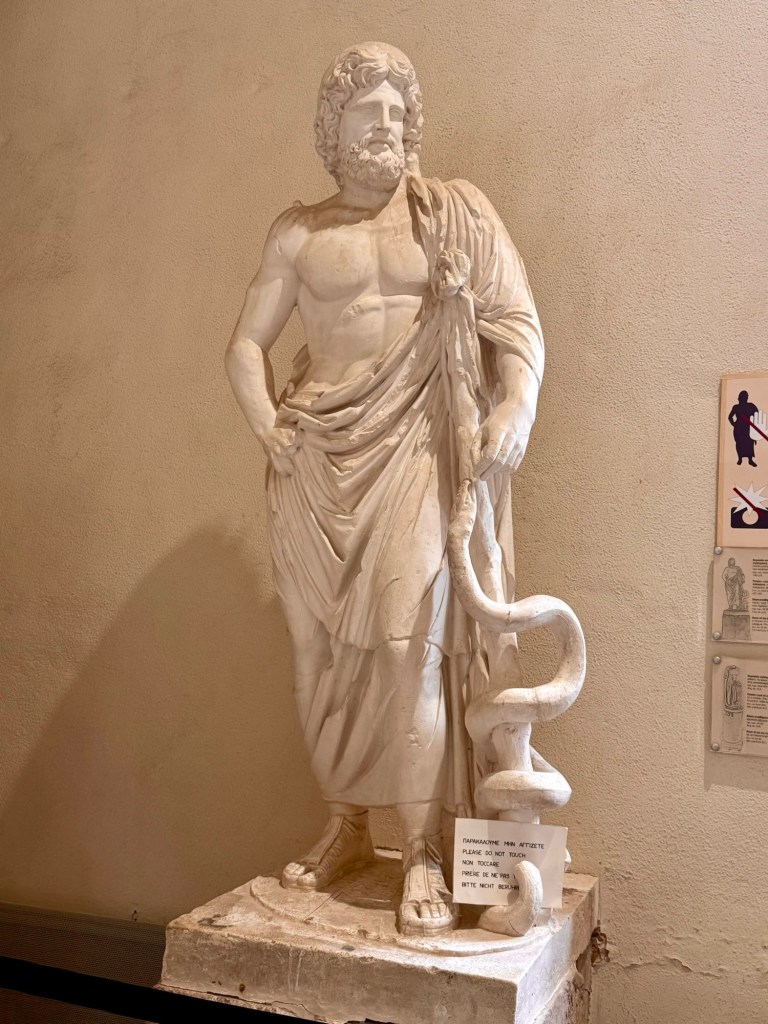
Epidaurus wasn’t just any ancient Greek city—it was the destination for healing in the classical world. Imagine a place where medicine, spirituality, theater, and wellness converged into one comprehensive healing experience. This was the Sanctuary of Asclepius, the Greek god of medicine (yes, the same Asclepius whose snake-entwined staff we still use as a medical symbol today!).
What fascinated me most as our guide spoke was learning that the ancient Greeks understood something we’re only recently rediscovering in modern healthcare: healing isn’t just about treating symptoms. At Epidaurus, patients didn’t just receive medical treatment—they experienced therapeutic baths, engaged in physical exercise, attended theatrical performances, and participated in religious rituals. Sound familiar? It’s essentially what we now call holistic or integrative medicine.
Fun fact: Patients at the sanctuary would sleep in a special building called the “abaton,” where they believed Asclepius would visit them in their dreams and either heal them directly or reveal their cure. The prescriptions written by the priest-physicians were found inscribed on stone tablets—ancient medical records!
The Theater That Takes Your Breath Away
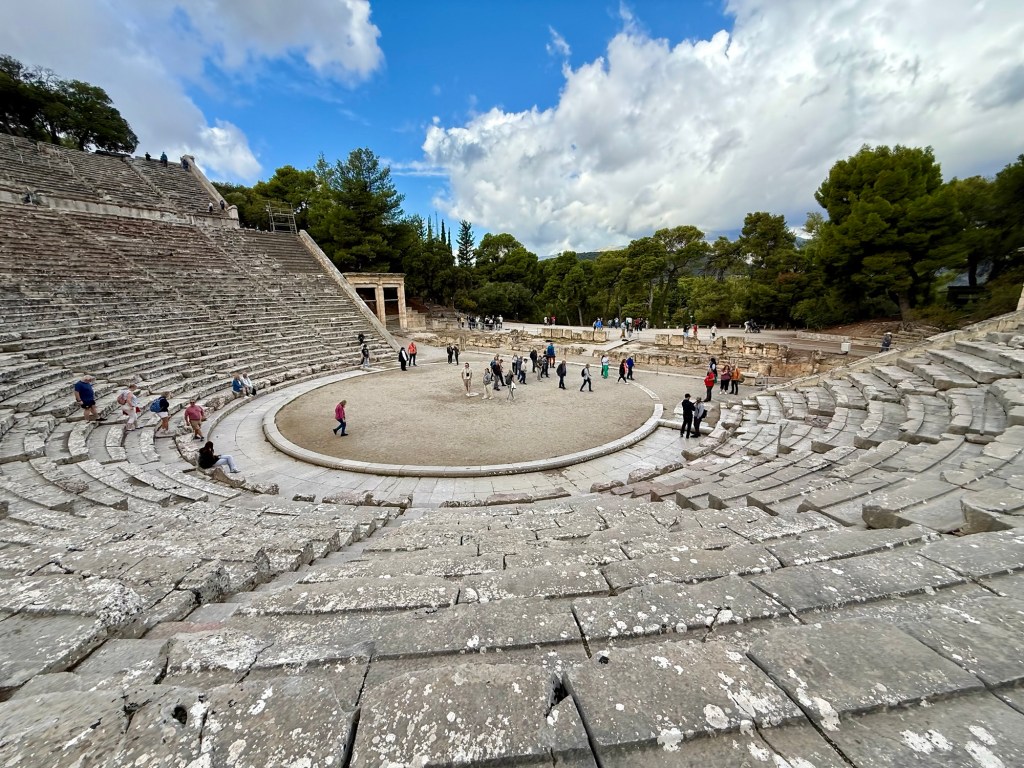
And then we arrived at the Theater of Epidaurus, and I genuinely gasped.
Carved into the hillside in the 4th century BCE, this architectural marvel seats 14,000 people and remains one of the best-preserved ancient theaters in existence. But here’s what made my history-geek heart skip a beat: the theater was designed using the golden ratio—that mathematical proportion (approximately 1.618:1) found throughout nature, from nautilus shells to flower petals to the spiral of galaxies. The ancient Greeks believed this ratio created perfect harmony and beauty, and they incorporated it into the theater’s proportions, creating a space that feels naturally balanced to the human eye.
As I climbed the limestone steps, running my hands along the surprisingly smooth, almost silky stone worn by centuries of visitors, I couldn’t help but marvel at the craftsmanship. These weren’t just seats—they were testimony to human ingenuity.
A Moment Frozen in Time
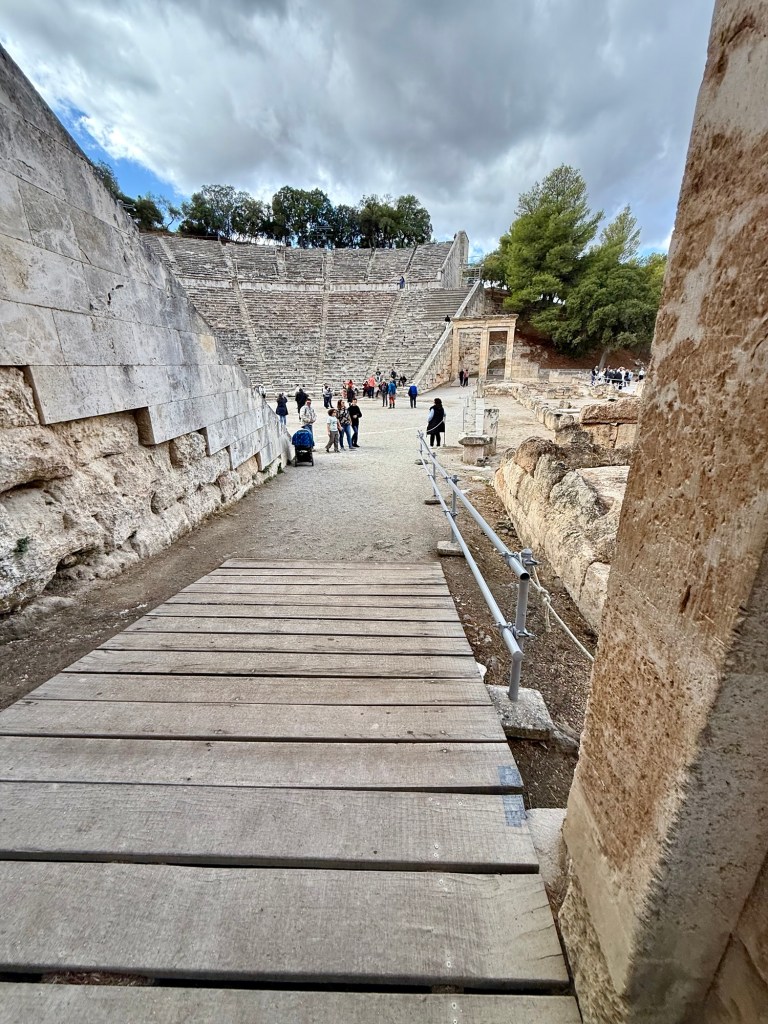
Settling into a spot high in the theater, I let my imagination run wild. What did audiences watch here? Greek tragedies by Sophocles and Euripides, certainly—stories of gods and heroes, hubris and redemption. I pictured the space filled with citizens in flowing chitons, the late afternoon sun casting long shadows across the orchestra circle below, actors in elaborate masks projecting their voices through this natural amphitheater.
But here’s the connection that struck me most profoundly: these theatrical performances weren’t just entertainment—they were therapy. The Greeks believed that watching tragedy allowed people to experience catharsis, a purging of emotions that brought psychological and even physical relief. Theater was literally prescribed as part of the healing process at Epidaurus.
Fun fact: The acoustics of the theater are so perfect that you can hear a match being struck in the center of the orchestra from the very top row, 60 meters away! Scientists have discovered that the limestone seats act as acoustic filters, suppressing low-frequency background noise while amplifying the performers’ voices.
Ancient Wisdom, Modern Applications
As a nurse, walking through Epidaurus felt like encountering the ancient relatives of modern healthcare. The parallels were striking:
- Their emphasis on the healing environment mirrors our understanding of how hospital design affects patient outcomes
- Their integration of physical activity, nutrition, and mental health reflects our current shift toward preventive and holistic care
- Their recognition that community and social connection aid healing aligns with what we know about patient support systems
- Even their use of therapeutic drama finds echoes in today’s art therapy and drama therapy programs
Fun fact: The symbol of modern medicine, the Rod of Asclepius (a single snake wrapped around a staff), comes directly from the god worshipped at Epidaurus. The snake was sacred to Asclepius because snakes shed their skin and appear to be “reborn,” symbolizing healing and renewal. Non-venomous snakes were even allowed to roam freely through the sanctuary!
The Magic of Connection
Standing in that ancient theater, I felt a profound connection across millennia. The same human desires that brought people to Epidaurus 2,400 years ago—the hope for healing, the search for meaning, the need for beauty and community—are the same reasons patients walk into hospitals today. The tools have changed, but the fundamental human experience of illness and the yearning for wellness remains constant.
Epidaurus reminded me why I became a nurse in the first place: because caring for others is one of humanity’s oldest and most sacred callings. It’s not just about medications and procedures—it’s about treating the whole person, mind, body, and spirit.
Visiting Epidaurus
If you ever find yourself in Greece, make the journey to Epidaurus. It’s about a two-hour drive from Athens, nestled in the hills of the Argolid Peninsula. The site is usually less crowded than other major attractions, giving you space to truly absorb the atmosphere. Pro tip: visit in the late afternoon when the tour buses have left, and if you’re there in summer, check if there are any performances scheduled—yes, the theater is still used for performances today, 2,300 years later!
Walk slowly. Touch the stones. Sit in the theater and close your eyes. Listen to the whisper of history in the perfect acoustics. And remember that you’re standing in a place where humanity first began to understand that healing is as much an art as it is a science.
Have you visited any historical sites that connected with your profession or passion? I’d love to hear about your experiences in the comments below!




 Platnumkitty
Leave a comment