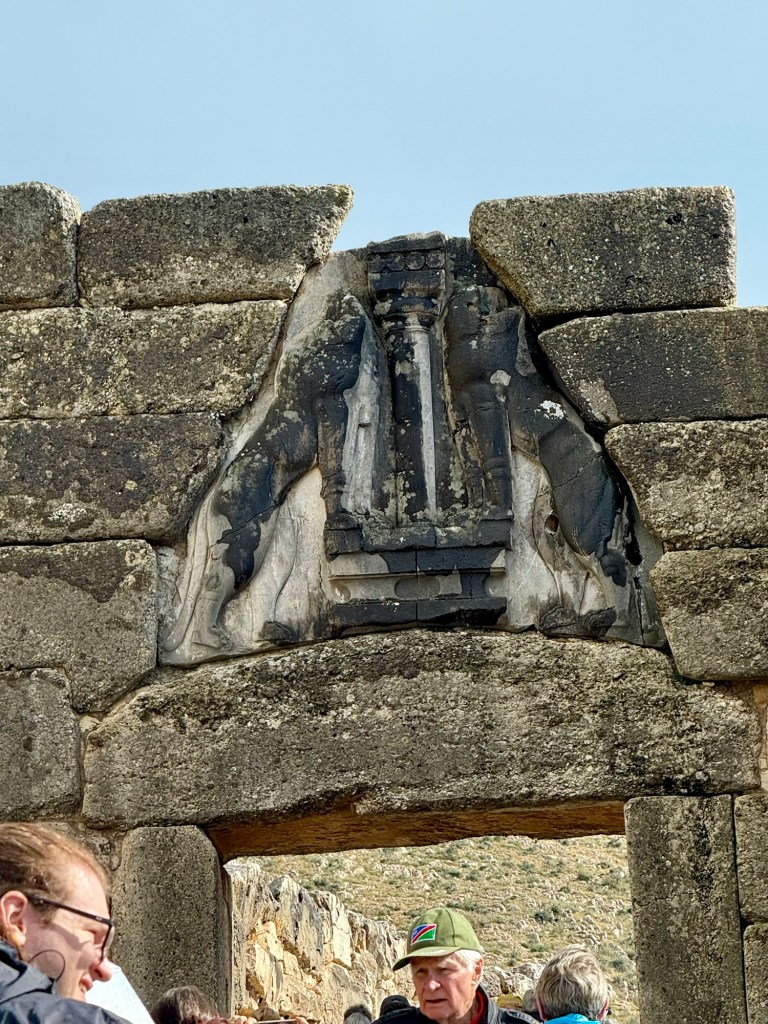
The Lion Gate of Mycenae: A Threshold Between Worlds
There are places in the world where stone and silence speak louder than words. The Lion Gate at Mycenae, carved into the bones of Greece nearly 3,200 years ago, is one of them. Standing before its massive blocks of cyclopean masonry, you feel more than history—you feel presence.
This was not just an entrance. It was a threshold, a liminal space where the mortal and the divine met. The twin lions (or lionesses) poised above the gate are more than decoration; they are guardians, eternal sentinels watching over those who pass. In ancient times, lions symbolized divine strength, sovereignty, and protection. To walk beneath their gaze was to step into a realm where kings ruled not only by earthly power but by sacred mandate.
Mystical Resonance
The central pillar between the lions is thought to represent a sacred altar or axis mundi—the cosmic axis connecting heaven and earth. In this way, the Lion Gate becomes more than stone; it becomes a portal, a reminder that every journey into Mycenae was also a spiritual crossing.
For the adventurer, this site whispers of epic tales—Agamemnon, Helen, and the shadow of Troy. For the mystic, it hums with deeper energy: the vibration of guardianship, the resonance of divine authority, the eternal reminder that thresholds are sacred.
Feeling the Energy
Stand before the gate at dusk, when the light softens and shadows stretch across the relief. You may feel the weight of time dissolve, replaced by a sense of timelessness. The lions are not merely carved—they are alive in the collective memory, embodiments of protection and power. The stones themselves seem to pulse with the energy of countless souls who crossed this threshold, each carrying hopes, fears, and prayers.
Why It Matters Today
In our modern wanderings, the Lion Gate reminds us that travel is not only about movement through space—it is about movement through spirit. To step into Mycenae is to step into a dialogue with the ancients, to feel the sacred guardianship of a civilization that believed in the divine order of things.
For the adventurer, it is a call to explore. For the mystic, it is an invitation to listen. And for all who stand before it, the Lion Gate is a reminder: some doors are not just entrances—they are portals to the eternal.
“May every gate you cross remind you of the unseen guardians,
and may every journey lead you closer to the eternal light within.”
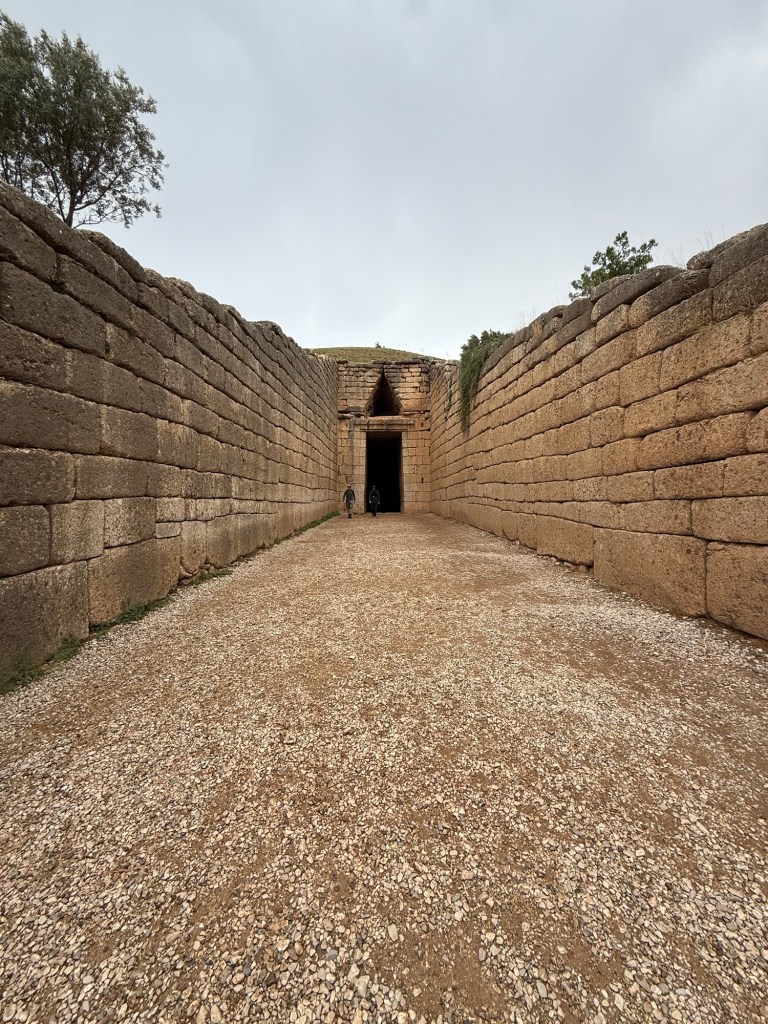
Where Kings Sleep and Myths Awaken
Agamemnon’s tomb and the city of Mycenae carry deep spiritual and mystical resonance, woven from myth, legend, and ancient ritual. The site is not only an archaeological marvel but also a place where myth and history blur, creating a powerful aura of sacred kingship, divine favor, and tragic destiny.
The Tomb of Agamemnon (Treasury of Atreus)
- Architectural wonder: Known as the Treasury of Atreus, the so‑called Tomb of Agamemnon is a monumental tholos (beehive-shaped tomb) built between 1300–1250 BCE. Its immense size and precision suggest it was designed to honor a ruler with divine or semi-divine status.
- Mythic associations: Though archaeologists debate whether Agamemnon himself was buried there, the tomb became symbolically linked to him — the tragic king who led the Greeks in the Trojan War and was murderedupon his return. This association imbues the site with themes of sacrifice, betrayal, and the fate of dynasties WorldAtlas.
- Spiritual aura: Ancient visitors and later writers often treated the tomb as a liminal space — a threshold between the mortal world and the heroic age sung by Homer. It was seen as a bridge between myth and reality, where the spirits of kings lingered WorldAtlas.
Mystical Stories of Mycenae
- Founded by Perseus: Myth says Mycenae was founded by Perseus, son of Zeus, after slaying Medusa. This origin ties the city to divine intervention and heroic destiny.
- Dynasty of Atreus: Mycenae was home to the cursed House of Atreus — Agamemnon, Menelaus, and their kin. Their stories are filled with blood feuds, divine punishment, and tragic cycles of vengeance, giving the city a mystical reputation as a place where fate and the gods’ will played out.
- Sacred kingship: Mycenae’s rulers were often portrayed as chosen by the gods, embodying both glory and doom. The city itself became a symbol of hubris and downfall, echoing spiritual lessons about power and mortality.
- Myth and ruins intertwined: Pausanias, the ancient traveler, described Mycenae as a once-great city reduced to ruins by divine will, reinforcing the idea that its collapse was part of a cosmic cycle maicar.com.
Spiritual Significance
- Threshold of worlds: The tomb and city are often interpreted as liminal spaces — where the heroic age meets the mortal, and where myth bleeds into archaeology.
- Mystical resonance: For centuries, Mycenae has been seen as a place of ancestral spirits, divine justice, and tragic destiny, making it spiritually charged for visitors.
- Modern reflection: Today, standing before the Lion Gate or inside the Treasury of Atreus, many feel a sense of awe — not just at the engineering, but at the weight of myth and the spiritual lessons of impermanence, fate, and legacy.
Agamemnon’s tomb is less about burial and more about mythic memory — a sacred monument where history, legend, and spirituality converge. Mycenae itself is a mystical city, born of gods and heroes, cursed by bloodlines, and remembered as a place where the divine and mortal worlds collided.



 Platnumkitty
Leave a comment