There’s a particular kind of frustration that comes with being lost. Your phone’s at 12%, Google Maps keeps recalibrating, and all you wanted was to find a simple convenience store. You’re hot, you’re tired, and the street signs might as well be written in ancient hieroglyphics. This is not the adventure you signed up for.
But here’s what I’m learning: sometimes the best moments of our lives arrive disguised as inconveniences.
When Wrong Becomes Right
In October, my son and I were wandering the streets of Athens with a simple mission: find a convenience store. We needed water, maybe some snacks—nothing specific or Instagram-worthy about it. Just a practical errand in an unfamiliar city.
We took a wrong turn. Then another. The convenience store remained elusive, and we found ourselves on a narrow street we definitely hadn’t planned to explore. My son looked at me with that “Mom, do you actually know where we’re going?” expression that every parent knows too well.
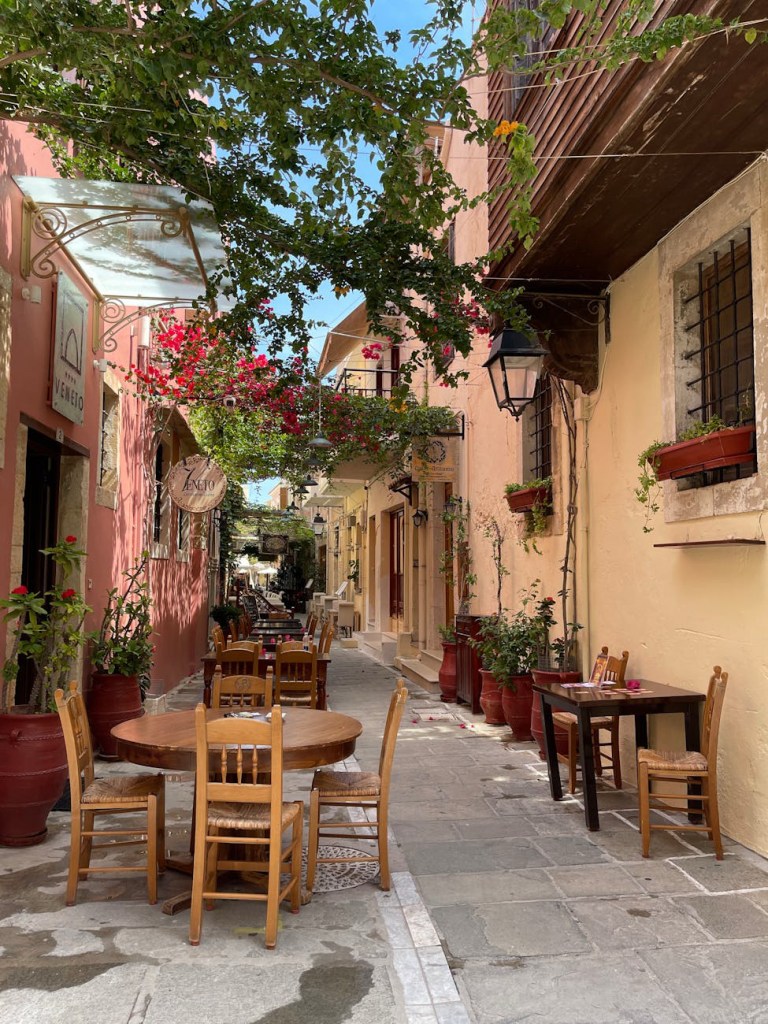
And then we saw it. A small restaurant tucked between weathered buildings, with tables spilling onto the cobblestones and the kind of lighting that made everything look like it belonged in a film. We weren’t hungry. We weren’t looking for a restaurant. But something about stumbling upon it, about the sheer accident of being there, made us stop.
We sat down. We ordered dishes we couldn’t pronounce. And it turned out to be one of the most memorable meals of our entire trip. The food was extraordinary, yes, but what made it special was the story behind it. We didn’t find this place through a curated list or a five-star review. We found it by getting lost. We found it by being willing to pivot from frustration to curiosity.
That moment—sitting across from my son, eating incredible food on a street we’d stumbled onto by mistake—is something we still talk about. Not because we planned it, but precisely because we didn’t.
The Tyranny of Optimization
We live in an age of optimization. We route our commutes to save three minutes. We read reviews before trying new restaurants. We curate our travel itineraries with military precision, color-coding spreadsheets to maximize every hour in a new city.
There’s nothing wrong with planning. But somewhere along the way, we’ve become afraid of inefficiency. Afraid of wrong turns. Afraid of wasting time.
What if getting lost isn’t waste? What if those unplanned detours are where the real texture of life exists?
Adventure isn’t just about the big, marquee moments—the summit reached, the exotic destination checked off the list. It’s equally about the willingness to release our grip on control and let serendipity have a turn at the wheel.
The Everyday Practice of Getting Lost
You don’t need to be in Athens to practice this. You don’t need a plane ticket or a week off work. The art of getting lost, of inviting adventure into the ordinary, starts right where you are.
Let go of the optimal route. Next time you’re heading somewhere familiar, take a different street. Not because it’s faster or prettier, but simply because it’s different. Drive through that neighborhood you always pass but never enter. Walk the long way to the grocery store. Notice what you’ve been missing by always taking the efficient path.
Transform frustration into curiosity. When something goes wrong—when you miss your exit or your plans fall through—pause before you spiral into annoyance. Ask yourself: what might this detour offer? It won’t always lead to a magical restaurant in Athens, but the practice of staying open to possibility, even when things don’t go according to plan, changes how you move through the world.
Say yes to the unplanned. When a friend suggests something spontaneous, when you spot an interesting shop you’ve never noticed before, when someone invites you to an event that’s not on your calendar—consider saying yes. Not to everything, not to the point of exhaustion, but enough to keep your life from becoming too predictable, too scheduled, too known.
Create space for wandering. Build margin into your days and weeks. Leave Saturday afternoon unscheduled. Take a walk without a destination. Go to a part of town you don’t know well and just see what you find. We’ve become so good at filling every gap in our calendars that we’ve squeezed out the very space where serendipity lives.
The Courage of Not Knowing
There’s something vulnerable about admitting you’re lost. We’re supposed to have it together, to know where we’re going, to have our lives mapped out. Getting lost feels like failure.
But what if it’s actually a form of courage? What if the willingness to not know, to be uncertain, to take the wrong street and see where it leads, is one of the bravest things we can do?
My son and I could have kept searching for that convenience store. We could have gotten more frustrated, more focused on our original mission, more determined to solve the problem efficiently. Instead, we made a different choice. We let ourselves be surprised.
The Stories We Tell
Years from now, we won’t remember most of the convenience stores we visited. We won’t remember the perfectly executed itineraries or the efficiently optimized routes.
We’ll remember the restaurant we found by accident in Athens. We’ll remember the wrong turns that became right moments. We’ll remember the times we chose curiosity over control.
Adventure isn’t something we add to our lives through extreme activities or exotic locations. It’s something we practice in the small moments, the daily decisions, the willingness to occasionally get lost on purpose.
So the next time you take a wrong turn, instead of immediately course-correcting, pause. Look around. Notice where you’ve ended up. You might find a convenience store.
Or you might find something better.
Because sometimes the best adventures are the ones we never planned to have. Sometimes they’re hiding on the street we weren’t supposed to take, waiting for us to be just lost enough to find them.



 Platnumkitty
Leave a comment