Part 4B of our Blue Zones Series – A Follow-Up to Downshift
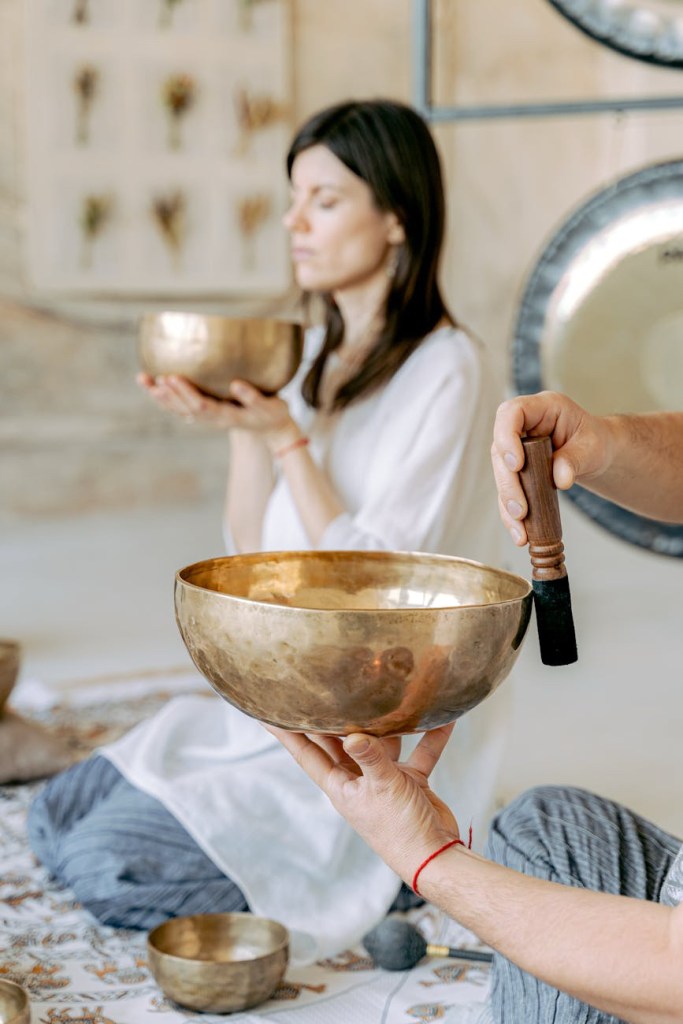
There’s a woman in Okinawa who starts every morning the same way.
She wakes before dawn. Makes tea. Sits on her porch facing east. And for twenty minutes, she just… is.
No phone. No to-do list. No mental rehearsal of the day ahead.
Just breath. Just sky. Just the quiet knowing that this moment—right here, right now—is enough.
When researchers asked her why she does this, she said something that stopped me in my tracks: “Because when I start the day aligned with myself, the whole day flows differently. When I don’t, I spend the whole day trying to catch up to my own life.”
This is the secret hidden inside the Blue Zones longevity formula. It’s not just about individual habits—napping, walking, eating plants. It’s about something deeper: alignment.
Living in a way where your daily actions reflect your deepest values. Where your schedule matches your soul. Where there’s no gap between who you are and how you live.
And when you live aligned, stress doesn’t just get managed. It dissolves.
The Alignment Gap
Most of us are living with what I call the Alignment Gap—the distance between how we want to live and how we actually live.
You value connection, but you spend your evenings scrolling alone.
You value health, but you’re too tired to cook and too stressed to move.
You value presence, but your mind is always three steps ahead or six months behind.
You value peace, but your calendar is a war zone.
This gap—this constant dissonance between values and actions—is exhausting. It’s a form of stress so chronic we’ve stopped noticing it. We just call it “normal life.”
But the centenarians in Blue Zones don’t live with this gap. Not because they’re enlightened masters, but because their cultures, their communities, and their daily rhythms force alignment.
The Adventist Sabbath forces alignment between faith and rest.
The Ikarian siesta forces alignment between energy and activity.
The Sardinian happy hour forces alignment between work and relationship.
These aren’t choices they make with willpower. They’re structures that make alignment inevitable.
And here’s the revolutionary part: you can build these structures too.
The Four Pillars of Aligned Living
After studying the centenarians’ daily rhythms, I’ve noticed that aligned living rests on four foundational pillars. Master these, and stress doesn’t have to be “managed”—it naturally finds less space to take root.
Pillar One: Embodied Presence (Being Here Now)
The Okinawan woman on her porch isn’t meditating to reduce cortisol or improve focus. She’s practicing presence—the art of being fully here, in this body, in this moment, without resistance.
This is what mindfulness actually is. Not a productivity hack. Not a stress-management technique. But a practice of coming home to yourself.
In Blue Zones, presence happens naturally because life moves slower. There’s time to actually taste your food. Time to notice the sky. Time to feel your feet on the earth.
But in our world? We have to create that time deliberately.
Your practice:
Morning Anchoring – Before you touch your phone, before you run the mental to-do list, sit for five minutes. Feel your breath. Notice what’s true in your body right now. Tired? Alert? Tense? Just notice. This is you, checking in with yourself before the world checks in with you.
Mindful Transitions – Between activities, pause for three breaths. Closing your laptop? Three breaths. Getting in the car? Three breaths. Hanging up the phone? Three breaths. These micro-moments of presence reset your nervous system and prevent stress accumulation.
Single-Tasking Meals – Pick one meal per day—just one—where you do nothing but eat. No phone. No TV. No reading. Just tasting, chewing, noticing. The Okinawans say hara hachi bu (eat until 80% full), but you can’t hear your body’s signals if you’re not present to them.
Evening Inventory – Before bed, sit for two minutes and ask: “What did I actually experience today?” Not accomplish. Experience. What did you see, feel, notice? This practice trains your brain to be present during the day because it knows it’ll be asked to remember.
Pillar Two: Values-Based Rhythms (Structuring Your Days Around What Matters)
Here’s what I’ve learned from the Blue Zones: you can’t rely on willpower to live your values. You have to encode them into your schedule.
The Adventists don’t decide each week whether they feel like observing Sabbath. It’s built into the rhythm of the week. Non-negotiable. The structure holds the value.
What are your actual values? Not the ones you think you should have. The ones that, when violated, make you feel hollow.
Maybe it’s creativity. Or adventure. Or deep rest. Or meaningful work. Or being present with your kids. Or time in nature. Or spiritual practice.
Now look at your calendar. Is that value anywhere in there? With actual time blocked? Or are you just hoping it’ll happen in the cracks between everything else?
Your practice:
The Non-Negotiable Ritual – Pick one value. Give it a weekly appointment. Sunday morning hike. Tuesday night pottery class. Friday afternoon reading in the park. Thursday dinner with friends. Protect this time like you’d protect a doctor’s appointment. Because in a very real sense, it is.
The Daily Touchstone – Find five minutes—just five—to honor your top value every single day. If you value creativity, write one paragraph. If you value connection, send one voice message to someone you love. If you value spirituality, read one page of something sacred. If you value nature, step outside and look at the sky. Daily beats weekly beats monthly beats “someday.”
The Calendar Audit – Once a month, look at your calendar. Ask: “If someone studied my schedule, what would they say I value?” If there’s a gap between that answer and your actual values, close it. Add something. Delete something. Rearrange something. Your calendar is a blueprint. Make sure it’s building the life you actually want.
Pillar Three: Embodied Wisdom (Listening to Your Body’s Truth)
The centenarians in Blue Zones have something most of us have lost: they trust their bodies.
They eat when hungry. Stop when satisfied. Sleep when tired. Move when restless. Rest when depleted.
We, on the other hand, override our bodies constantly. We’re tired but we drink coffee. We’re full but we keep eating. We’re stressed but we push through. We’re sick but we go to work anyway.
We’ve been taught that the mind should rule the body. But the Blue Zones teach us something different: the body has wisdom the mind doesn’t access. And when you listen to it—really listen—you make better decisions about rest, movement, food, and relationships.
Your practice:
The Body Scan – Once a day, stop and scan from head to toe. Where are you holding tension? Where does it hurt? Where feels good? You’re not trying to fix anything. Just notice. This practice rebuilds the connection between your awareness and your physical self.
Energy Mapping – For one week, track your energy levels hourly. When are you naturally alert? When do you crash? When do you feel most creative? Most social? Most tired? Then redesign your day around these rhythms instead of against them. The Ikarians nap at 2 PM because that’s when energy naturally dips. When’s yours?
Sensation Before Story – When you feel stressed or anxious, pause. Don’t go straight to the story (why you’re stressed, what you need to do about it). First, feel the sensation. Where is it in your body? What does it feel like? Tight chest? Shallow breath? Clenched jaw? Stay with the sensation for 30 seconds. Often, it shifts. The body just wanted to be heard.
Hunger and Fullness Awareness – Before you eat, rate your hunger 1-10. Halfway through the meal, pause and rate it again. Stop when you hit 7 or 8 (the hara hachi bu 80% rule). This isn’t about restriction. It’s about reconnection. Most of us eat on autopilot. This practice wakes you up to your actual needs.
Pillar Four: Sacred Boundaries (Protecting Your Energy Like Your Life Depends On It)
The Blue Zones communities have built-in boundaries. The Sabbath creates a boundary around rest. The siesta creates a boundary around midday recovery. The happy hour creates a boundary between work and home.
But in our always-on, always-available culture? You have to create these boundaries yourself. And you have to defend them.
This is where aligned living gets radical. Because boundaries mean saying no. They mean disappointing people. They mean being unavailable. They mean choosing your energy over other people’s expectations.
And they’re absolutely non-negotiable if you want to live long and well.
Your practice:
The Sacred No – Identify one commitment you’re going to stop doing. Something you said yes to out of guilt, obligation, or the inability to disappoint. Then stop doing it. Send the email. Have the conversation. Create the space. Notice how your body relaxes when you eliminate what was never aligned.
The Phone Boundary – Pick one hour per day when your phone doesn’t exist. Dinner hour. Morning hour. Bedtime routine. Put it in another room. Turn it off. You’re not available. The Sardinians don’t answer emails at happy hour. You don’t answer texts during your sacred hour.
The Energy Budget – You have a finite amount of energy each day. Start treating it like money. Every commitment costs energy. Every yes to someone else is a no to yourself. Before you say yes to anything new, ask: “Can I afford this?” If your energy account is already overdrawn, the answer is no.
The White Space Principle – For every hour you schedule, leave 15 minutes unscheduled. White space. Breathing room. The gaps between the notes that make the music. The Okinawans don’t rush from task to task. They have space between. You need it too.
The Meditation Practice That Changes Everything
If I had to recommend one practice that ties all four pillars together, it would be this: a daily meditation practice.
Not because meditation is magical. But because it’s the training ground for everything else.
In meditation, you practice presence. You practice noticing when you’re not present and coming back.
In meditation, you practice sitting with discomfort without reacting. You practice letting thoughts pass without grabbing them.
In meditation, you practice listening to your body, your breath, your inner state.
In meditation, you practice boundaries—this is my time, and I’m not available to anything else.
The centenarians in Okinawa, Sardinia, and Loma Linda often have meditation or prayer as part of their daily rhythm. Not for 90 minutes. For 10-20 minutes. Just enough to reset. Just enough to remember who they are underneath the doing.
A Simple Daily Meditation:
1. Sit. Chair, cushion, floor—doesn’t matter. Spine straight but not rigid. Hands resting.
2. Set a timer. Start with 5 minutes. Work up to 10, then 15, then 20. You’re building capacity.
3. Close your eyes. Or soften your gaze downward.
4. Breathe naturally. Don’t control it. Just notice it. In. Out. The rhythm that’s been sustaining you since birth.
5. When your mind wanders (it will, constantly), notice where it went. Then gently bring your attention back to your breath. No judgment. No frustration. Just: “Oh, I was thinking about dinner. Back to breath.”
6. Repeat approximately 47,000 times per session.
7. When the timer rings, sit for three more breaths. Then open your eyes slowly. Notice how you feel. This is your baseline. This is you, aligned.
Do this every day. Same time if possible. The Okinawan woman does it at dawn. You do it whenever works. But do it daily.
This is your anchor. Your reset. Your return to alignment.
Living Aligned in a Misaligned World
Here’s the truth: living aligned in modern culture is countercultural.
You’ll be the weirdo who takes a nap at 2 PM. The one who doesn’t answer emails on Sunday. The one who leaves parties early because you have a morning meditation practice. The one who says no without apologizing.
People won’t always understand. They might call you rigid, inflexible, selfish.
Let them.
Because the alternative—living out of alignment, perpetually stressed, accumulating inflammation, burning out, aging faster than you need to—is worse.
The centenarians in Blue Zones aren’t living to 100 by accident. They’re living to 100 because their entire lives are structured around alignment. Around rhythms that honor their bodies. Around values that are lived, not just believed. Around boundaries that protect their energy.
You can have that too. Not by moving to Okinawa. But by bringing Okinawa to you.
One practice. One boundary. One aligned choice at a time.
Your Aligned Living Challenge
This week, you’re going to experiment with one practice from each pillar:
Pillar 1 – Embodied Presence: Five-minute morning meditation. Before phone, before coffee, before anything. Just you and your breath.
Pillar 2 – Values-Based Rhythm: Block one hour this week for your top value. Put it in your calendar. Protect it like surgery.
Pillar 3 – Embodied Wisdom: Body scan once per day. Set a phone reminder. Check in with your physical self.
Pillar 4 – Sacred Boundaries: Say no to one thing. Anything. Something you don’t want to do that you’d normally force yourself to do.
Do all four. For seven days. Then notice.
What feels different? What feels hard? What feels like coming home?
The Promise of Alignment
When you live aligned—when your days reflect your values, when you’re present in your body, when you protect your energy—something remarkable happens.
Stress doesn’t disappear. But it loses its grip.
Because you’re not fighting yourself anymore. You’re not constantly overriding your needs, violating your values, ignoring your body’s wisdom.
You’re living in harmony with yourself. And that harmony is the real secret to longevity.
Not just more years. But years that feel worth living. Years where you’re present for your own life. Years where you wake up, like the Okinawan woman on her porch, knowing that this moment is enough.
So here’s my question: What would your life look like if it was fully aligned?
If every day included presence, honored your values, listened to your body, and protected your energy?
You don’t have to imagine it. You can build it.
Starting today. Starting now.
With one practice. One boundary. One aligned breath.
Your 100-year-old self is watching. Make them proud.
Next in the series: The 80% Rule – How Okinawans stay naturally slim without dieting, and why “hara hachi bu” might be the most powerful eating habit you’ve never heard of.




 Platnumkitty
Leave a comment