Part 5 of our Blue Zones Series
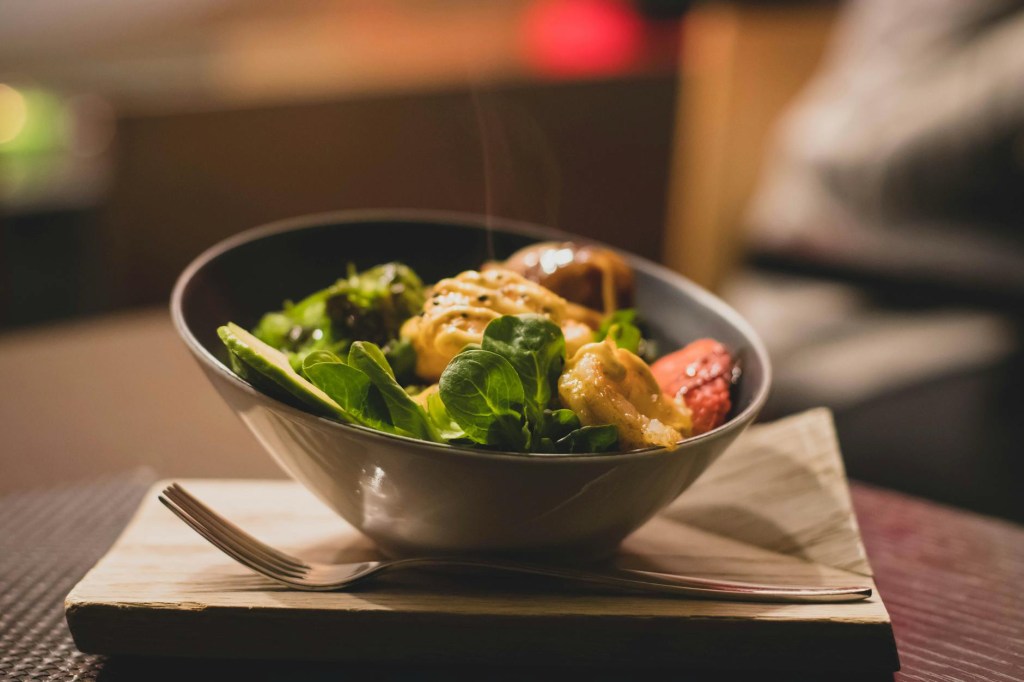
There’s a phrase in Okinawa that gets said before every meal, whispered like a prayer, repeated like a mantra: Hara hachi bu.
It means: “Eat until you are 80% full.”
Not stuffed. Not satisfied in that heavy, post-Thanksgiving way. Just… enough.
And here’s what blows my mind: the Okinawans have the longest average life expectancy in the world, the lowest rates of obesity, and they’ve never counted a calorie or tracked a macro in their lives.
They just stop at 80%.
That’s it. That’s the whole trick.
But in a culture where we supersize everything, where “all you can eat” is a selling point, where cleaning your plate is a virtue and second helpings are love—stopping at 80% feels revolutionary.
It feels like the adventure it actually is.
The Problem With 100%
Let me tell you what happens when you eat to 100% full.
Your stomach is stretched. Your body is working overtime to digest. Your blood sugar spikes and crashes. Your energy plummets. You feel sluggish, foggy, regretful. You promise yourself you’ll eat less next time. You don’t.
This is the cycle. And it’s not your fault.
Your brain receives the “I’m full” signal about 20 minutes after your stomach does. Which means by the time you feel full, you’re already past full. You’re at 110%, maybe 120%.
The Okinawans figured this out centuries ago. They realized that if you wait until you feel completely satisfied, you’ve already overeaten.
So they stop earlier. At the first whisper of satisfaction. At 80%.
And here’s what happens: they consume fewer calories without ever feeling deprived. They maintain healthy weights without dieting. They have more energy because their bodies aren’t constantly in digestive overdrive. They live longer because chronic overeating is linked to inflammation, diabetes, heart disease, and cancer.
Hara hachi bu isn’t a diet. It’s a practice of listening. Of honoring. Of stopping before you have to.
The 20% That Changes Everything
That 20% gap—the difference between 80% full and 100% full—is where all the magic happens.
It’s about 300-500 calories per day for most people. Which doesn’t sound like much until you do the math: that’s 109,500 to 182,500 calories per year. That’s 31 to 52 pounds of potential weight gain prevented. Every single year. Just by stopping a little sooner.
But it’s not just about weight. That 20% represents something deeper.
It’s the space between enough and too much.
It’s the practice of restraint in a culture of excess.
It’s the moment where you choose awareness over autopilot.
It’s the gap where you reclaim your power from the plate.
The Okinawans aren’t depriving themselves. They’re liberating themselves from the tyranny of more. From the cultural programming that says if some is good, more is better.
They’ve learned what we’ve forgotten: more is often just more. Not better. Not more satisfying. Just more.
And 80% is actually enough.
The Art of Eating at 80%
Here’s the challenge: our bodies have lost the ability to sense 80%.
We’ve been eating to full—or past full—for so long that we don’t know what satisfied-but-not-stuffed feels like. We’ve overridden our internal signals so many times that they’ve stopped speaking clearly.
So learning hara hachi bu is like learning a new language. The language your body has been speaking all along, but you’ve forgotten how to hear.
The Satisfaction Scale:
Think of fullness on a scale from 1 to 10:
1-2: Painfully hungry. Shaky. Irritable. Can’t think straight.
3-4: Definitely hungry. Stomach growling. Ready to eat.
5-6: Neutral. Not hungry, not full. Could eat, could wait.
7-8: Satisfied. Comfortable. Could definitely stop here. This is 80%.
9: Full. That sigh of contentment that tips into slight discomfort.
10: Stuffed. Regretful. Unbuttoning pants. Thanksgiving-level full.
Most of us eat until we’re at a 9 or 10. We’re aiming for that deep, complete fullness. That feeling of “done.”
The Okinawans stop at 7 or 8. Still satisfied. Still content. Just not stuffed.
Your practice: For one week, rate your hunger before you eat and your fullness halfway through. Then check in again when you think you’re done. Where are you actually? If you’re past 8, you’ve gone too far.
The goal isn’t perfection. It’s awareness. You’re rebuilding the connection between your brain and your stomach. You’re learning to hear the signal that’s been there all along.
The Practical Magic of 80%
Okay, but how? How do you actually stop at 80% when the food is delicious and the plate is still half full and you were raised to clean your plate?
Here’s what works. These aren’t rules. They’re tools. Experiments. Adventures in eating differently.
Slow Down (Like, Really Slow Down)
The Okinawans eat slowly. They savor. They put their chopsticks down between bites. They talk. They breathe.
You can’t sense 80% if you’re racing to 100%.
Your adventure: Pick one meal today. Set a timer for 20 minutes. Make the meal last the full 20 minutes. Chew thoroughly. Put your fork down between bites. Notice flavors. Have a conversation. Let each bite register before you take the next one.
This isn’t about being precious or performative. It’s about giving your brain time to catch up with your stomach. Remember: the fullness signal takes 20 minutes. If you finish your meal in 8 minutes, you’re eating blind.
Use Smaller Dishes (Your Eyes Don’t Do Math)
Here’s a weird truth: we eat with our eyes first.
A portion that looks small on a large plate feels unsatisfying, even if it’s plenty of food. The same portion on a smaller plate feels abundant.
The Okinawans traditionally use smaller bowls and plates. Not because they’re trying to restrict. But because it creates the visual experience of plenty while serving less.
Your adventure: For one week, use your salad plates as dinner plates. Use smaller bowls. Notice if you feel just as satisfied with less. Spoiler: you probably will.
The Halfway Pause (Check In Before You Check Out)
Halfway through your meal, stop. Put down your utensils. Take three breaths. Ask yourself: “What number am I at right now?”
Not “Am I still hungry?” (You probably are—food is still on the plate.) But “How full am I, actually?”
If you’re at a 6 or 7, you’re close. You could stop soon. If you’re still at a 4, keep going. If you’re already at an 8, you’re done.
Your adventure: Set a phone reminder to go off 10 minutes into meals. When it buzzes, pause and check in. Where are you on the scale? This interrupts autopilot and brings you back to awareness.
Start With Vegetables (Volume Without Calories)
The Okinawan diet is 80% vegetables and whole grains. Which means they fill up on high-volume, nutrient-dense foods before they ever get to the calorie-dense stuff.
You can borrow this strategy without becoming Okinawan.
Your adventure: Start every meal with vegetables. A salad. Roasted broccoli. Soup. Fill half your plate with plants. Eat those first. Then move to the protein and starches. You’ll hit 80% faster because you’ve already filled your stomach with high-fiber, high-water content food.
The Glass of Water Trick (Are You Hungry or Thirsty?)
Before you take another serving, drink a full glass of water. Then wait five minutes.
Often, what we interpret as “still hungry” is actually “slightly dehydrated” or “mouth wants more stimulation.”
The water gives you the pause to check in with what’s actually true.
Your adventure: Keep water on the table. Drink between courses. Drink before dessert. See if the craving for more disappears once you’re properly hydrated.
Leave A Little On The Plate (The Radical Act of Enough)
This is the hardest one for many of us. We were taught that wasting food is wrong. That we should be grateful. That there are starving children somewhere who would love that last bite.
But here’s the truth: overeating food your body doesn’t need doesn’t help anyone. It just makes you uncomfortable and contributes to disease.
Your adventure: Leave three bites on your plate. Not because the food is bad. Not because you didn’t enjoy it. But because you’re practicing the art of enough. You’re proving to yourself that you can stop even when food remains.
Those three bites aren’t waste. They’re an investment in your awareness. They’re proof that you’re in control, not the plate.
The Restaurant Challenge
Restaurants are designed to get you to 100%. Or 120%.
The portions are enormous. The food is engineered for maximum palatability. The plates are huge. The bread comes before the meal. The server asks if you want dessert.
Practicing hara hachi bu in a restaurant is advanced-level work. But it’s where the practice becomes real.
Your strategies:
Split an entrée. Or order an appetizer as your meal. Restaurant portions are often 2-3 times what one person needs.
Ask for a to-go box when the meal arrives. Pack half before you start eating. Out of sight, out of mind.
Order vegetables first. Side salad. Steamed greens. Fill up on the good stuff before the pasta arrives.
Skip the bread basket. Or have one piece and send it away. Those pre-meal calories don’t count toward satisfaction—they just make you fuller before the meal even starts.
Eat slowly. Put your fork down between bites. Be the last one done. Stretch the meal. Give your brain time to register.
Stop when you’re at 7 or 8. Not when the plate is empty. When you are satisfied. The plate doesn’t get to decide when you’re done.
The Emotional Eating Plot Twist
Here’s where it gets real: hara hachi bu only works when you’re eating for physical hunger.
If you’re eating for emotional reasons—stress, boredom, loneliness, anxiety, celebration—the 80% rule doesn’t apply because you’re not trying to fill your stomach. You’re trying to fill something else.
The Okinawans have strong social structures. They have ikigai. They have community. They have purpose. Which means they’re not turning to food to meet emotional needs as often as we do.
But we live in a different world. And emotional eating is real.
Your practice: Before you eat, ask yourself: “Am I physically hungry, or am I trying to feel something different?”
If it’s physical hunger (stomach growling, low energy, it’s been 4+ hours since you ate), eat to 80%.
If it’s emotional hunger (sudden craving, specific food desire, you just ate an hour ago), pause. What do you actually need? A walk? A call to a friend? Five minutes of sitting with the feeling? A nap?
Sometimes, the answer is still “I’m going to eat this.” And that’s okay. But at least you’re aware. At least you’re choosing consciously instead of eating on autopilot.
The Long Game of 80%
Here’s what happens when you practice hara hachi bu consistently:
Week one: It feels weird. Uncomfortable. You’ll be hungry again sooner. You’ll want to keep eating. Your brain will protest.
Week two: You start to recognize the signal. You can feel the difference between 7 and 9. You stop a little sooner.
Month one: You have more energy after meals. Less afternoon crash. Less nighttime discomfort. Your pants fit a little better.
Month three: You’ve internalized the practice. You stop naturally. You don’t have to think about it as much. Your body trusts that more food is coming. You don’t need to stuff yourself now.
Month six: You’ve lost weight without dieting. You feel lighter, more energized. Your relationship with food has shifted from scarcity to abundance. You know there’s always enough.
Year one: This is just how you eat now. You can’t imagine going back to stuffed. 80% feels perfect. Your body has recalibrated. You’ve arrived.
This isn’t a quick fix. It’s a practice. The Okinawans have been doing this for generations. You’re learning it one meal at a time.
Be patient with yourself. This is unlearning decades of conditioning. It takes time.
Your 80% Challenge
This week, you’re going to experiment with eating to 80%:
Day 1: Rate your hunger before and after one meal. Just notice. No judgment. Where do you typically stop?
Day 2: Slow down one meal. Make it last 20 minutes. See what you notice.
Day 3: Use a smaller plate for dinner. Notice if you feel just as satisfied.
Day 4: Halfway through lunch, pause. Check in. Where are you on the scale?
Day 5: Start one meal with vegetables. Eat them first. Then proceed.
Day 6: Leave three bites on your plate. Practice the art of enough.
Day 7: Reflect. What felt easy? What felt hard? What did you learn about your relationship with food?
The Freedom in 80%
The promise of hara hachi bu isn’t deprivation. It’s liberation.
Liberation from the food coma. From the guilt. From the cycle of overeating and regret. From the disconnect between your body and your brain.
When you eat to 80%, you’re free to enjoy food without letting it run your life. You’re free to feel good in your body. You’re free to trust yourself around food.
The Okinawans aren’t thin because they have superior willpower. They’re thin because they’ve built a practice that makes overeating unnecessary. They stop before they need to because they’ve learned that 80% is actually, truly, genuinely enough.
And it is. For them. For you. For all of us.
So here’s my question: What would change if you stopped at 80%?
Not just about food. But about everything. Consumption. Work. Screen time. Doing.
What if enough was actually enough?
Try it. For one week. For one meal. For one bite.
Stop a little sooner. Leave a little space. See what fills it.
Your 100-year-old Okinawan self is whispering: Hara hachi bu.
Listen.
Next in the series: Plant Slant – Why beans are the cornerstone of every Blue Zones diet and how to make vegetables the star of your plate without becoming a full vegetarian.
Leaving the table satisfied, not stuffed, is a powerful habit. If you’re inspired to make the “80% Rule” a natural part of your life, the full Blue Zones philosophy provides the perfect recipe for longevity.
I’m learning to listen to my body’s signals through this practice, and I invite you to join me in exploring the bigger picture.
With gratitude and clarity: This link is part of the Amazon Services LLC Associates Program. If you purchase through it, I may earn a small commission. Your price stays the same, and your support allows me to share well-researched, practical ways to live healthier. Thank you!
Let’s support each other in finding that sweet spot of “enough.” What’s your tip for mindful eating?




 Platnumkitty
Leave a comment