Part 1 of the Cosmic Clarity-Lessons From the Wild Series
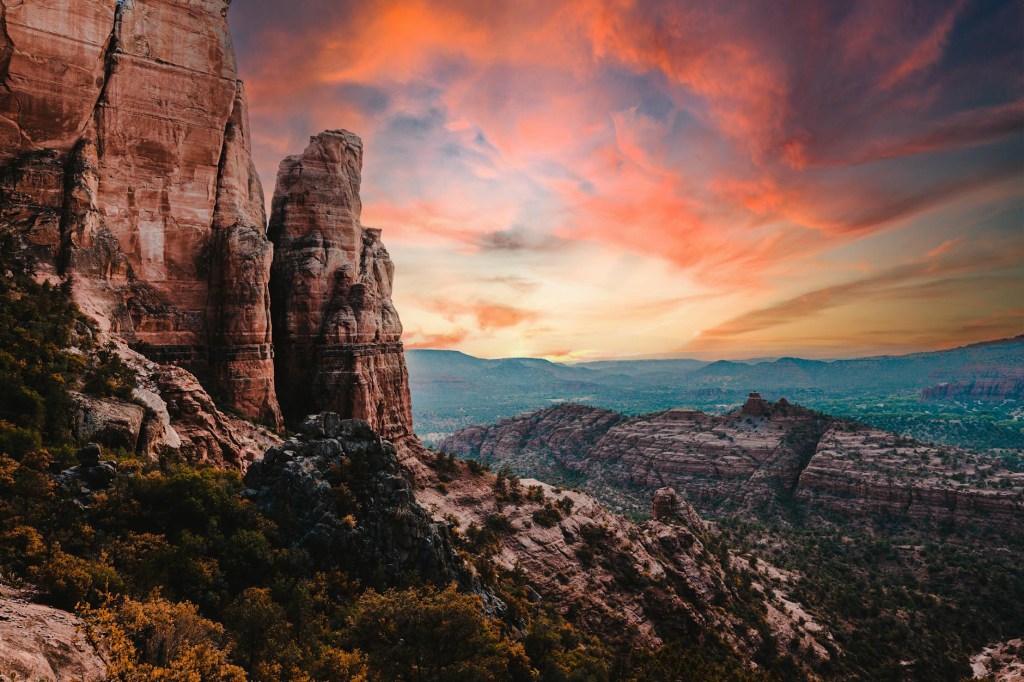
There’s this moment that happens sometimes on long drives through the desert.
The sun’s setting, painting everything in shades of copper and gold. You’ve been on the road for hours, maybe days. And then—without really deciding to—you pull over. Not because you need gas or food or rest. You pull over because something in you recognizes that this moment deserves more than 70 miles per hour.
You turn off the engine. Step out into the vast quiet. And you watch the light change at its own unhurried pace.
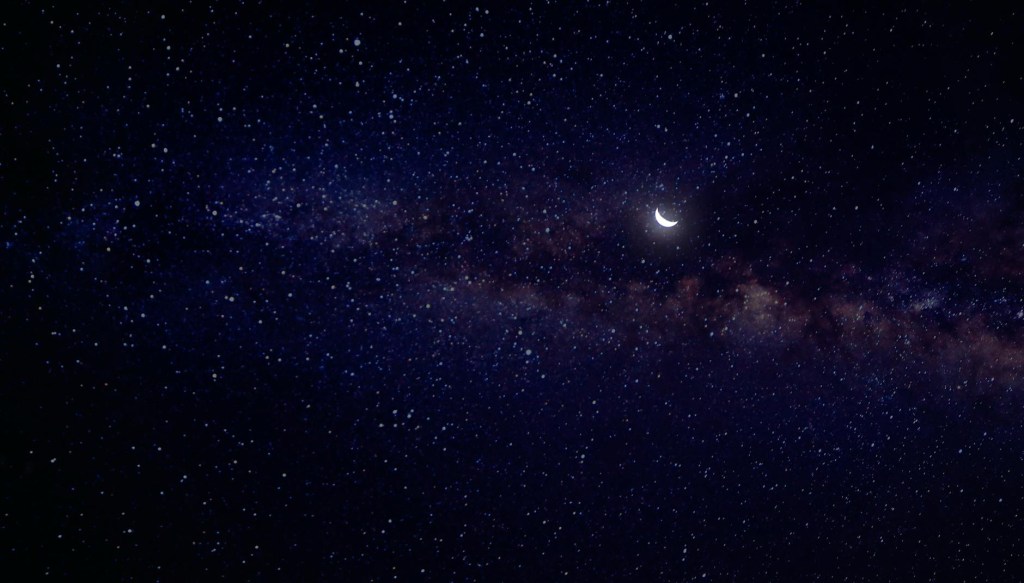
The sky doesn’t check its watch. The colors don’t rush their transformation from gold to pink to purple to deep indigo. The first stars appear exactly when they’re supposed to, not a moment sooner.
And standing there, you realize: nothing in nature is in a hurry. Except you.
The Madness We’ve Accepted as Normal
We live in a world that worships speed. Fast shipping. Quick wins. Rapid results. Life hacks. Morning routines that pack eighteen productivity techniques into thirty minutes.
We’ve convinced ourselves that faster is better. That efficiency is next to godliness. That if we’re not constantly optimizing, improving, and accelerating, we’re somehow falling behind.
I fell into this trap hard. For years, I tried to speedrun my life. Rush through experiences to get to the next one. Check off bucket list items like grocery shopping. Move faster, do more, achieve bigger.
Until the day I watched a tree grow.
Okay, not literally. Trees are painfully slow. But I was hiking in the Redwoods, standing beneath these ancient giants that have been growing for over two thousand years. Two. Thousand. Years.
They didn’t hurry. They didn’t hustle. They just… grew. Steadily, consistently, at their own perfect pace. And they became the most magnificent things I’d ever seen.
That’s when it hit me: what if everything I’d been taught about speed was wrong?
What Nature Knows That We’ve Forgotten
Mountains don’t form overnight. They rise millimeter by millimeter over millions of years. The most majestic landscapes on Earth are the result of patient, persistent forces working at a pace we can’t even perceive.
Rivers don’t force their path. They find the way of least resistance. They flow around obstacles. They take their time carving through rock, knowing that water—given enough time—can reshape entire landscapes.
Seeds don’t apologize for their timeline. An acorn doesn’t stress about not being an oak tree yet. It trusts its process. It grows at exactly the speed it’s meant to grow, and in its own time, it becomes something magnificent.
The seasons don’t skip ahead. Spring doesn’t try to become summer faster. Fall doesn’t rush winter. Each season takes its full time, serving its complete purpose, before yielding to the next.
And yet we—who are literally made of the same stuff as mountains and rivers and trees—somehow think we should operate on a different timeline.
The Cost of Constant Rush
Here’s what happened when I spent years trying to outpace my natural rhythm:
I collected experiences without actually experiencing them. I’d complete a hike and immediately start thinking about the next one. I’d arrive at a breathtaking vista and spend three minutes there before hurrying on to stay “on schedule.”
I mistook motion for progress. I was always moving, always doing, always going. But I wasn’t always growing. Movement without direction is just exhaustion with mileage.
I missed the whispers. Because whispers require you to slow down enough to hear them. The universe doesn’t shout its guidance over the sound of your hurried footsteps.
I burned out repeatedly. And each time, I was surprised. As if you can run full sprint indefinitely without consequences.
I compared myself to everyone else’s highlight reel. Social media showed me people summiting Everest while I was still training for my first fourteener. What I didn’t see was their timeline—the years of preparation, the failures, the unsexy middle parts.
The Radical Act of Moving at Your Own Pace
Last year, I did something that felt terrifying: I slowed down.
Not because I was injured or forced to. But because I chose to. I started asking myself a question before every decision: “What pace does this actually want to move at?”
Sometimes the answer surprised me.
That book I’d been trying to force myself to write for two years? It wanted to be written slowly, in small morning sessions, not in frantic weekend binges. When I honored that, the words finally flowed.
That relationship I’d been rushing toward resolution in? It wanted more time to develop naturally. When I stopped pushing, it either deepened authentically or revealed itself as wrong—both of which were better than forcing something on my timeline instead of its own.
That trail I’d planned to hike in two hours? It wanted four. When I let go of my arbitrary deadline and moved at the pace that felt sustainable, I actually enjoyed it. Radical concept.
Learning to Move Like Nature
This isn’t about being lazy or lacking ambition. The stars aren’t lazy—they’re burning with unimaginable intensity. They’re just not in a hurry about it.
This is about recognizing that everything—including you—has a natural pace. And when you move at that pace, you move more powerfully than when you’re forcing a speed that isn’t yours.
Trees grow slowly, but their roots grow deep.Quick growth is often shallow growth. The things that last—relationships, skills, wisdom, character—they all take time to develop properly. You can’t microwave depth.
Flowers don’t bloom year-round. They have seasons of rest, seasons of growth, seasons of blooming. You’re allowed to have seasons too. You’re allowed to not be in constant bloom.
Stars visible from Earth are already ancient.The light we’re seeing tonight left its source years, decades, sometimes centuries ago. Your impact might not be immediate, but that doesn’t mean it’s not profound. Some of the most important work you do won’t show its full effect for years.
The moon moves at the same pace whether anyone’s watching or not. Your worth isn’t determined by your productivity or your speed. You’re valuable at rest. You’re valuable in slow seasons. You’re valuable simply because you exist.
The Practice of Patient Presence
So how do you actually do this in a world that’s constantly screaming at you to hurry up?
Start noticing nature’s pace. Spend time watching things that move slowly. Clouds drifting. Shadows lengthening. Tides coming in. Let your nervous system remember that not everything needs to move at digital speed.
Take one thing off your timeline. Choose something you’ve been rushing and release your arbitrary deadline. Maybe it’s a creative project. Maybe it’s healing from something. Maybe it’s finding a partner or figuring out your career. What if you just… let it unfold at its own pace?
Practice the sunset ritual. Once a week, watch an entire sunset. No phone, no multitasking. Just you and the sky’s unhurried transformation. Notice how long it actually takes. Notice that you can’t speed it up. Notice that you don’t want to.
Ask better questions. Before adding something to your plate, ask: “What pace does this want to move at? What pace can I sustain? Am I rushing this because it needs to move fast, or because I’m uncomfortable with slowness?”
Create buffer space. Build margins into your days. Leave early so you can arrive slowly. Schedule fewer things so each thing gets the time it deserves. Plan trips with entire days of nothing—no agenda, no attractions, just being somewhere at nature’s pace.
Honor your seasons. Maybe right now you’re in a winter season—a time of rest and dormancy. Stop trying to force spring. Winter is part of the cycle. Rest is productive. Fallow periods are where the soil regenerates.
What I’m Learning in the Slow Lane
I’m learning that the best conversations happen when nobody’s in a rush to get to the point.
I’m learning that the most beautiful photos come when I’m willing to wait for the light instead of just snapping and moving on.
I’m learning that relationships deepen at their own pace, and trying to fast-forward intimacy just creates a shallow approximation of the real thing.
I’m learning that my body has wisdom about when to push and when to rest, and ignoring that wisdom always comes with a price.
I’m learning that the journey actually is the destination—but only if you’re moving slowly enough to notice where you are.
The Permission You’re Waiting For
You’re allowed to take longer.
You’re allowed to move at a pace that feels sustainable instead of impressive.
You’re allowed to arrive when you arrive instead of when you thought you should.
You’re allowed to be a work in progress for as long as it takes.
You’re allowed to value depth over speed, quality over quantity, meaning over metrics.
The stars have been burning for billions of years. They’re not done yet. They’re not worried about it.
The mountains are still rising. Slowly, imperceptibly, but rising. They’re not behind schedule.
The ancient redwoods are still growing, still reaching, still adding rings. They’re not concerned that they’re not growing fast enough.
And neither should you.
Your Practice This Week
Choose one:
The Morning Slowness Practice: Set your alarm fifteen minutes earlier, but instead of using that time to do more, use it to do less. Make your coffee slowly. Sit with it. Watch the light change. Move at nature’s pace for just the first fifteen minutes of your day.
The Commute Experiment: One day this week, leave early enough that you don’t have to rush. Drive or walk at a pace that feels almost ridiculously slow. Notice everything you usually miss when you’re hurrying. Notice how your body feels without the urgency.
The Sunset Commitment: Watch one complete sunset this week. From the first golden shift to the last light. Time it. Realize it takes about thirty minutes for the sky to fully transition from day to night. Sit with the fact that this is how long transformation actually takes.
The Timeline Release: Choose one thing you’ve been rushing and consciously release your deadline. Write it down: “This gets to unfold at its own perfect pace.” Check in with it weekly instead of daily. See what shifts when you stop forcing it.
The Nature Observation: Spend thirty minutes watching something in nature that moves slowly. A plant throughout the day. Clouds. Shadows. Waves. Don’t document it, don’t post it. Just watch. Let your nervous system recalibrate to a slower rhythm.
The stars will still be there in a hundred years, burning at their own perfect pace.
The question is: will you finally let yourself move at yours?
What would change if you gave yourself permission to move at nature’s pace? What are you rushing that wants to unfold slowly?

 Platnumkitty
Leave a comment