Part 3 of the Cosmic Clarity-Lessons From the Wild Series
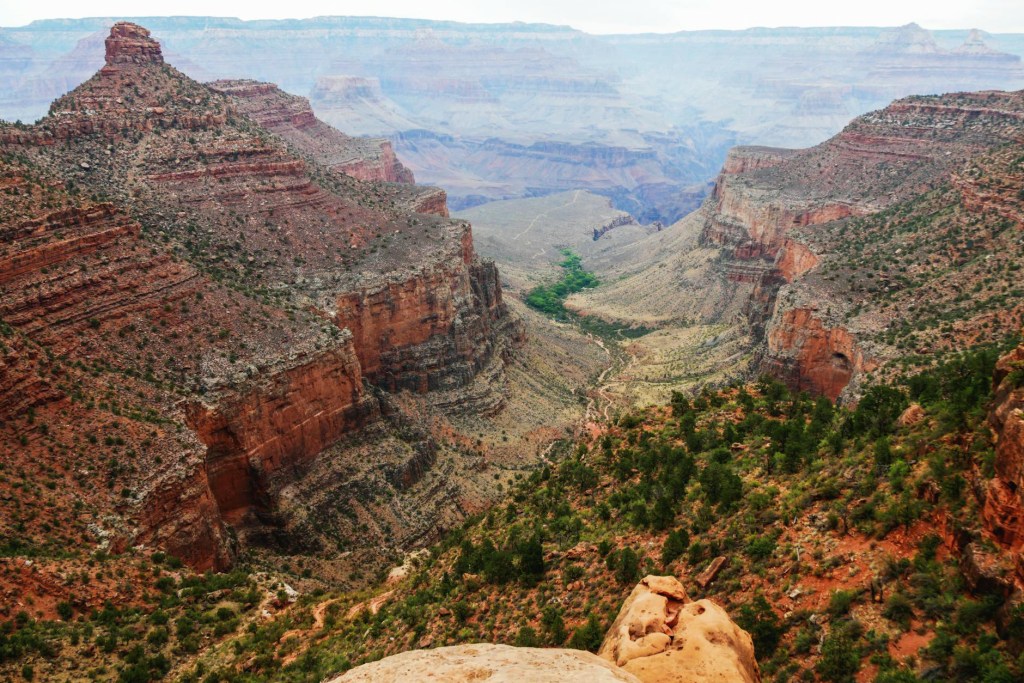
I was spiraling about a problem that felt enormous when I stood at the edge of the Grand Canyon.
Not metaphorically. Literally. I was stressed about something that had consumed my thoughts for weeks. Something that felt urgent, massive, insurmountable.
Then I looked down.
A mile down. Into a canyon carved over six million years. Into layers of rock that told the story of 1.8 billion years of Earth’s history.
And my problem—the thing that had been taking up every bit of my mental space—suddenly felt… small.
Not unimportant. Just properly sized.
From that height, with that perspective, I could see: I’d been operating at ground level where everything feels huge. Where every detail looms large. Where perspective is impossible because you’re too close to see anything but the immediate.
But elevation changes everything.
When you gain height—physically, mentally, emotionally—the problems that felt overwhelming shrink to their actual size. The patterns that were invisible become clear. The path forward that was obscured reveals itself.
I needed height. Not just that day at the canyon. Always. Regularly. Perspective isn’t a one-time thing. It’s a practice.
And I’d been living my entire life at ground level, wondering why everything felt so hard.
The Problem With Ground-Level Thinking
At ground level, everything is immediate. Urgent. Enormous. Right in your face.
You can’t see patterns. You’re too close. One tree blocks your view of the forest. One bad day feels like your whole life. One setback feels like total failure.
You can’t see options. The path directly in front of you is the only path you can see. Alternatives are invisible. Solutions are hidden. You feel stuck because from ground level, you are stuck.
Everything feels equally important. With no perspective, you can’t distinguish between what matters and what doesn’t. The urgent drowns out the important. The trivial consumes the same energy as the significant.
You’re reactive, not responsive. At ground level, you’re just dealing with whatever’s immediately in front of you. No space to think. No room to choose. Just reacting. Constantly.
You lose context. This moment feels like everything because you can’t see it in the larger arc of your life. This problem feels permanent because you can’t see that everything is temporary.
You feel alone. You can’t see that everyone else is struggling with their own ground-level problems. You think you’re the only one. The isolation compounds the difficulty.
I’d been living there. At ground level. For years. And it was suffocating.
The View From the Edge
Standing at the edge of the Grand Canyon, I looked down into a mile of vertical space.
The Colorado River, from that height, looked like a thin ribbon. Almost delicate. Beautiful.
But I knew—I’d read the signs—that river carved this entire canyon. Over millions of years. Steadily. Patiently. Relentlessly.
From ground level, the river is just water flowing. Unremarkable. Small.
From the rim, you can see what it created. The massive, impossible, breathtaking result of slow, steady persistence over time.
That’s when it hit me: I’ve been judging my efforts from ground level. Where the daily work looks small. Where progress is invisible. Where it feels like nothing is happening.
But from height, you can see: small, consistent effort over time creates the Grand Canyon. Creates the impossible. Creates what seems like it could never be.
I needed to stop evaluating my life from ground level and start checking from height.
From ground level: I’m not making progress fast enough.
From the rim: Slow progress over time creates massive transformation.
From ground level: This setback is devastating.
From the rim: This is one small moment in a much larger story.
From ground level: I should be further along.
From the rim: I’m exactly where years of choices have led me. The path makes sense from here.
From ground level: Everything is urgent.
From the rim: Almost nothing is actually urgent. Most things can wait.
The elevation didn’t change my problems. It changed how I saw them. Which changed everything.
The Climb That Changes Perspective
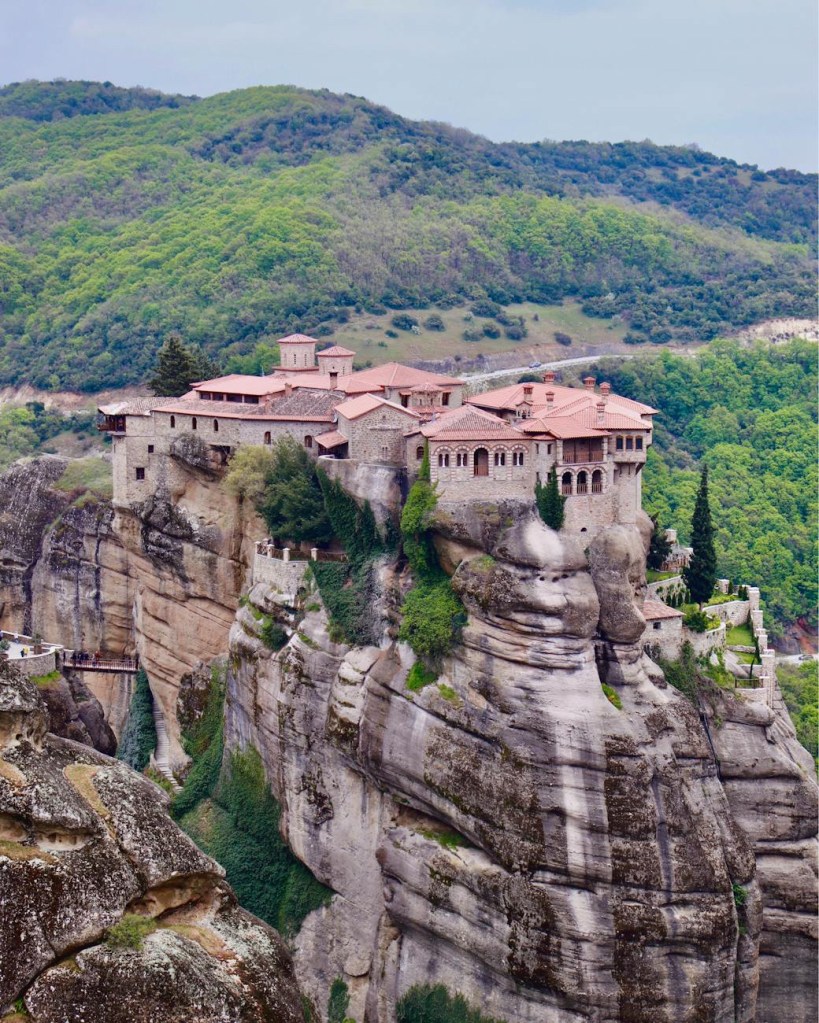
This past October, I was in Meteora, Greece. Staring up at massive rock monoliths—natural sandstone pillars rising over 1,000 feet from the valley floor.
And perched impossibly on top of these rocks: monasteries. Built in the 14th century. By monks who hauled stones and supplies up sheer cliffs using ropes and pulleys and sheer determination.
To visit them, you climb. Hundreds of stone steps carved into the rock face. Steep. Narrow. Ancient.
At the base, looking up, the climb looked impossible. The height was intimidating. The effort required seemed enormous.
But I started climbing anyway. One step at a time. No choice but to keep going.
First hundred steps: My legs burned. I questioned why I was doing this. Thought about turning back. The monastery still looked impossibly far.
Two hundred steps: Breathing hard. Sweating. But I’d gained some height. I looked back at the valley below. Already, things looked different. Smaller. The cars in the parking lot like toys.
Three hundred steps: Still climbing. Still hard. But the perspective was shifting noticeably now. I could see patterns in the landscape I couldn’t see from below. The way the rocks related to each other. The layout of the valley.
Four hundred steps: Almost there. The monastery visible above. And when I looked down: the entire valley spread out below me. The town looked tiny. The problems that felt heavy at ground level felt… lighter. Properly sized.
When I finally reached the monastery and stepped onto the terrace, the view took my breath away.
The valley stretched in every direction. Mountains layered into the distance. The vastness of the landscape. The sense of scale.
And standing there, I realized: The climb itself was the teacher.
Not just the destination. The climb. The gradual gain of elevation. The way perspective shifted with each step. The way problems that felt enormous at ground level became smaller as I climbed higher.
You can’t rush the climb. You take it one step at a time. Each step gains you a little height. A little perspective. You don’t get the view without the climb.
The climb is uncomfortable. Your legs burn. Your lungs work hard. You question whether it’s worth it. But the discomfort is part of gaining elevation. There’s no comfortable way to gain height.
The view is worth the climb. Every single time. Even when the climb is hard. Even when you want to quit. The perspective from height is always worth the effort.
You have to climb regularly. You can’t climb once and keep the perspective forever. You drift back to ground level. You have to keep climbing. Keep gaining height. Over and over.
This became my metaphor for life: I need to climb regularly. To gain height. To see from above. To remember what matters and what doesn’t.
What Height Reveals
Your problems are smaller than you think. From ground level, they loom large. From height, you can see: they’re manageable. They’re temporary. They’re not as big as they feel.
Standing on that monastery terrace, looking out over the valley, the thing I’d been stressed about felt… silly. Not unimportant. Just not worth the mental energy I’d been giving it.
The patterns become visible. From ground level, you see individual moments. From height, you see the pattern. The way this problem is connected to that one. The way your current struggle is part of a larger cycle you’ve been in before.
At the Grand Canyon, I could see the layers of rock. Each layer telling part of the story. From the rim, the pattern was clear: everything happens in layers. In time. In sequence. You can’t rush geology. You can’t rush growth.
The path forward becomes clear. From ground level, you can only see what’s immediately in front of you. From height, you can see multiple paths. Options that were invisible from below become obvious from above.
In Meteora, from the monastery, I could see the entire network of trails through the valley. From ground level, I’d only been able to see the one trail I was on. From height: multiple paths, all leading somewhere. I had options I didn’t know existed.
What matters vs. what’s urgent becomes distinguishable. At ground level, everything feels equally urgent. From height, you can see: some things matter deeply. Some things are just noise. The elevation helps you distinguish between them.
Looking down from the canyon rim, I could see: the river matters. The daily fluctuations in water level? Not so much. The long-term direction matters. The short-term turbulence? Less important than it seems.
You’re part of something larger. From ground level, you feel isolated. Alone in your struggle. From height, you can see: everyone is on their own journey. Everyone has their own path. You’re not alone—you’re part of a larger landscape of human experience.
In Greece, from those monastery terraces, I could see other people making their own climbs. Other tiny figures ascending other rock faces. All of us seeking height. Seeking perspective. Seeking to see clearly. I wasn’t alone in needing this.
The Practice of Gaining Height
The daily zoom-out. Every evening, I practice this: mentally step back from my day. Imagine I’m at the canyon rim, looking down at my day from height. From that perspective: what mattered? What was just noise? What do I want to remember?
This five-minute practice changes everything. It prevents me from staying stuck at ground level. It forces perspective daily.
The future-self letter. Once a month, I write from my 80-year-old self to my current self. From that vantage point—decades in the future—what matters about this moment? What advice would that wiser, higher-perspective version give me?
This creates elevation through time. The problems that feel enormous now? My 80-year-old self has perspective on them. And she’s usually gentler, wiser, less stressed than current me.
The deathbed perspective. When I’m really stuck, I imagine: I’m on my deathbed, looking back at my life. Will I remember this problem? Will I care about this stress? Will this matter at all?
Morbid? Maybe. Effective? Absolutely. Very few things survive the deathbed perspective test. Most of what we stress about is revealed as trivial from that height.
The actual climbing. I try to physically gain height regularly. Hike to a viewpoint. Climb stairs to a rooftop. Visit a tall building’s observation deck. Actually look down from actual height.
There’s something about physical elevation that creates mental elevation. The body teaches the mind. The literal climb reminds me to make the metaphorical one.
The life-path mapping. Every six months, I draw my life path as if I’m looking down at it from above. I can see the twists and turns that made sense in hindsight. The detours that weren’t failures—they were the path. From height, the journey makes sense in ways it doesn’t from ground level.
The pattern recognition. I keep a journal of recurring patterns. When I notice I’m in a familiar struggle, I imagine zooming out to see: Oh, I’ve been here before. I know how this goes. I know how to navigate this. The pattern visible from height helps me navigate from ground level.
When I Forget to Climb
I forget sometimes. Of course I do. I get sucked back into ground-level thinking.
The daily urgencies consume me. The problems loom large again. The perspective disappears. I’m back in the weeds, grinding, stressed, unable to see clearly.
The signs I’ve lost perspective:
- Everything feels equally urgent
- I can’t see options or solutions
- I feel stuck and overwhelmed
- Small problems feel catastrophic
- I’ve lost sense of what actually matters
- I’m purely reactive, no space to think
- I feel isolated in my struggle
When I notice these signs, I know: I need to climb. I need height. I need perspective.
Sometimes that’s a literal hike to a high place. Sometimes it’s a mental exercise—the zoom-out practice, the future-self letter, the deathbed perspective.
But I need to do something. Because ground-level thinking, when you stay there too long, becomes quicksand. The more you struggle, the deeper you sink.
Height is the antidote. Always.
The View I Keep Returning To
I think about the Grand Canyon often. That mile of vertical space. That massive scar in the earth carved by patient water over impossible time.
From the rim, you can see: nothing is permanent. Everything changes. What seems solid (rock) can be carved away. What seems small (water) can create the impossible.
And you can see your life in that context: Your problems are not permanent. Your struggles are carving something. What seems impossible might just require time and persistence.
I think about those monasteries in Meteora. Perched impossibly high. Built by people who understood: height is sacred. Perspective is holy. You climb to see clearly.
Those monks chose the hardest possible location. Not despite the difficulty of the climb—because of it. The climb was part of the practice. The elevation was the point.
They knew: you can’t reach clarity without climbing. You can’t gain perspective from ground level. The effort to rise is inseparable from the wisdom you gain at height.
Both places taught me the same lesson: When you’re stuck, overwhelmed, lost in the details, consumed by problems that feel enormous—climb.
Gain height. Literally if possible. Metaphorically always.
From height, everything looks different. Problems shrink to proper size. Patterns emerge. Paths become visible. What matters separates from what doesn’t.
The climb might be uncomfortable. The climb might be hard. The climb is always worth it.
Because the view from height changes everything.
Your Practice This Week
The evening zoom-out. Tonight, before bed, mentally step back from your day. Imagine you’re looking down at it from above—from the canyon rim, from the monastery terrace. From that height: what mattered today? What was noise? What do you want to remember?
The problem inventory. Write down what’s stressing you right now. All of it. Then ask: If I were looking at this from 10,000 feet up, how would it look? From five years in the future? From my deathbed? Let perspective shrink what needs shrinking.
The actual climb. This week, physically gain height. Hike to a viewpoint. Climb to a rooftop. Visit a high floor of a building. Stand somewhere high and look down. Notice: what changes when you gain physical elevation?
The pattern recognition. Look back at the last five years. What patterns can you see from this distance that you couldn’t see while you were in it? What does the pattern tell you about where you are now?
The future-self letter. Write a letter from your 80-year-old self to your current self. What does that wise, high-perspective version of you want you to know about this moment? What matters? What doesn’t? What advice does she have?
The options mapping. Take one problem that feels like it has no solution. Imagine you’re looking down at it from height. From that perspective, can you see options that are invisible from ground level? Write down every possibility, even the ones that seem impossible.
The daily perspective check. Set a reminder for mid-day. When it goes off, pause. Take three breaths. Mentally step back and up. Look at your day from height. Adjust course if needed. Return to what matters.
The Elevation That Saves You
I can’t promise that gaining perspective will solve all your problems.
But I can promise: it will change how you see them. And how you see them changes everything.
The problem that’s consuming you right now? It’s smaller from height.
The path that’s unclear from ground level? It’s visible from elevation.
The pattern you can’t see when you’re in it? It’s obvious when you zoom out.
The stress that feels permanent? It’s temporary when you see the larger arc.
Standing at the edge of the Grand Canyon, looking down at six million years of patient transformation, I finally understood: I’d been taking myself too seriously. My timeline too seriously. My problems too seriously.
Not because they don’t matter. Because from height, I could see: they matter less than I thought. And I’m more capable of handling them than I believed.
Climbing those stone steps in Meteora, gaining elevation with each step, I learned: the climb itself is the teacher. The effort to rise creates the capacity to see clearly.
You can’t rush the climb. But you can commit to climbing. Regularly. Consistently. Every time you notice you’ve drifted back to ground level.
The height is always available. The perspective is always there. You just have to make the effort to climb.
And the view—the clarity, the peace, the proper sizing of problems, the visibility of options—the view is always worth the climb.
The Grand Canyon waited six million years to reveal its depths. The monasteries have been offering perspective for 700 years.
They’re not going anywhere. Height is patient. It’s always there when you’re ready to climb.
Your problems haven’t shrunk. You’ve just gained the elevation to see them clearly.
And from that height, everything changes.
What problem feels enormous at ground level right now? What would it look like from 10,000 feet? What changes if you zoom out?

 Platnumkitty
Leave a comment