Part 4 of the Cosmic Clarity-Lessons From the Wild Series
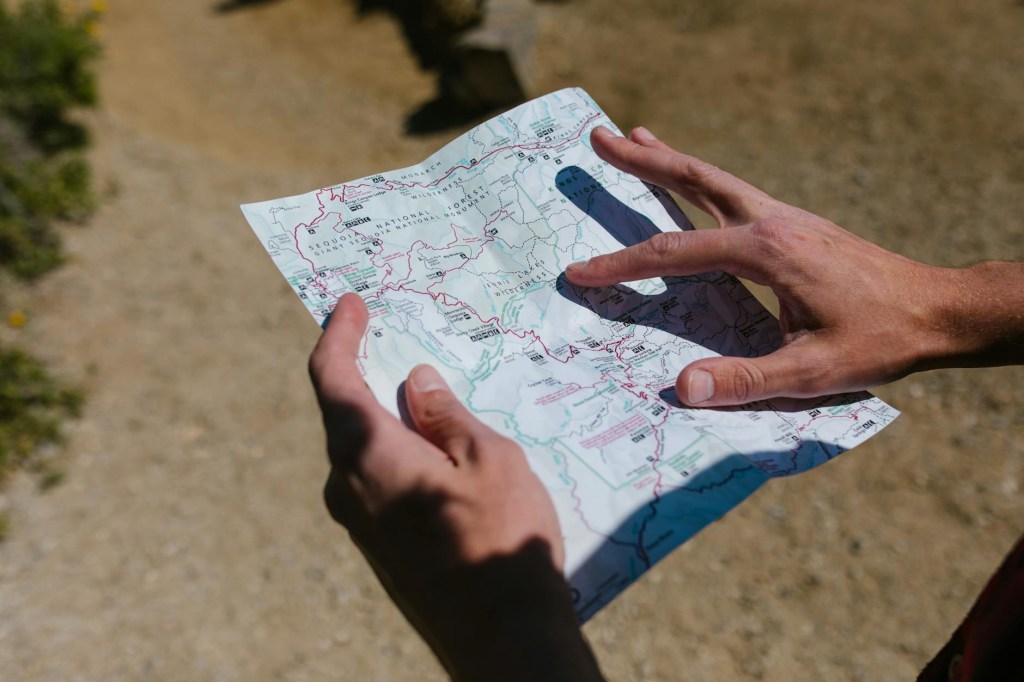
I was hopelessly lost in the desert with my college friends when I realized: this is the most present I’ve been in months.
We were supposed to be at my friend’s vacation house near Joshua Tree. Should have been a simple drive. Straight shot. Easy navigation.
But somewhere along the way, we took a wrong turn. And didn’t notice. For hours.
By the time we realized we were completely off course, we were deep in the desert. Miles from where we should have been. No familiar landmarks.
My friends were panicking. Checking the map frantically. Arguing about which way to go. Stress levels rising.
And me? I felt… alive.
Not because being lost was fun (it wasn’t). But because for the first time in months, I had no choice but to be completely present.
No plan to follow. No schedule to keep. No certainty about what came next. Just: here, now, figuring it out.
We had to actually pay attention. To road signs. To the position of the sun. To our instincts. To each other. To the landscape.
We couldn’t zone out. Couldn’t multitask. Couldn’t operate on autopilot.
We were lost. And being lost demanded presence.
Eventually, we found our way. Hours late. Sunburned. Exhausted. But something had shifted.
That accidental getting-lost taught me more than the entire planned spring break trip. Because being lost—really lost—strips away the illusion of control and forces you into the raw reality of not knowing.
And sometimes, not knowing is exactly what you need.
The Tyranny of Always Knowing Where You’re Going
We’ve made “lost” the enemy.
We have GPS on our phones. Maps that update in real-time. Turn-by-turn directions. The ability to know exactly where we are and exactly how to get where we’re going at all times.
Being lost has become optional. Avoidable. A failure of preparation.
And we’ve lost something essential in the process.
Being lost used to be normal. Expected. Part of travel, part of exploration, part of being human.
You’d get turned around. You’d ask for directions. You’d figure it out. You’d discover things you weren’t looking for because you went the wrong way.
Now? We’re never lost. We’re always oriented. Always certain. Always on the marked trail.
And it’s made us worse at everything that matters:
Worse at presence. We don’t have to pay attention anymore. The GPS tells us where to go. We can zone out completely and still arrive.
Worse at intuition. We don’t have to trust our gut. The app has the answer. Our internal navigation system atrophies from disuse.
Worse at handling uncertainty. We’re so used to knowing that not-knowing feels intolerable. We’ve lost our capacity to be comfortable with ambiguity.
Worse at discovery. When you follow the optimal route every time, you never stumble onto the hidden gem. The scenic detour. The unexpected beautiful thing.
Worse at problem-solving. When technology solves navigation for us, we don’t develop the skills of figuring it out ourselves.
We’ve optimized for efficiency. And lost the wisdom that comes from being lost.
What Being Lost Actually Taught Me
Hour one of being lost in the desert: Panic. Frustration. Whose fault was this? Why weren’t we paying attention? How could we be so stupid?
My friends were arguing. I was stress-eating snacks from the back seat.
Hour two: The panic settled into something else. We had to accept: we were lost. We didn’t know where we were. And we had to figure it out without technology saving us.
So we started actually looking. At road signs. At the landscape. At where the sun was in the sky (west—it was afternoon). At maps that didn’t require cell service.
We started talking to each other. Actually collaborating instead of just blaming.
And I noticed: my senses were sharper. My attention was fuller. I was completely present in a way I hadn’t been in months.
Hour three: We’d found a small road that seemed to be heading in the right direction. Not certain. Just… a hunch. Based on intuition and educated guessing and hope.
And as we drove, I looked out the window. Really looked.
The desert was stunning. Rock formations I’d never have seen on the main road. Light hitting the Joshua trees in ways that made them look like they were glowing. Vastness that took my breath away.
If we hadn’t gotten lost, I’d have missed all of this.
Hour four: We found our way back. Eventually. Exhausted and late and sunburned but… different.
The trip we’d meticulously planned? It was fine. Nice. Forgettable.
The hours we spent lost? Unforgettable. Bonding. The story we still tell years later.
The getting lost was the only part of that trip that mattered.
The Metaphor I Couldn’t Ignore
That literal getting-lost taught me something about the metaphorical kind.
I’d been living my life with GPS on constant. Every move planned. Every decision mapped out. Every step of my future charted.
Where I should be by 25. What career path I should follow. What milestones I should hit and when. The “right” route. The optimal path. The way I was “supposed” to go.
And I’d been following it. Dutifully. Anxiously. Never deviating. Terrified of getting lost.
But living with that much certainty was making me miserable.
I wasn’t paying attention to my actual life. I was just following the directions. Heading toward waypoints I’d set years ago without questioning if they were still where I wanted to go.
I wasn’t present. I was always mentally at the next destination, the next milestone, the next “should.”
I wasn’t trusting my intuition. I was trusting the plan. Even when my gut said “this doesn’t feel right,” I kept following the route.
I wasn’t discovering anything unexpected. I was on the marked trail. The efficient path. Missing everything off the planned route.
And I wasn’t actually living. I was navigating.
That day in the desert, being physically lost, showed me: I needed to get lost on purpose. In my life. In my path. In my certainty about where I was going.
Because the getting lost—the not knowing—that’s where real life happens.
The Difference Between Lost and Free
There’s a moment when being lost shifts.
At first, it’s scary. Disorienting. You want your bearings. You want to know where you are. You want certainty.
But if you stay with it—if you don’t immediately panic and scramble for the GPS—something shifts.
You stop feeling lost. You start feeling free.
Free from the tyranny of the plan. Free from the pressure of the route. Free from the anxiety of being on schedule.
You’re here. Wherever here is. And you’re figuring it out. And that’s… exhilarating.
Lost feels like: Panic. Disorientation. Failure. Being off-track. Doing it wrong. Need to fix this immediately.
Free feels like: Presence. Possibility. Adventure. Being open. Discovering. Trusting the process.
Same situation. Different relationship to it.
When I stopped seeing our desert detour as a problem to solve and started seeing it as an adventure to experience, everything changed.
The stress dissolved. The presence increased. The experience became memorable instead of just stressful.
I started applying this to my life:
When I didn’t know what career move to make: Instead of panicking about being lost, I got curious. What could I discover in this not-knowing?
When a relationship ended and I had no idea what I wanted next: Instead of scrambling for certainty, I stayed in the ambiguity. Let myself be free of knowing.
When my five-year plan fell apart: Instead of desperately creating a new plan, I practiced being planless. Being open. Being lost on purpose.
And every time, the same pattern: The fear of being lost transformed into the freedom of not knowing.
Getting Lost on Purpose
In recent years, I started doing it intentionally.
The wandering walk. Every week, I take a walk with no destination. I just walk. Turn when something looks interesting. Follow curiosity. Get deliberately “lost” in my own neighborhood.
I’ve discovered parks I didn’t know existed. Streets I’d never noticed. Coffee shops I’d walked past a hundred times. Little pockets of beauty hiding in plain sight.
All because I stopped optimizing the route and started wandering.
The no-GPS experiment. For a month, I didn’t use GPS anywhere within my city. If I didn’t know how to get somewhere, I had to figure it out. Ask people. Use intuition. Pay attention.
I got turned around multiple times. Took wrong turns. Ended up in unexpected places.
And I learned my city in a way GPS never taught me. I built mental maps. Developed spatial awareness. Trusted my sense of direction.
The plan-free day. Once a month, I take a day with zero plans. No schedule. No agenda. No list of things to accomplish.
I wake up and ask: What do I want to do right now? Then I do that. Then I ask again.
These days are the most restorative, creative, alive days I have. Because there’s no route to follow. Just presence and response.
The career detour. When I was supposed to be climbing the career ladder in one field, I took a “detour” that everyone said was getting lost.
I spent a year doing something completely unrelated to my plan. Something that “didn’t make sense.” Something off the marked path.
That detour became the most formative year of my professional life. Taught me skills I use constantly. Opened doors I didn’t know existed. Led me to work I actually love instead of work I thought I should do.
What You Find When You Stop Following the Map
You find what you’re actually interested in. When you’re following the route, you only see what’s on the route. When you wander, you discover what genuinely catches your attention. What you’re drawn to without “should” driving you.
You find your intuition. When you can’t rely on external directions, you have to rely on internal knowing. That muscle gets strong. You learn to trust yourself.
You find presence. Can’t zone out when you don’t know where you’re going. You have to pay attention. Be here. Notice. That presence changes everything.
You find resilience. Being lost and figuring it out builds confidence. You prove to yourself: I can handle not knowing. I can navigate uncertainty. I’m more capable than I thought.
You find the unexpected. The best things in my life have come from detours. From getting lost. From going off-plan. The things I never would have found if I’d stayed on the marked trail.
You find what was already there. Sometimes getting lost geographically or metaphorically leads you right back to where you started. But you see it differently. With new eyes. You come home to yourself in a new way.
That’s what happened in the desert. We eventually got to the vacation house. Where we were “supposed” to be all along.
But we arrived different. The getting lost changed us. And when we got “home,” home felt different because we’d been transformed by the journey.
The Practice of Purposeful Lostness
The weekly wander. Choose one activity per week where you deliberately don’t optimize. Take the long way. Don’t use GPS. Wander instead of marching. Let yourself be inefficient.
The no-plan experiment. Block out one morning or afternoon. No agenda. No list. No plan. Just be and respond. See what emerges when you’re not following a script.
The wrong turn taken. When you have an impulse to turn down an unfamiliar street, take a different route, explore something off your plan—follow it. See where it leads. Practice saying yes to detours.
The GPS-free challenge. Pick a day or week. No GPS for non-essential trips. Figure out how to get places using maps, asking people, intuition, trial and error. Build your internal navigation.
The five-year-plan burning. If you have a rigid life plan, question it. What if you didn’t follow it? What if you got “lost” from that path? What might you discover? Give yourself permission to deviate.
The comfort zone violation. Do something that feels like getting lost in terms of your identity. If you’re always the planned person, be spontaneous. If you’re always the adventurous one, make a plan. Get lost from your usual self.
The trust-the-detour practice. When life takes you off your planned route—job loss, relationship ending, plans falling apart—practice seeing it as a detour, not a disaster. Ask: What might I discover here that I wouldn’t have found on the marked path?
Your Practice This Week
The literal getting lost. This weekend, go somewhere without GPS. A neighborhood you don’t know well. A trail system. Somewhere you can safely get turned around. Practice navigating without technology. Notice what happens.
The wandering walk. Take one walk this week with no destination. Just walk. Turn when something looks interesting. Follow curiosity. Get deliberately lost in familiar territory. What do you discover?
The plan-free morning. Choose one morning. No schedule. No to-do list. No agenda. Wake up and respond to what you actually want moment-to-moment. Notice how it feels to be unscheduled.
The detour inventory. List three times you got “lost” in your life—literally or metaphorically. What did you discover? What did being off-path teach you? What did you find that you wouldn’t have found on the marked route?
The current lostness. Where in your life do you feel lost right now? Instead of panicking about it, get curious. What if this not-knowing is exactly where you need to be? What might this lostness be teaching you?
The one deviation. Where in your life are you rigidly following a plan? This week, deviate slightly. Take a small detour. Do one thing that’s off your marked path. See what happens.
The GPS audit. Notice how often you use GPS this week. Even for places you know how to get to. What would change if you navigated half those trips without it? Try it once.
The Freedom on the Other Side of Lost
I can’t promise that getting lost will always lead somewhere good.
But I can promise: it will lead somewhere you wouldn’t have gotten by staying on the marked path.
The desert detour with my friends? We were hours late. Sunburned. Exhausted.
We also saw landscape we’d never have seen. Had conversations we wouldn’t have had. Bonded in ways we couldn’t have if everything had gone according to plan.
The getting lost was the most valuable part of the trip. The part that mattered. The part we still talk about.
The same is true for metaphorical getting lost.
The career detour that everyone said was a mistake? Led to the work I was meant to do.
The relationship ending that felt like losing my way? Led me home to myself.
The year I spent with no plan? The most formative year of my life.
The times I’ve been most lost have been the times I’ve found the most important things.
Not despite being lost. Because of it.
Because when you don’t know where you’re going, you have to pay attention to where you are.
When you can’t follow the map, you have to trust your compass.
When you’re off the marked trail, you discover what the marked trail was hiding.
That day in the desert, hopelessly lost, I was more present than I’d been in months.
And that presence—that forced attention, that necessary trust, that demanded navigation without certainty—that’s what I’ve been seeking ever since.
Not by avoiding being lost. By getting lost on purpose. Regularly. Intentionally.
Choosing the unmarked trail. Taking the turn that’s not on the GPS. Deviating from the plan.
Not recklessly. But deliberately. With eyes open. With presence. With trust that being lost is sometimes exactly where you need to be.
The marked path will always be there. The GPS is always available. Certainty is an option.
But so is getting lost. And what you find when you’re willing to not know where you’re going might be exactly what you’ve been looking for all along.
The vacation house was nice. We eventually got there.
But the hours we spent lost in the desert? That’s what changed us. That’s what we remember. That’s what mattered.
Maybe being lost isn’t the problem. Maybe never getting lost is.
Where are you refusing to get lost? What are you missing by always knowing where you’re going? What might you discover if you took a wrong turn on purpose?


 Platnumkitty
Leave a comment