Post 5 of the Explore Sedona Series
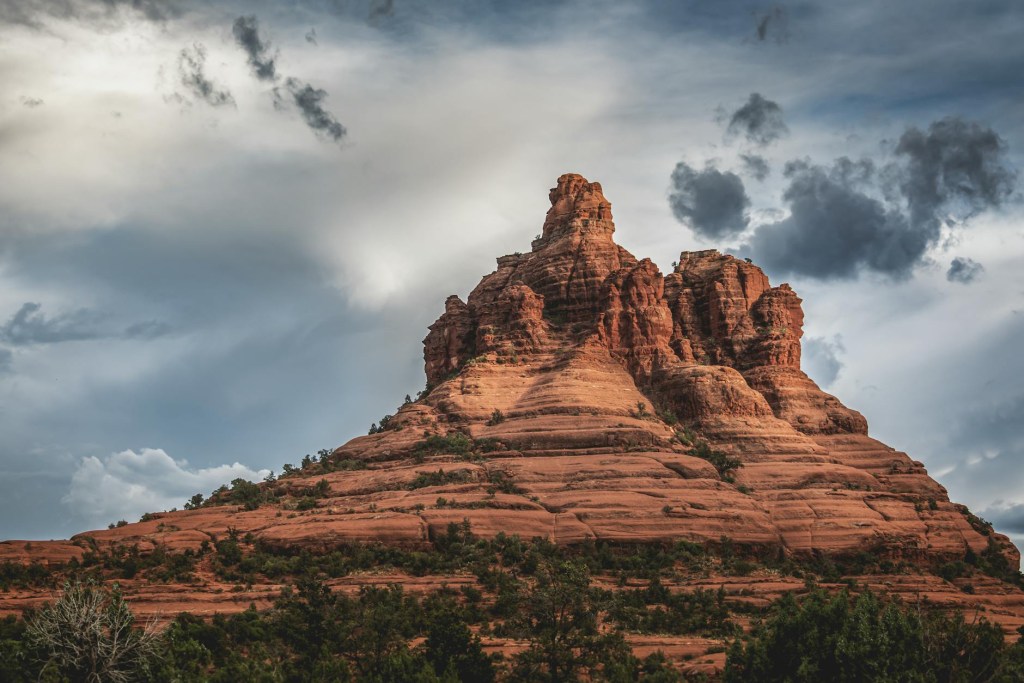
I consider myself a practical person. I like evidence. I like explanations. I like things that make logical sense.
So when I tell you that my cell phone started taking photos rapid-fire all by itself while sitting on Bell Rock in Sedona, with no one touching it and no prompts on the screen—well, I still don’t have a logical explanation.
What I have is an experience. And it wasn’t just me. The humming in the air. The twist of the juniper trees. That strange, electric stillness that makes the hair on your arms stand up. Something was happening. Something I couldn’t explain but could definitely feel.
That’s the thing about vortexes. They don’t ask you to believe in them. They just ask you to show up.
If you’re curious about these mysterious energy sites—what they are, where to find them, and how to actually experience them—you’re in the right place. Let’s dive in.
What Even IS a Vortex? (The Simple Explanation)
Let’s start with the basics. The word “vortex” literally means “a whirling mass of energy.” Think of a tornado, but instead of wind, it’s earth energy spinning in a concentrated area .
The term was popularized in the 1980s by a psychic named Page Bryant, who identified specific locations in Sedona where the energy felt particularly strong . She called them “vortexes,” and the name stuck.
Here’s what I love about vortexes: you don’t need to be psychic to feel them. You don’t need special training or a specific belief system. You just need to be present.
Scientifically speaking, the red rocks of Sedona are made of Schnebly Hill sandstone, a form of hematite—yes, iron oxide. That’s what gives them that stunning crimson color . Iron is conductive. Some theories suggest the piezoelectric charge from the earth’s movement, combined with the iron in the rocks, might create a magnetic or energetic field that sensitive people can perceive .
Spiritually speaking, vortexes are considered places where the veil between worlds is thin, where the earth’s energy rises to the surface, and where healing, clarity, and transformation become more accessible .
Both explanations can be true at once. The beauty of vortexes is that they don’t require you to choose.
Signs You Might Be in a Vortex
How do you know if you’ve found one? While every site has its own personality, there are some common phenomena people report:
Twisted Tree Trunks
This is the most visible sign. Juniper and piñon pine trees growing in vortex areas often have trunks that spiral or twist dramatically . Some say the trees are literally shaped by the spinning energy. Others say it’s a result of wind and growing conditions. Either way, when you see a tree trunk corkscrewing toward the sky, you’ll know you’re in a special place.
A Palpable Feeling of Energy
This is harder to describe but unmistakable when you feel it. Some people describe it as a tingling on their skin. Others feel a buzzing or humming in the air. For me, it felt like the atmosphere had thickened slightly—like the silence itself had weight.
Emotional Shifts
Vortexes are known to amplify whatever you’re feeling. If you’re carrying grief, you might find yourself crying without knowing why. If you’re holding onto anger, it might bubble to the surface. If you’re seeking clarity, answers might suddenly feel clear .
Electronics Acting Strangely
This is a big one—and it happened to me. Dead batteries suddenly working. Phones dying inexplicably. Cameras malfunctioning. And in my case, a cell phone that decided to take about fifty photos in ten seconds without any input from me.
I wasn’t scared. I was fascinated. It felt like the energy was saying, “Hey. Pay attention. Something real is happening here.”
The Four Main Vortexes of Sedona
Sedona is home to several recognized vortex sites, but four are considered the major players. Each has its own unique energy signature:
Bell Rock (The “Active” Vortex)
Location: Just south of the “Y” intersection of Highway 179 and 89A.
Energy: Masculine, outward, energizing.
Bell Rock is often the first vortex visitors encounter. It’s massive, visible from the road, and incredibly accessible . The energy here is considered “active” or “electric”—it moves outward, making it great for energizing your body and spirit .
My experience: This is where my phone went haywire. It’s also where I felt the most physical sensation—that buzzing, humming quality in the air. The rocks here invite exploration, and even a short walk will put you in close contact with the energy.
Best for: Getting energized, physical activity, beginner vortex explorers.
Airport Mesa (The “Balanced” Vortex)
Location: Off Airport Road, a short drive from Uptown Sedona.
Energy: Balanced, view-oriented, clarifying.
Airport Mesa sits on a plateau with stunning 360-degree views of Sedona . The energy here is considered “balanced” or “masculine/feminine”—a blend of upward and outward movement . The vortex is located on the southwest side of the mesa, and there’s a short, easy trail that loops around the perimeter .
Best for: Clarity, decision-making, sunset viewing (it’s a prime spot).
Cathedral Rock (The “Receptive” Vortex)
Location: Just west of the “Y” on Highway 89A.
Energy: Feminine, receptive, inward.
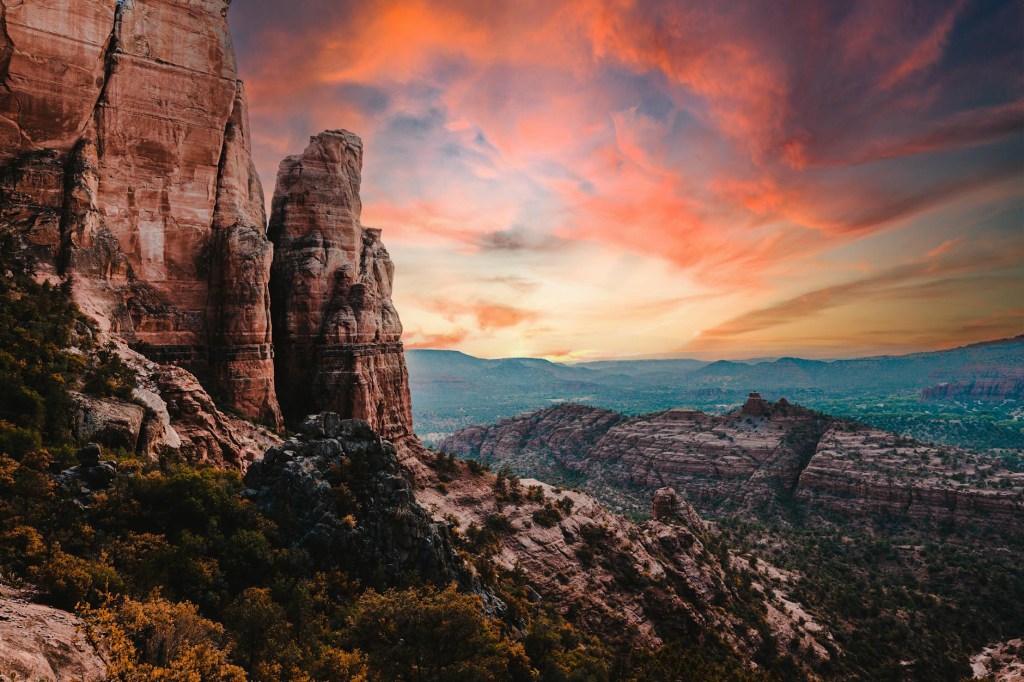
Cathedral Rock is arguably the most photographed formation in Sedona—and for good reason. It’s majestic, cathedral-like (hence the name), and rises dramatically from the earth . The energy here is considered “receptive” or “feminine”—it draws you inward, making it ideal for meditation and introspection .
The trail to the saddle is short but steep, requiring some scrambling over rocks. It’s doable for most active people but requires focus.
Best for: Meditation, introspection, emotional healing.
Boynton Canyon (The “Balanced” Vortex)
Location: West Sedona, off Boynton Pass Road.
Energy: Balanced, nurturing, integrative.
Boynton Canyon is considered the most “balanced” of the vortexes, combining masculine and feminine energies . It’s also associated with the Enchantment Resort, but the trail is public and accessible . Many visitors report feeling a deep sense of peace and nurturing here—like the earth is holding space for them.
Best for: Integration, healing, long hikes in nature.
The Spiritual Significance (Without the Religion)
If you’re not religious but are spiritually curious, vortexes offer something unique: a chance to connect with something larger than yourself without dogma or doctrine.
Many visitors describe vortex experiences as:
· A sense of coming home. Like the land recognizes you, or you recognize it.
· Heightened intuition. Answers to questions you’ve been sitting with suddenly become clear.
· Emotional release. Crying, laughing, or feeling intense emotions without a clear trigger.
· A feeling of being “seen.” Not by a person, but by the place itself.
The vortex doesn’t give you these experiences. It creates conditions where you can have them yourself. Think of it less as a magic wand and more as a tuning fork—it helps you find your own frequency.
How to Experience a Vortex: Practical Exercises
Okay, so you’ve made it to Sedona. You’ve chosen your vortex. Now what? Here are some actionable ways to connect with the energy:
Exercise 1: The Silent Sit (15-30 minutes)
Find a spot that calls to you—a flat rock, a shaded area under a twisted tree, a place with a view. Sit down. Turn off your phone (or at least silence it). Close your eyes. Breathe.
Notice what you feel. Not what you think you should feel—what you actually feel. Tingling? Warmth? Nothing at all? All of it is valid. The goal isn’t to have an “experience.” The goal is to be present.
Exercise 2: The Hand-to-Rock Connection
Place your palms flat on a rock surface. Close your eyes. Some people feel warmth, pulsing, or a subtle vibration. Others feel nothing physically but notice an emotional shift. Spend 5-10 minutes just breathing and holding space for whatever arises.
Exercise 3: Journaling with Intention
Before you visit a vortex, sit with a question. It can be big (“What’s my purpose?”) or small (“Should I take that job?”). Bring your journal. After you’ve spent time in silence, write down whatever comes—even if it seems unrelated. Sometimes the answers arrive sideways.
Exercise 4: The Walking Meditation
Walk slowly through the vortex area. Pay attention to each step. Notice how the ground feels beneath your feet. When your mind wanders (it will), gently bring it back to the sensation of walking. This is especially powerful on Bell Rock, where the terrain varies.
Exercise 5: The Gratitude Offering
Many visitors leave small, biodegradable offerings—a pinch of tobacco, a flower, a silent word of thanks. This isn’t about “paying” the vortex. It’s about acknowledging that you’re a guest in a sacred space. Leave no trace, but leave gratitude.
Practical Tips for Vortex Visiting
When to Go:
· Early morning (sunrise) or late afternoon (golden hour) offer softer light, fewer crowds, and often more intense energy .
· Weekdays are less crowded than weekends.
· Spring and fall offer the most comfortable temperatures.
What to Bring:
· Water (hydration is physical AND energetic)
· A journal and pen
· A small cushion or mat if you plan to sit
· Layers (desert temperatures shift dramatically)
· Sunscreen and hat
· An open mind
Vortex Etiquette:
· Leave no trace. Pack out everything you bring in.
· Don’t remove rocks, crystals, or other natural elements.
· Be respectful of others’ experiences—some people are meditating, crying, or processing deeply.
· If you bring crystals to charge, ask permission (internally) before placing them.
My Bell Rock Story (The One with the Phone)
I’ve told this story a dozen times, and people always ask, “Were you scared?”
No. I wasn’t.
I was sitting on a low rock formation on Bell Rock, journaling, when I heard a clicking sound. I looked down. My phone, sitting on the rock next to me, was taking photos. Rapid fire. One after another after another. I wasn’t touching it. There was no debris on the screen. It just… went off.
By the time I picked it up, it had taken about fifty photos. Some were blurry shots of the sky. Some were close-ups of the rock. Some were just black.
I wish I could tell you I had a profound spiritual vision in that moment. Instead, I just sat there, phone in hand, laughing. Because what else could I do? Something inexplicable had happened. Something that didn’t fit into my logical, evidence-based worldview.
And that was the gift. The vortex didn’t give me answers. It gave me a question: “What if there’s more going on here than you understand?”
I’m still sitting with that question. And honestly? I hope I always am.
Planning Your Vortex Journey
Getting There:
· Fly into Phoenix Sky Harbor (PHX) and drive 2 hours north.
· Fly into Flagstaff (FLG) and drive 45 minutes south.
· Sedona is compact, and all major vortex sites are within 20-30 minutes of town.
Where to Stay:
· Uptown Sedona for walkability
· West Sedona for quieter vibes and closer access to Boynton Canyon
· Village of Oak Creek for proximity to Bell Rock
Resources:
· Sedona Visitor Center for maps and current conditions
· Local vortex tour guides if you want a structured experience
· Your own intuition (seriously, trust it)


 Platnumkitty
Leave a comment