Part 6 of the Cosmic Clarity-Lessons From the Wild Series
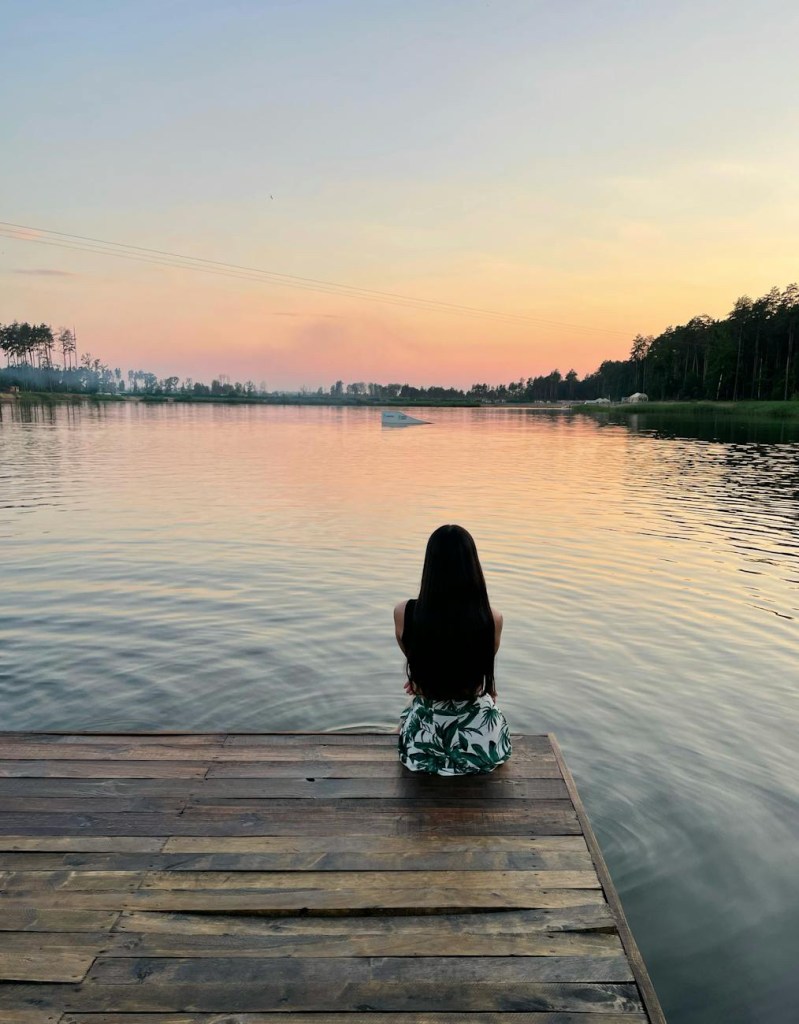
I was lying in a hammock doing absolutely nothing when my brain staged a full-scale rebellion.
It had been maybe seven minutes—seven minutes of just existing, just being, just hammock and breeze and the sound of leaves—when the thoughts started attacking:
You should be checking your email.
You’re wasting time.
Other people are being productive right now.
What are you even doing with your life?
This is lazy.
You should at least be meditating properly.
Or listening to a podcast.
Or planning something.
Anything but this.
My body was still, but my mind was sprinting on a treadmill of manufactured urgency.
And that’s when I realized: I’d forgotten how to do nothing. Actually, genuinely, completely nothing.
No consumption. No production. No optimization. No self-improvement. No purpose beyond just… being.
When did that become so hard? When did simply existing become something I needed to defend?
The Productivity Prison We Built Ourselves
Here’s what happened: somewhere along the way, we made productivity a moral virtue.
Busy became a badge of honor. Rest became something you had to earn. Doing nothing became laziness instead of being human.
We turned ourselves into machines that are supposed to be always on, always optimizing, always doing something that can be measured or monetized or at least justified.
And then we wondered why we’re all so exhausted.
I look at my life and see it everywhere: I watch TV while scrolling Instagram. I listen to podcasts while working out. I read books about productivity to optimize my morning routine to be more productive so I can… what? Do more? Be more? Optimize further?
Even my rest is productive. Meditation apps that track my streaks. Sleep optimization. Recovery metrics. I’ve turned doing nothing into yet another thing to accomplish.
We’re terrified of the gap. The space. The moment where nothing is happening.
Because if nothing is happening, what are we worth?
What Nothing Actually Is
Let me be clear about what I mean by doing nothing.
I don’t mean scrolling TikTok for three hours. That’s not nothing—that’s consumption.
I don’t mean taking a “rest day” where you catch up on emails. That’s not rest—that’s switching tasks.
I don’t mean watching Netflix to “decompress.” That’s not decompressing—that’s numbing.
Real nothing is:
- Sitting and looking at the sky
- Lying in grass and feeling the ground beneath you
- Standing at a window and watching rain
- Sitting with your coffee and doing absolutely nothing else
- Existing without input or output
No entertainment. No information. No productivity. No purpose.
Just you, being alive, occupying space, breathing.
When’s the last time you did that? Not for thirty seconds while your app loaded. For actual, sustained periods of time?
If you can’t remember, you’re not alone. Most of us can’t.
The Last Time I Did Real Nothing
It was in Greece. I was on a trip with a tight itinerary—ruins to see, beaches to explore, museums to visit. Every moment scheduled, every experience optimized.
But on day four, I was so exhausted from doing and seeing and experiencing that I just… stopped.
I found the hotel jacuzzi. And I sat in it. For three hours.
No phone (it died and I didn’t charge it). No book. No one to talk to. No goal beyond sitting in warm water and existing.
At first, my brain lost its mind. The same rebellion I described earlier but worse. So much worse. Every neuron screaming that I was wasting my limited time in Greece. That I should be out there, experiencing, collecting moments, making the most of it.
But I stayed. Partly because I was too tired to move. Partly because something in me knew I needed this more than I needed another walking tour.
And after about forty-five minutes, something shifted.
The mental noise quieted. My body settled. Time did this weird thing where it stopped feeling linear—there was no before or after, no should-be-doing, just the eternal present moment of warm water and cold air and steam rising.
I wasn’t meditating. I wasn’t trying to be present. I wasn’t attempting anything.
I was just there. Being. Nothing.
And it was the most restorative thing I’d done in years.
What Science Says About Nothing
Turns out, doing nothing isn’t lazy. It’s neurologically essential.
Your brain needs to wander. The Default Mode Network—the part of your brain that activates when you’re not focused on anything specific—is where creativity happens, where problems solve themselves, where insights emerge. But it only turns on when you stop inputting and outputting. When you do nothing.
Rest is not the same as sleep. Your body needs both. Sleep restores you physiologically. But awake-rest—true doing nothing—restores you psychologically. It’s when your nervous system actually downregulates. When stress hormones decrease. When your body remembers it’s not running from a predator.
Boredom is fertile ground. All those “shower thoughts” and “driving insights”? They happen because those are the few remaining moments we’re not consuming content. Your best ideas are waiting on the other side of boredom, but we never get there because we fill every gap with input.
Constant stimulation rewires your brain. The more we train our brains to expect constant novelty, the less we’re able to tolerate stillness. We’re literally making ourselves incapable of doing nothing through our habits.
Burnout isn’t solved by vacation. It’s solved by fundamentally changing your relationship with rest. You can’t compensate for 360 days of grinding with 5 days of forced relaxation. Your nervous system needs regular, consistent, real rest. Nothing-rest.
The Guilt Is the Point
The reason doing nothing feels so wrong is because we’ve been conditioned to feel that way.
Capitalism needs you to be productive. Social media needs you to be engaged. Consumer culture needs you to be buying or wanting or striving. Your worth—as we’ve been taught—is tied to your output.
So of course doing nothing feels like failure. It’s supposed to.
The system doesn’t benefit from you sitting in a hammock remembering you’re human. It benefits from you grinding, consuming, producing, repeat.
The guilt you feel when you do nothing? That’s not your intuition. That’s internalized capitalism.
Your intuition—your actual, deep-body wisdom—knows you need rest. Knows you’re not a machine. Knows that your value isn’t conditional on your productivity.
But we’ve been trained out of listening to that.
How I’m Relearning Nothing
It’s been harder than learning any skill I’ve acquired as an adult. Harder than learning a language or an instrument or how to rock climb.
Because there’s nothing to master. No metric to improve. No way to do it “right.”
But here’s what’s helped:
I scheduled it. I know, I know—scheduling doing nothing is absurd. But my brain needed permission. So I put “Nothing Time” on my calendar. One hour, twice a week. Non-negotiable. During that hour, I do nothing. My calendar says it’s allowed.
I started with five minutes. An hour of nothing was impossible at first. My brain couldn’t handle it. So I started with five minutes. Just sit. Just be. No phone, no book, no task. Five minutes. Then ten. Then twenty. Building the tolerance like a muscle.
I separated rest from numbing. I had to get honest about what actually restores me versus what just distracts me. Netflix doesn’t restore me—it numbs me. There’s a difference. Sitting outside doing nothing restores me. Even when it’s uncomfortable at first.
I made boring places sacred. Waiting rooms. Lines. Traffic. Instead of immediately grabbing my phone, I practice nothing. Just existing in the gap. Watching people. Feeling my breath. Being bored. It’s revolutionary.
I told people what I was doing. “I’m practicing doing nothing” sounds weird to say, but it helps. When friends ask what I did this weekend and I say “Sat on my porch for two hours doing nothing and it was amazing,” it normalizes it. It gives others permission too.
I paid attention to what emerged. After a few weeks of regular nothing-time, things started bubbling up. Creative ideas. Insights about relationships. Clarity about decisions I’d been agonizing over. The nothing wasn’t empty. It was full of things that had been waiting for space to surface.
The Nothing Practice Menu
Here are specific ways to practice nothing, from easiest to most challenging:
Level 1: Gateway Nothing (5-10 minutes)
- Sit with your morning coffee. Just coffee. No phone, no book, no podcast. Just you and coffee and whatever thoughts arrive.
- Stand at a window. Watch whatever’s happening outside. Don’t try to see anything specific. Just watch.
- Lie in bed before getting up. Give yourself five minutes between waking and doing. Just lie there. Feel your body. Notice your breath.
Level 2: Intentional Nothing (15-30 minutes)
- Sit outside with no agenda. No book, no music, no purpose. Pick a spot—porch, park bench, backyard—and just sit.
- Take a bath with nothing. No music, no podcast, no book. Just water and you.
- Find a comfortable spot and stare at a wall. Seriously. It’s harder than it sounds and weirdly meditative.
Level 3: Extended Nothing (1-3 hours)
- Hammock time. Lie in a hammock or on the ground and watch clouds or trees or sky. For an hour. Yes, really.
- The nothing walk. Walk with no destination, no podcast, no timeline. Just walk and notice. Stop when you want. Change direction for no reason.
- The beach sit. Go to a beach (or any natural place) and just sit. For hours. Watch the water. Do nothing else.
Level 4: Advanced Nothing (Half day to full day)
- The nothing Sunday. One Sunday a month, do absolutely nothing productive. No errands, no chores, no catching up. Just exist.
- The solo nothing retreat. Go somewhere alone for a full day. No phone, no books, no plans. Just you and nature and time.
- The sensory nothing. Spend extended time in near-total darkness or silence. Let your senses rest along with your mind.
What Nothing Taught Me
I’m enough without doing. This is the big one. The one that’s still teaching me. My worth isn’t conditional on my productivity. I’m valuable just by existing. Wild concept, apparently.
Boredom is a doorway, not a problem. Every creative breakthrough I’ve had recently came after extended boredom. The boredom is where the good stuff lives. You just have to be willing to pass through it instead of scrolling away from it.
Rest is not weakness. Rest is wisdom. Animals rest. Seasons rest. The earth rests. Why did I think I was exempt?
Doing nothing is doing something. It’s choosing yourself over the demands of productivity culture. It’s reclaiming your time, your attention, your nervous system. It’s radical resistance.
I don’t need to earn rest. I used to think rest was the reward for working hard enough. Now I understand: rest is a biological necessity. I don’t need to earn the right to be human.
The world doesn’t end when I stop. This was my biggest fear. That if I stopped, everything would fall apart. Turns out, everything keeps going. And I return to it more capable, more creative, more alive.
The Radical Resistance of Rest
In a world that profits from your exhaustion, rest is rebellion.
In a culture that measures your worth by your output, doing nothing is a revolutionary act.
In a society that demands constant availability, unplugging is protest.
They need you tired, distracted, and consuming. They need you to believe you’re not doing enough, being enough, accomplishing enough. They need you running on that hamster wheel, forever chasing enough-ness.
You doing nothing—truly, completely nothing—breaks their system.
Because when you do nothing, you remember:
- You’re not a productivity machine
- Your value isn’t conditional
- You don’t need to earn the right to exist
- Rest isn’t lazy, it’s human
- You’re enough, right now, doing nothing
That’s dangerous to a system that needs you to forget those things.
Your Practice This Week
Start small. The goal isn’t to do nothing perfectly (which would defeat the purpose). The goal is to practice existing without producing or consuming.
The 5-Minute Nothing:
Tomorrow morning, before you check your phone, sit somewhere comfortable for five minutes. No music. No meditation app. No trying to make it meaningful. Just sit. Notice what comes up. Don’t fix it or change it. Just notice.
The Waiting Room Practice:
This week, anytime you’re waiting—in line, at a doctor’s office, for a friend—don’t grab your phone. Just wait. Just be. Let yourself be bored. Watch people. Feel your body. Exist in the gap.
The Nothing Hour:
Schedule one hour this week where you do absolutely nothing. Put it on your calendar. Defend it. During that hour: no phone, no book, no TV, no tasks. Find somewhere comfortable and just be. If your brain freaks out (it will), let it. Stay anyway.
The Screen-Free Morning:
Choose one morning this week. From when you wake up until noon, no screens. No phone, no computer, no TV. You can still do things—make breakfast, take a walk, journal—but no digital input. Notice how different the morning feels.
The Nothing Commitment:
Tell someone you’re practicing doing nothing. Say it out loud. “I’m practicing doing nothing because I forgot how and I think it’s important.” Saying it makes it real. It also gives others permission.
The world will tell you this is a waste of time.
Your productivity guilt will scream that you should be doing something useful.
Your FOMO will whisper about all the things you’re missing.
But here’s the truth: You’re not missing anything. You’re finding something.
You’re finding the version of yourself that exists underneath all the doing.
The one who’s been there all along, waiting for you to stop long enough to remember.
*When’s the last time you did absolutely nothing? What are you afraid will happen if you stop?



 Platnumkitty
Leave a comment