
You know that feeling when you’re lying in bed at 3 AM, replaying a conversation from five years ago? Or when you catch yourself thinking, “If only they hadn’t done that,” or “Why did this happen to me?” for the thousandth time?
Yeah. Me too.
Here’s the thing nobody tells you: the suffering isn’t actually coming from what happened. It’s coming from the part of you that’s still fighting with reality, still arguing with what already is.
This is where radical acceptance comes in—and no, it’s not about giving up or becoming a doormat. It’s actually the opposite.
What Radical Acceptance Really Is (And What It’s Not)
Radical acceptance is the practice of completely and totally accepting reality as it exists in this moment, without judgment or resistance. It’s saying “yes” to what is, even when what is totally sucks.
The word “radical” here means complete, total, all-the-way-down acceptance. Not halfway. Not “I accept this BUT…” Just acceptance, period.
But let me be super clear about what it’s NOT:
- It’s not approval or agreement
- It’s not passivity or giving up
- It’s not suppressing your feelings
- It’s not staying in harmful situations
- It’s not spiritual bypassing
Think of it this way: You can radically accept that it’s raining while still grabbing an umbrella. You’re not arguing with the sky about whether it should be raining—you’re just dealing with the reality of wetness.
Why We Resist Reality (And Why It Hurts So Much)
Our brains are wired to solve problems. When something painful happens, we automatically go into fix-it mode. But here’s the catch: you can’t fix the past, and you can’t control most of what happens to you.
When we resist what’s already happened or what already is, we create a second layer of suffering on top of the original pain. It’s like this:
Pain (what happened) + Resistance (fighting what happened) = Suffering
The pain is unavoidable sometimes. The suffering? That’s optional.
I learned this the hard way when a relationship was at a crossroads years ago. I spent months in the “this shouldn’t have happened” phase. I replayed conversations, imagined different outcomes, and exhausted myself with what-ifs. Endings hurt, sure. But my refusal to accept that it was actually ending? That’s what kept me in agony.
Real-Life Examples of Radical Acceptance in Action
Example 1: The Job That Didn’t Work Out
Non-acceptance sounds like: “This is so unfair. I deserved that position. They made the wrong choice. My career is ruined.”
Radical acceptance sounds like: “I didn’t get the job. That’s the reality. I’m disappointed and that’s okay. What’s my next step?”
Notice: you’re not pretending you’re fine. You’re feeling your feelings AND accepting the facts.
Example 2: Family Dynamics
Non-acceptance: “My mother should be different. Why can’t she just understand me? I need her to change.”
Radical acceptance: “My mother is who she is right now. I can’t control her behavior. I can decide how I want to respond and what boundaries I need.”
Example 3: Your Own Mistakes
Non-acceptance: “I can’t believe I said that. I’m such an idiot. I should have known better. I always mess everything up.”
Radical acceptance: “I said something I regret. I’m human and I made a mistake. What can I learn from this? How can I make amends?”
How to Practice Radical Acceptance (The Actual Steps)
1. Notice the Resistance
Pay attention to your “should” thoughts:
- “This shouldn’t be happening”
- “They should have…”
- “I should be further along by now”
- “Life should be easier”
These are your clues that you’re fighting reality.
2. Feel Your Feelings First
Before you can accept, you have to acknowledge what you’re feeling. Sad? Angry? Scared? Let yourself feel it. Radical acceptance isn’t about skipping to “I’m fine with everything!” It’s about being real.
3. State the Facts Without Judgment
Say what actually is, using neutral language:
- Instead of: “This terrible, unfair thing happened and ruined everything”
- Try: “This happened. I didn’t want it to happen, and it did.”
4. Use the Magic Phrase
When you catch yourself resisting, try: “It is what it is, and I can handle what comes next.”
This isn’t resignation—it’s clearing space for you to actually respond skillfully instead of spinning in resistance.
5. Turn Toward, Not Away
This is the radical part. Instead of avoiding, denying, or numbing, you turn directly toward reality. You look at it. You feel it. You let it be exactly what it is.
Actionable Practices You Can Start Today
Morning Reality Check:
Each morning, take two minutes to accept something small. The weather. The traffic. Your energy level. Practice saying internally: “This is how it is right now.”
The Acceptance Breath:
When you notice resistance, try this:
- Breathe in: “This is the reality”
- Breathe out: “I accept what is”
Do this five times. See what shifts.
Journaling Prompt:
“What am I resisting right now? What would change if I stopped fighting this reality?”
Body Scan for Resistance:
Resistance lives in your body. Where are you clenched? What are you bracing against? Soften those places. Let your body practice acceptance even if your mind isn’t there yet.
The 24-Hour Rule:
When something upsetting happens, give yourself 24 hours to feel everything without forcing acceptance. Then, when you’re ready, start practicing the steps above.
The Spiritual Part (Without the Woo-Woo)
Here’s where it gets interesting. When you stop fighting reality, something opens up. Not in a magical thinking way, but in a very real, felt-sense way.
You start to realize that life is happening FOR you, not TO you. Not because there’s some grand plan, but because everything—literally everything—is an opportunity to grow, to learn, to become more of who you really are.
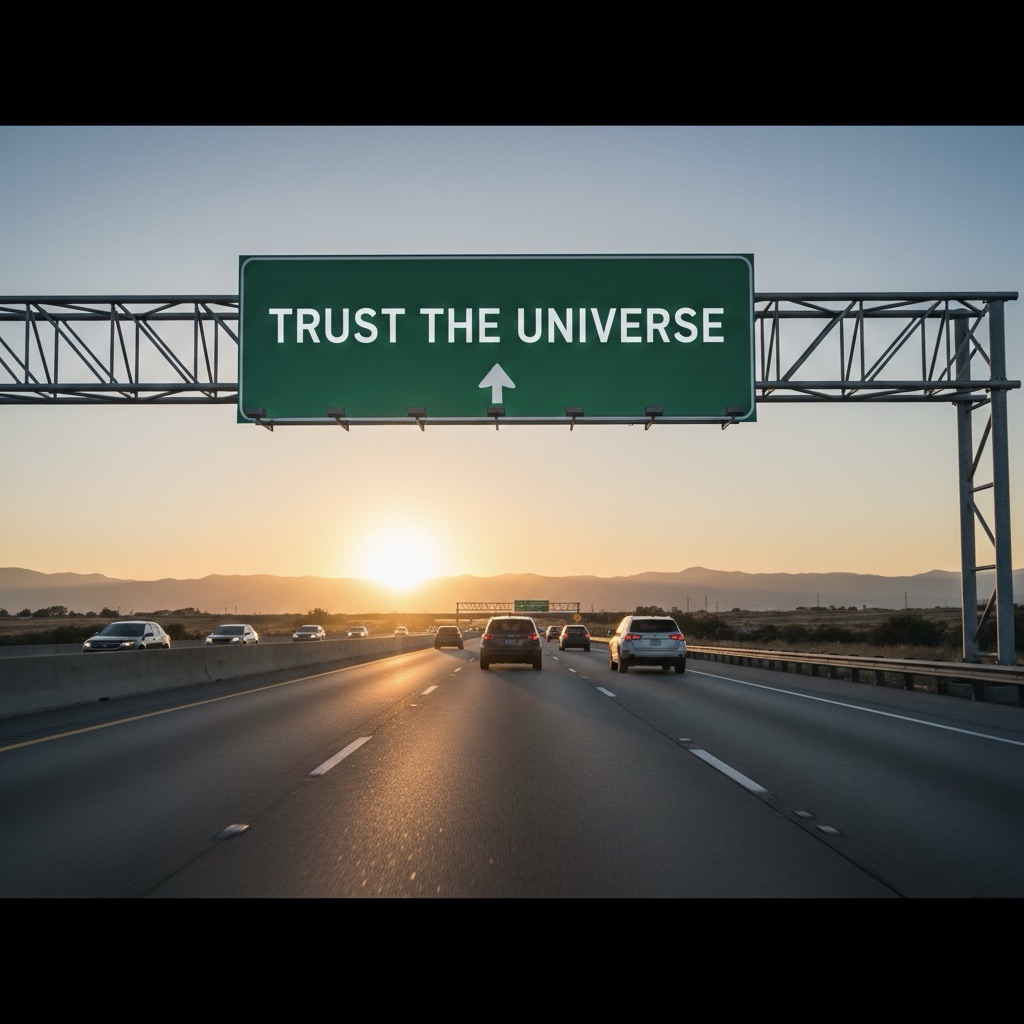
Radical acceptance is a practice of trust. Trust that you can handle what comes. Trust that resistance doesn’t protect you—it just keeps you stuck. Trust that there’s wisdom in what is, even when you can’t see it yet.
It’s also a practice of love. When you accept reality, you’re actually accepting yourself—all your humanness, all your imperfection, all the ways you thought you should be different.
When It Feels Impossible
Some things feel too big to accept. Grief. Trauma. Injustice. And you know what? That’s okay too.
Radical acceptance isn’t about accepting everything all at once. It’s about accepting this moment, then the next, then the next. Some days you’ll nail it. Other days you’ll be back in resistance, and that’s part of being human.
Be gentle with yourself. This is a practice, not a destination.
What Changes When You Stop Fighting
When I finally accepted that my relationship was over all those years ago—truly accepted it, not just said the words—something shifted. The obsessive thoughts quieted down. The tightness in my chest loosened. I could finally see what was next instead of staring backward.
That’s the gift of radical acceptance. It doesn’t change what happened. It changes your relationship to what happened. And that changes everything.
You stop being at war with your life and start being in it.
You stop waiting for things to be different before you can be okay.
You realize that your peace isn’t dependent on external circumstances.
Your Invitation
So here’s my invitation to you: What’s one thing you’ve been resisting that you could practice accepting today? Not forever, not perfectly—just for today.
Maybe it’s your body as it is right now. Maybe it’s a relationship that isn’t what you hoped. Maybe it’s your financial situation, your career path, or just the fact that you’re not as far along as you thought you’d be.
Whatever it is, try saying this: “This is where I am. I didn’t choose this, and this is what’s real. I’m going to stop fighting and see what happens next.”
You might be surprised by how much energy you’ve been spending on resistance—and how much becomes available when you let it go.
Reality is already here. The question is: are you going to keep arguing with it, or are you ready to work with what is?
I’m rooting for you either way.
Actionable Summary
Start Here:
- Notice one thing you’re resisting today
- Practice the acceptance breath (5 rounds)
- Journal: “What am I fighting that’s already happened?”
- Use the morning reality check for the next 7 days
- Be patient with yourself—this is lifelong practice
Remember: Acceptance isn’t the end. It’s the beginning of being able to respond skillfully to your life instead of just reacting to what you wish was different.



 Platnumkitty
Leave a comment