Part 13 of our Blue Zones Series

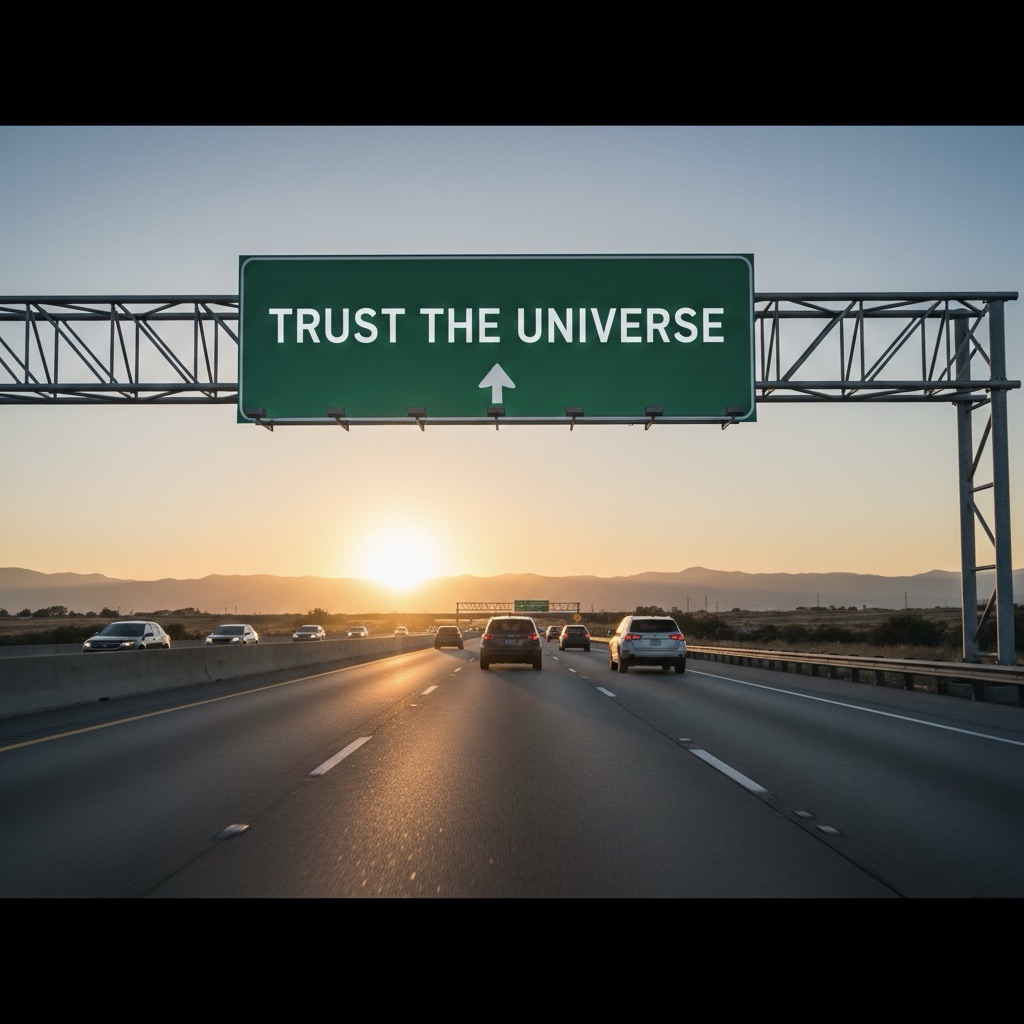
You know that moment when you’re driving and suddenly realize you’ve been on autopilot for the last twenty minutes? Your body went through all the motions—turn signals, lane changes, speed adjustments—but your mind was somewhere else entirely. And then consciousness floods back in and you think: Wait, where am I actually going?
That’s the mid-journey moment. Not a crisis. Not rock bottom. Just this quiet, unsettling realization that you’ve been moving forward without checking if you’re still headed where you want to go.
Most of us wait for the crisis to force the recalibration. The layoff. The breakup. The health scare. The moment when life yanks the wheel and we have no choice but to pay attention. But here’s what I’ve learned: you don’t need to wait for everything to fall apart to change direction. You can pull over while things are still running smoothly. Check your map. Adjust your route. Pack different snacks.
This is your permission slip to recalibrate before the emergency lights start flashing.
Why We Need Scheduled Check-Ins (Even When Everything’s “Fine”)
There’s a particular kind of suffering that comes from living a life that looks good on paper but feels hollow in your bones. You hit the milestones. You check the boxes. And yet there’s this nagging sense that you’re building someone else’s dream house.
The problem isn’t that you made wrong choices. It’s that you made right choices for a previous version of yourself and never updated the itinerary.
Think about it: when you plan a long road trip, you don’t just set the GPS at the beginning and never look at it again. You check in. You adjust for traffic, weather, energy levels. You discover a quirky roadside attraction and decide it’s worth the detour. You realize you’re not actually hungry for the restaurant you chose three states ago.
Your life deserves the same flexibility.
Quarterly recalibration rituals give you structured permission to ask the big questions before they become emergencies. They’re like scheduled maintenance for your soul—small, consistent tune-ups that prevent major breakdowns.
The Four Seasonal Check-Ins: A Framework for Your Year
I’ve built my life around four quarterly rituals, each aligned with a season and a specific question. They’re not rigid systems or productivity hacks. They’re invitations to sit down with yourself and get honest about what’s working and what’s quietly dying.
Winter Solstice (December): The Release Ritual
Question: What needs to end so something new can begin?
Winter is nature’s reminder that death isn’t failure—it’s fertilizer. Trees don’t apologize for dropping their leaves. They let go of what served its purpose so new growth becomes possible.
The Practice:
Set aside a full afternoon when the year is winding down. Make tea. Light a candle. Get cozy. Then ask yourself:
∙ What am I doing out of obligation rather than alignment?
∙ Which relationships have run their course?
∙ What beliefs about myself are no longer true?
∙ What am I holding onto simply because letting go feels like admitting defeat?
Write everything down. Be brutally honest—this is just for you.
Then, here’s the crucial part: create a small releasing ceremony. I burn my list in a fireplace. My friend tears hers into tiny pieces and throws them into the ocean. Another buries his in the garden. The method doesn’t matter. The symbolic act of physically letting go does.
Real example: Three years ago, my winter release ritual revealed that I was still defining success by my corporate father’s metrics—salary, title, upward trajectory. I wrote “Dad’s definition of achievement” on paper and watched it turn to ash. It felt dramatic and necessary. By spring, I’d left a prestigious job that was slowly hollowing me out and started freelancing. My bank account shrank. My aliveness expanded.
Spring Equinox (March): The Planting Ritual
Question: What wants to grow through me this year?
Spring isn’t about forcing new growth—it’s about recognizing what’s already trying to emerge and giving it conditions to flourish. Seeds don’t try to become trees. They just become what they already are, given the right soil and sunlight.
The Practice:
Go somewhere that feels alive to you—a park, a coffee shop with good people-watching, anywhere you feel creative and open. Bring a journal.
Ask yourself:
∙ What keeps whispering to me that I keep ignoring?
∙ If I knew no one would judge me, what would I try?
∙ What small experiment could I run this quarter?
∙ What wants to be expressed through my hands, voice, time, or energy?
Choose ONE thing—just one—to plant this season. Not ten goals. Not a total life overhaul. One seed.
Then create the conditions for growth: Set up systems, not just intentions. If you’re planting a creative practice, schedule the time. If you’re planting a relationship, make the first call. If you’re planting a new way of being, identify the first tiny action.
Real example: During spring three years ago, I admitted I missed writing—not the professional content mill stuff, but real writing that made my chest feel tight and alive. My seed was: “Write one true thing every Sunday morning.” That’s it. No blog launch, no book proposal, no audience expectations. Just me and the page. Those Sunday sessions eventually became the foundation for the work you’re reading now. But it started with one protected hour per week.
Summer Solstice (June): The Nourishment Ritual
Question: What am I feeding, and is it feeding me back?
Summer is peak energy season—long days, full schedules, maximum output. It’s also when we most easily slip into depletion mode, running on fumes and calling it productivity. This ritual is about examining your energy exchange rate.
The Practice:
Create an energy audit. Draw two columns:
Energy Drains | Energy Sources
Spend a week noticing—really noticing—what depletes you and what replenishes you. Be specific. Not just “work” but which parts of work. Not just “people” but which interactions.
You might discover that it’s not your job that exhausts you—it’s the meetings. Not your relationship—it’s the unspoken resentment. Not social media—it’s checking it before you’ve had coffee.
Then ask:
∙ Where am I over-giving without replenishment?
∙ What “shoulds” am I forcing that don’t actually feed anyone?
∙ What genuinely delights me that I’ve relegated to “when I have time”?
∙ How can I redistribute my energy toward what’s actually nourishing?
Make one significant change. Not everything needs to shift, but something does.
Real example: My summer audit revealed that I said yes to every coffee meeting request out of some twisted idea that being accessible made me generous. In reality, I was arriving to my actual creative work depleted. My shift: “No in-person meetings on Mondays and Fridays.” Those became my deep work days. Some people were annoyed. My work got exponentially better. The trade-off was worth it.
Autumn Equinox (September): The Harvest Ritual
Question: What have I learned, and how do I want to integrate it?
Autumn is accounting season. Not in a judgmental way—in a celebratory, wisdom-gathering way. You’ve been planting and growing and adjusting. Now you get to see what actually bore fruit and extract the lessons.
The Practice:
Review the year so far. Look at your calendar, photos, journal entries, even credit card statements (they tell the truth about where your resources went).
Ask yourself:
∙ What did I learn about myself this year?
∙ What worked better than I expected?
∙ What flopped, and why?
∙ What surprised me?
∙ What do I want to take forward, and what can I compost?
This isn’t about achievement. It’s about integration. You’re looking for patterns, unexpected connections, evidence of growth you might have missed while you were busy living.
Then: share your harvest. Tell someone what you’ve learned. Write it down. Create something that captures the wisdom. This step matters because articulating our lessons helps us actually learn them.
Real example: Last autumn, reviewing my year revealed that every single moment I felt truly alive involved teaching something—leading a workshop, explaining an idea to a friend, writing tutorials. The pattern was so obvious I couldn’t believe I’d missed it. That harvest insight led me to restructure my entire business around education. Not eventually. Within six weeks. Because I finally had evidence of my own truth.
The Essential Tools for Your Recalibration Kit
You don’t need expensive retreats or elaborate systems. You need these:
- Protected time: Non-negotiable space on your calendar. Two hours minimum, quarterly. Put it in ink.
- A question practice: Get good at asking yourself real questions, then actually listening to the answers. Most of us are great at asking; terrible at hearing.
- Honest witnesses: One or two people who know you well enough to call bullshit when you’re performing rather than being real. Not cheerleaders. Not critics. Mirrors.
- Documentation: Keep records of your rituals—photos, journal entries, voice memos. You’ll forget what mattered. Future you needs this data.
- Permission to change your mind: The whole point is that you’re allowed to outgrow your previous decisions. You’re not flaky. You’re responsive to new information—the most valuable information being your own evolving truth.
What Recalibration Actually Feels Like
Let me be honest: this practice isn’t always comfortable. Some check-ins reveal that you’re more off-course than you thought. Some illuminate hard truths about relationships, work, or ways of being that you’ll need to address.
But there’s a particular flavor of discomfort that comes from honest self-examination that’s completely different from crisis panic. It’s more like stretching a tight muscle. It hurts, yes, but it’s a relief hurt. You can feel the increased range of motion, even as you wince.
And here’s what I’ve noticed after three years of quarterly rituals: the recalibrations get easier and the adjustments get smaller. When you’re checking in every few months, you catch the drift before you’re hundreds of miles off course. You’re making corrections in degrees, not complete 180s.
Your life starts to feel more like a conversation with yourself rather than a runaway train.
An Invitation (Not an Obligation)
You don’t have to adopt all four rituals. You don’t have to do them quarterly. You don’t have to do them my way.
But I’m inviting you to try something. Pick one season, one question, one afternoon. See what emerges when you create intentional space for recalibration before everything falls apart.
The truth is, your life is going to change whether you participate in the direction or not. People evolve. Circumstances shift. What worked at 25 doesn’t at 35. What fulfilled you in spring feels constraining by fall.
You can wait for the crisis to force the pivot, or you can build in space to choose your course corrections consciously.
Your GPS is recalculating. Will you look at the new route, or just keep driving?



 Platnumkitty
Leave a comment