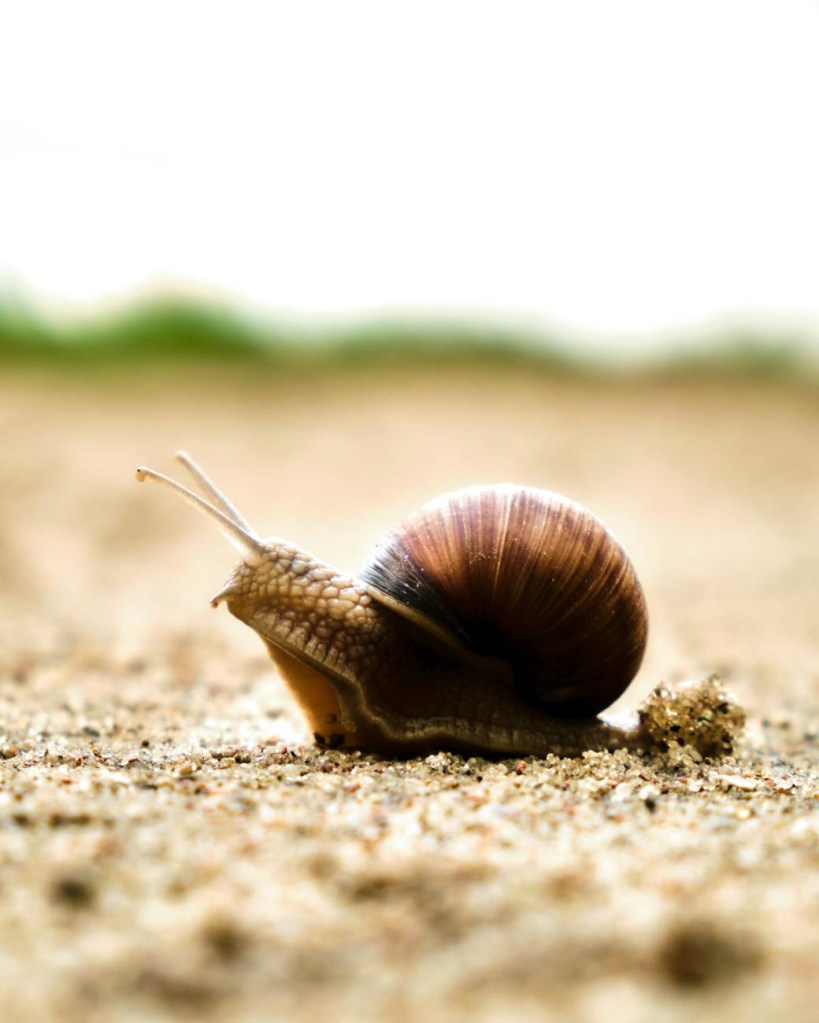
There’s a moment that happens somewhere between the third café visit and the first time you recognize a neighbor’s dog. It’s when you realize you’ve stopped counting days and started counting experiences. That’s when slow travel stops being a concept and becomes a way of moving through the world.
I used to measure trips in passport stamps and photo counts. Athens to Santorini to Mykonos in five days. I’d return home exhausted, scrolling through hundreds of photos of places I’d barely seen, trying to remember which sunset was Oia and which was Cannon Beach. I was collecting destinations like Pokemon, checking boxes on some invisible list that promised fulfillment at the finish line.
The finish line never came.
What Is Slow Travel, Really?
Slow travel isn’t about being lazy or unambitious. It’s about choosing presence over productivity, even in how we adventure. It’s the decision to spend two weeks in one town instead of two days in seven towns. To learn three phrases in the local language instead of learning nothing in three languages. To understand one place deeply instead of seeing many places superficially.
Think of it this way: you can sprint through a museum, glancing at masterpieces, or you can sit in front of one painting and really see it. Slow travel is the second option, applied to entire cities, regions, countries.
The Paradox of Doing Less
Here’s what surprised me most when I first tried slow travel: I felt like I experienced more, not less.
When you stay in one place longer, you stop being a tourist and start being a temporary local. You discover the neighborhood bakery in Kyoto’s Higashiyama district where locals line up before dawn. You learn that the small taverna in Nafplion’s old town, the one tourists walk past looking for something more “authentic,” actually serves the best moussaka because the owner’s yiayia still comes in to oversee the kitchen. You meet the artist who sets up her easel at Toronto’s Harbourfront every morning, and eventually, she invites you to her studio in Kensington Market.
These moments don’t happen on day two. They happen on day eight, day twelve, day twenty.
You can’t schedule serendipity, but you can create the conditions for it. And those conditions require time.
What Slow Travel Actually Looks Like
I’ll be honest—slow travel looks different for everyone, and it doesn’t require months of freedom or a remote job (though those help). It’s more about mindset than timeline.
It might mean:
Staying in one place long enough that grocery shopping becomes normal. Returning to the same coffee shop until the barista knows your order. Taking the same walk multiple times, noticing how the light changes throughout the week. Building a routine, even though you’re not “home.” Saying yes to random invitations from people you’ve just met. Having entire days with no plan except to see where curiosity leads. Reading a book in a park for three hours without feeling guilty about “wasting” travel time.
The common thread is giving yourself permission to move at a human pace rather than an itinerary’s pace.
The Economics of Depth
Here’s something nobody tells you about slow travel: it’s often cheaper than fast travel.
When you’re not island-hopping through the Cyclades every three days, you’re not constantly paying for ferries and last-minute accommodations. When you rent an apartment in Athens’ Exarcheia neighborhood for three weeks instead of a Santorini hotel for three nights, the difference is staggering. When you shop at Manila’s local markets and learn to cook Filipino breakfast instead of eating every meal out, you save money while also discovering that tapsilog tastes completely different when you make it yourself.
Plus, locals tend to share their knowledge when you’re around long enough to build rapport. The best restaurants, the secret beaches, the upcoming festivals that aren’t in guidebooks yet—this insider information doesn’t come from a quick Google search. It comes from conversations, from trust, from time.
Confronting the FOMO
Let’s address the elephant in the room: what about everything you’re missing?
This was my biggest struggle at first. While I was spending three weeks exploring the mountain terraces of Bontoc and the surrounding Mountain Province, my friends were posting photos from Tokyo, Seoul, Bangkok, and Singapore. Surely they were having more adventure, more stories, more life?
But then I started noticing something. Their stories were often about logistics—crazy flights, lost luggage, rushed connections. Mine were about people—the fisherman in Ensenada who took us out on his boat at dawn and taught us which catches were worth buying, the grandmother in Kalambaka who invited us in for coffee and showed us how her family has made spanakopita for four generations, the jazz musician in Vancouver’s Gastown who we met at a tiny venue.
They had more stamps in their passports. I had more connections in my heart.
There’s no moral superiority here, just different choices. But I realized that FOMO was making me miss out on the very thing I was chasing: genuine connection with places and people.
The Skills You Didn’t Know You Were Learning
Slow travel teaches you things that fast travel can’t:
Patience. Not everything happens on your schedule, and that’s okay. Adaptability. When you’re somewhere long enough, you can’t just wait out the “bad” days—you learn to find richness in ordinary moments. Cultural humility. The longer you’re somewhere, the more you realize how much you don’t know and how different “normal” can be. Comfort with solitude. You’ll have stretches with no planned activities, no constant stimulation, and you’ll learn to enjoy your own company. Deep observation. When you walk the same street ten times, you finally start to really see it—the patterns, the rhythms, the small changes.
These aren’t tourist skills. They’re life skills.
Places That Reveal Themselves Slowly
Some destinations practically beg for slow travel. They’re layered, complex, impossible to understand in a quick pass-through.
Meteora is one of these places. Everyone sees the photos—the monasteries perched impossibly on rock pillars—and thinks a day trip from Athens will suffice. But stay in Kalambaka for a week. Wake up before sunrise and watch the mist settle into the valleys. Hike the old footpaths between the monasteries that most tourists never find. Talk to the monks who still live there. By day five, you’ll realize the rocks themselves have a rhythm, and the light performs a different show every single morning.
Or take the interior of Ontario—not Toronto, though that city deserves its own slow exploration—but places like Algonquin Park or the small towns along Lake Huron. Stay long enough to understand the Canadian concept of “cottage culture.” Learn why people return to the same spot every summer for forty years. Feel the difference between a weekend visit and actually settling into the pace of life by the water.
The Peloponnese region of Greece rewards patience too. You could rush from Mycenae to Olympia to Corinth in a blur of ancient ruins. Or you could base yourself in Nafplion for ten days. Let the archaeological sites be punctuation marks in your days, not the only point. Swim in the sea each morning. Learn which beaches the locals prefer. Understand how this small city has been shaped by its Venetian, Ottoman, and Greek layers. By the end, you’ll know the difference between tourist Greece and the Greece that Greeks actually live in.
How to Start (Without Quitting Your Job)
You don’t need a sabbatical to practice slow travel. You can start small:
Take your week-long vacation and spend it entirely in one neighborhood of Athens instead of trying to island-hop through Mykonos and Santorini too. Choose an Airbnb in Plaka or Koukaki with a kitchen and a local feel rather than a hotel in the tourist center. Leave several days completely unplanned—no ancient sites booked, no sunset cruise reserved. Go to the same local spot multiple times—a taverna in Exarcheia, a café in Monastiraki, the Sunday market at Avissinias Square. Return to places you’ve been before, rather than always seeking the new. Even Kyoto—somewhere many people visit once—becomes a different city when you return and can skip the “must-sees” to explore neighborhoods like Kuramae or spend a day following the Philosopher’s Path without rushing. Practice slow travel in your own city first to understand the mindset. If you live near Toronto, Vancouver, or any US city, try being a tourist at home for a weekend.
The point is to shift from consumption mode (seeing as much as possible) to absorption mode (experiencing as deeply as possible).
The Stories That Stay With You
Years later, I barely remember the names of half the cities I rushed through. But I can tell you about the time I spent in Delphi and the surrounding villages, where I hiked different trails every morning and slowly began to understand why the ancient Greeks believed gods lived in these mountains. I remember the time in Kyoto when I finally stopped trying to see every temple and instead returned to Kiyomizu-dera at different times of day, watching how the light transformed it. I remember the three weeks in Baguio when the fog rolled in every afternoon and I befriended a coffee shop owner who introduced us to the local artist community and taught us that “Philippine time” isn’t about being late—it’s about prioritizing connection over schedule.
These aren’t just travel memories. They’re formative experiences that changed how I see the world and my place in it.
That’s the thing about depth over distance: it transforms you in ways that breadth never quite manages.
Your Invitation
Slow travel isn’t a rejection of adventure. It’s a different kind of adventure—one that values transformation over transportation, stories over stamps, and presence over productivity.
It’s not for everyone, and that’s okay. But if you’ve ever returned from a trip feeling like you missed something essential, even though you saw everything on the list… if you’ve ever wondered what it would be like to actually live somewhere instead of just visiting… if you’re tired of performing travel for the ’gram and hungry for something more real…
Maybe it’s time to slow down.
The world isn’t going anywhere. But the depth of your experience with it? That’s entirely up to you.
Where would you go if you had permission to stay?


 Platnumkitty
Leave a comment