Part 4 of The Geology of Ideas series.
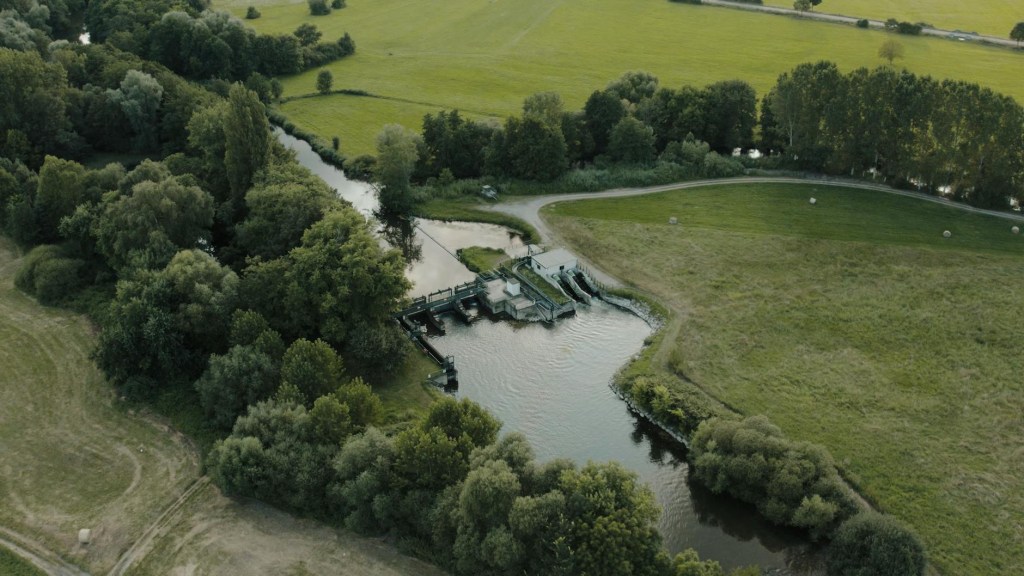
We’ve excavated your creative bedrock, learned to photosynthesize from observation, and mapped the underground networks connecting your passions. Now we’re following the water — and learning what happens when we stop trying to control where it goes.
I want to start with a question that might sting a little:
How much of your creative energy right now is going toward actually making things — and how much of it is going toward managing your feelings about making things?
Sit with that for a second. Because if you’re anything like me — and based on the responses to this series, I think a lot of you are — the ratio is not what we’d like it to be. A significant amount of what we call ‘working’ is actually worrying. Planning. Evaluating before we’ve made anything worth evaluating. Bracing for a result we haven’t produced yet. Preparing to be disappointed, or dismissed, or simply not good enough.
That’s not a creative process. That’s a dam.
Rivers don’t agonize about where they’re going. They don’t stop in the middle of a canyon and decide they need a better plan before continuing. They move. They find the low place. They carve something new if the old path closes. They flood when they need to, recede when they need to, and over time — over patient, unhurried time — they shape entire landscapes without ever once forcing it.
This is what I mean by River Logic. And I think it might be the most countercultural thing I’ve written in this series so far.
Identifying Your Mental Dams: What’s Actually Stopping the Flow
A dam is a structure built to hold water back. In nature, they can be magnificent and useful — beavers build them as habitats, and human-built dams power cities and create reservoirs. But a dam in the wrong place, or a dam that’s become more about control than purpose, doesn’t make the water more powerful. It just makes the water still.
Creative dams work the same way. They usually started as protection. A reasonable response to a real threat. But they outlived their usefulness and now they’re just stopping the flow.
The three biggest creative dams I see, again and again:
Dam #1: Perfectionism
Perfectionism presents itself as high standards. It likes to frame itself as care, as craft, as respect for the work. And in small doses, that’s even true. But when perfectionism is running your process, what it actually is is fear wearing a very convincing costume.
The perfectionist dam says: you can’t release the water until it’s exactly right. And since ‘exactly right’ is a moving target that retreats every time you get close to it, the water just… stays. Still. Behind the wall you built to protect it. Going nowhere. Doing nothing.
I’ve sat on pieces for so long, revising and reconsidering and second-guessing, that by the time I finally released them I’d squeezed all the aliveness out of them. The raw energy of the first draft — the thing that made it worth writing in the first place — had been smoothed into something technically cleaner and emotionally quieter. I’d perfected the life right out of it.
The antidote is not recklessness. It’s recognizing that done and imperfect is almost always more valuable — to you and to your readers — than perfect and perpetually withheld. A river that reaches the ocean carries silt and debris and the occasional fallen branch. It’s still a river. It still does what rivers do.
Dam #2: Over-Planning
Planning is not the same as creating. This is a distinction our productivity-obsessed culture blurs constantly, and creative people pay the price.
Over-planning is the dam that says: we need a full map of the river before we let a single drop move. Content calendars, editorial outlines, project roadmaps, aesthetic mood boards, audience strategy decks — none of these things are bad. But when they become a substitute for the actual work rather than a support for it, they’ve stopped the flow under the guise of organizing it.
Here’s the tell: if your planning activities feel more comfortable than your creating activities, you might be using planning as a sophisticated form of avoidance. The plan can’t fail. The outline can’t be bad. But the actual piece — the river released — that’s vulnerable. That can be judged. So we plan instead, and call it being thorough.
Rivers don’t have maps of themselves. They have momentum and gravity and the willingness to find out what’s around the next bend by going there.
Dam #3: Outcome Obsession
This is the sneakiest dam, because it doesn’t look like fear at all. It looks like ambition. It looks like goals. It looks like knowing what you want.
Outcome obsession is when you can’t write the post without calculating how it will perform. Can’t start the project without knowing if it’ll be well-received. Can’t make the thing without first determining whether the thing will matter to enough people in the right ways. The creative act becomes hostage to its own hoped-for result, and since the result is unknowable before the work exists, the work never gets started.
A river doesn’t flow toward the ocean because it knows it will make it. It flows because that’s what water does when it’s free to move. The destination is a consequence of the motion, not the prerequisite for it.
A quick diagnostic: which dam is yours right now?
• Do you have a project you’ve been ‘almost ready’ to release for weeks or months? → Perfectionism dam.
• Do you have a project that exists mainly as notes, outlines, and aesthetic references but almost no actual content? → Over-planning dam.
• Do you find yourself researching your potential audience more than you’re making work for them? → Outcome obsession dam.
Naming the dam is the first crack in it. You can’t dismantle what you haven’t identified. And once you see it clearly — once you recognize it for the fear-structure it actually is — it loses some of its authority over you.
The Creative Meander: Why the ‘Wasted’ Detour Is Where the Good Stuff Lives
A meandering river is one that curves. It loops and bends and wanders across a floodplain in a path that looks, from above, almost frivolous. Why not go straight? Why all the bends?
Because the bends are where everything alive happens.
The outer bank of a river’s curve is where erosion is most intense — where the water moves fastest, cuts deepest, and breaks new ground. The inner bank is where sediment deposits, where new land forms, where the richest, most fertile soil accumulates. The meander isn’t inefficiency. It’s the mechanism by which rivers build their most productive terrain.
I think about this every time I catch myself in a creative detour and feel guilty about it.
There was a trip to Ensenada that was supposed to be a long weekend getaway, nothing more. No agenda, no content plan, no reason beyond wanting to be somewhere different for a few days. I wandered a fish market for two hours. I sat in a café and eavesdropped shamelessly on a table of older men arguing about something I couldn’t quite follow. I drove a road that went nowhere I’d planned to go and ended at a lookout point where I sat alone for a long time watching the water.
That trip deposited more creative sediment than anything I deliberately set out to gather that year. The material from it kept surfacing in my writing for months afterward — images, textures, half-overheard sentences, the particular quality of the light on the water at that lookout. The detour was the whole point. I just didn’t know it at the time.
What creative meanders look like — and why they’re worth protecting:
• The afternoon you spent reading something completely outside your usual genre or field, with no reason except that it interested you. That was erosion and deposition. New ground was being cut. New sediment was forming.
• The project that ‘went nowhere’ but taught you something about your own process you couldn’t have learned any other way. The meander that didn’t lead where you expected still changed the landscape.
• The conversation that started as a catch-up and turned into a two-hour conversation about something that mattered. Meanders. Rich deposits on the inner bank.
• The day you canceled your plans and just wandered — a neighborhood, a bookstore, a park, a market — without a destination. The path that looked like avoidance from the outside was the path that knew where the fertile ground was.
• The half-finished draft you set aside because it wasn’t working yet. Maybe it wasn’t a dead end. Maybe it was a meander that hasn’t found its deposit site yet.
The straightest path between two creative points is almost never the most productive one. The most productive one is the one that curves, backtracks, deposits richness along the way, and arrives changed by the journey. Protect your meanders. They are not distractions from the work. They are the work, in disguise.
Embracing Seasonal Flooding: When Overwhelm is Actually Irrigation
This one is for anyone who has ever felt so full of input — so saturated with experiences, ideas, emotions, and impressions — that they couldn’t make anything at all.
You know this feeling. You’ve traveled somewhere extraordinary and come home unable to write about it. You’ve been through something emotionally enormous — a loss, a transition, a period of rapid change — and found that the very size of it made it impossible to process into words. You’ve had a season of such intense input that your output dried up completely, and you worried that something was wrong.
Nothing is wrong. You’re flooding.
Rivers flood seasonally — when snowmelt or heavy rains bring more water than the channel can contain. And to a nervous human watching from the bank, a flood looks like disaster. It looks like destruction, like loss of control, like things going terribly wrong. But here’s what a flood actually does to the land around a river: it deposits an extraordinarily rich layer of nutrient-dense sediment across the entire floodplain. The ancient Egyptians built one of the world’s great civilizations in large part because the Nile flooded every year, replenishing the soil of the surrounding desert with minerals from deep upstream. The flood wasn’t the catastrophe. The flood was the source.
I think about a particular stretch of time when I was traveling constantly — moving through Greece in the span of a few weeks, from Athens to Corinth to Meteora to Santorini, each place overwhelming and magnificent and demanding to be absorbed. I took notes. I took photos. I had conversations I wanted to remember. But I could barely write a coherent sentence the whole time. I was flooded. The channel couldn’t hold it all.
But the writing that came out of that trip — months later, when the waters had receded and the sediment had settled — was some of the most grounded and specific I’d done. The flood had left something behind. It always does.
How to work with your floods instead of against them:
• Stop trying to write during the flood. Seriously. If you’re in a period of intense input — travel, grief, transition, new love, deep learning — your job is not to produce. Your job is to absorb. Take notes if you can. Photographs. Voice memos. But don’t mistake the inability to write during a flood for writer’s block. It’s the opposite of writer’s block. It’s writer’s saturation.
• Trust the sediment lag. The rich material from a flooding period rarely surfaces immediately. Give it weeks. Sometimes months. Check your old notes from overwhelming seasons and you’ll find things that are ready now that weren’t ready then.
• Mark your flood seasons. When you’re going through a period of high input and low output, note it. Not with anxiety — with curiosity. What is all of this depositing? What will it leave behind when it recedes?
• Don’t drain the floodplain. When you’re emerging from a flood and material starts to surface, don’t rush to use all of it at once. The sediment deposited by a flood is rich precisely because it came from so many different places upstream. Let it integrate. Let things settle into each other. The most interesting writing comes from material that’s had time to composite.
• Recognize the post-flood fertility. After an overwhelming season, there is almost always a period of unusual creative clarity and output. That’s the floodplain ready to grow. Be ready to plant when it comes.
The seasons of overwhelming input are not interruptions to your creative life. They are the upstream source of your most fertile creative periods. You just have to live downstream from them long enough to receive what they’ve sent.
The River Logic Exercise: Getting Your Stalled Project Moving Again
Alright. Let’s get practical. You have a stalled project. I know you do, because everyone does. It might be something you’ve been avoiding for weeks. It might be something you open, stare at, close, and feel vaguely bad about. It might be something you’ve almost given up on but haven’t quite let yourself release.
Pick one. We’re going to apply River Logic to it right now.
Step 1: Locate the dam.
Be honest with yourself. Why is this project stalled? Not the surface reason (“I haven’t had time,” “I need to do more research”) — the real reason. Is it perfectionism? Are you waiting until you can do it the way you’ve imagined it in your head, which means it never gets started because the imagined version is always better than the real one could be? Is it over-planning? Does the project live mostly in outlines and notes and ‘soon’? Is it outcome obsession? Are you unable to start because you don’t know yet if it will matter?
Write down the dam. Just name it. You don’t have to fix it yet. Just see it clearly.
Step 2: Find the path of least resistance.
Rivers don’t force their way through rock if there’s a softer path available. They find the low place. The gap. The direction that requires the least effort to move in.
Ask yourself: what is the absolute smallest movement this project could make right now? Not the movement it should make. Not the movement that would make you feel like you’re finally taking it seriously. The tiniest possible trickle forward.
Some examples of tiny trickles:
• Write one true sentence about it. Not an introduction. Not a thesis. One sentence that is honest about what this project actually is or what you actually feel about it.
• Read the last thing you wrote on it out loud — just to hear where it actually is, without judgment.
• Describe the project out loud to someone you trust, as if you’re explaining it for the first time. Sometimes the spoken version is further along than the written version.
• Write the ending. If you’re stuck at the beginning, skip it entirely and write the last scene, the closing paragraph, the final thought. See if the river finds its way to that point backward.
• Change the format. If it’s been living as a long essay, try writing it as a series of short observations. If it’s been a video script, try writing it as a letter to one specific person.
Step 3: Ask if it needs a new channel.
Sometimes a stalled project isn’t stalled because of a dam. Sometimes it’s stalled because it’s been trying to flow in a direction that was never actually right for it. Rivers do this — they sometimes abandon their old channels entirely and cut new ones when the landscape changes. It’s called avulsion. It’s dramatic, it’s fast, and it leaves the old channel dry. But the water is still moving. It just found where it actually wants to go.
Ask your stalled project these questions:
• Am I forcing this into a format that doesn’t fit it? Would it flow better as something else entirely — a different length, a different medium, a different audience?
• Is the stalling coming from the project itself, or from my relationship to it? Is there something about what this project would require me to say honestly that I’m not ready to say?
• Is this project still mine? Did it start as something genuine and gradually drift into something I thought I should be making? If so — can I find my way back to the original impulse? Or has the river already moved on?
• What would this project look like if it could go wherever it actually wants to go, without me managing it toward an outcome?
Not every stalled project needs to be finished. Some need to be released. Some need a new channel. Some need to be acknowledged as the flood season they actually were — necessary input that was never meant to become output. River Logic includes knowing the difference.
What Happens When You Let the River Move
There is a version of creative work that feels like building a dam and then standing guard over it. Protecting what’s behind it. Managing how much gets through and when. Controlling the outcome by controlling the flow. And it is exhausting in a way that doesn’t even feel like exhaustion — it feels like discipline. Like rigor. Like taking the work seriously.
But a river that’s allowed to move — to meander, to flood, to find its own channel, to carry silt and branches and sediment and whatever else it picks up along the way — that river shapes something. Over time, it carves canyons. It builds deltas. It makes land where there was none. Not because it forced anything. Because it moved.
Your creative work wants to move. It has its own logic, its own momentum, its own sense of where the low place is. Your job — the real job, the one underneath all the planning and perfecting and outcome-managing — is to get out of the way.
Let it meander. Let it flood. Let it find new channels when the old ones close. Let it carry things you didn’t plan to carry and deposit them somewhere you didn’t expect.
Just let it move.

 Platnumkitty
Leave a comment