Part 7 of The Geology of Ideas series.
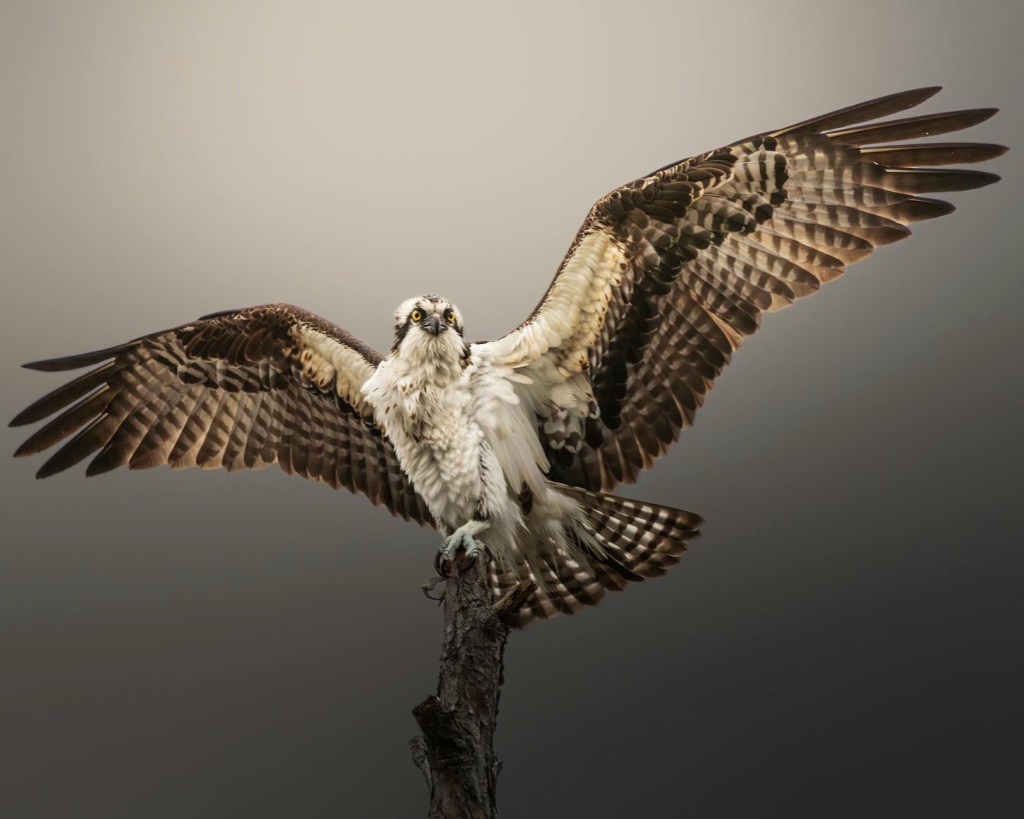
We’ve dug through bedrock, followed rivers, mapped fungi, sat with moss, and moved through storms. Now we’re looking up — at the astonishing engineers who build their most intimate spaces from whatever the world leaves lying around.
I want to tell you about the bowerbird.
The male bowerbird of Australia and New Guinea does not build a nest to hold eggs. He builds a bower — an elaborate, painstakingly constructed gallery of found objects — purely as an act of creative expression. He collects blue bottle caps, flower petals, berries, shells, feathers, bits of glass, pieces of plastic. He arranges them by color. He creates deliberate visual gradients. He places larger objects farther from the bower entrance to create an optical illusion of forced perspective, making the structure appear larger than it is to a visiting female.
He is not doing this by instinct alone. Researchers have observed bowerbirds moving individual objects, stepping back to assess the arrangement, and repositioning pieces that aren’t working. He curates. He edits. He stands back and looks at what he’s made and decides it isn’t quite right yet.
He is, by any honest definition, making art.
But even the more ‘practical’ nest — the one built to hold eggs, to shelter young, to create the safest possible container for the most vulnerable thing a bird will ever protect — is built entirely from found materials. Twigs, grass, mud, spider silk, feathers, lichen, moss, bark strips, human hair, pet fur, dryer lint, strip of plastic bag. Whatever the world offers. Whatever is available, useful, and can be woven into something that holds.
This is the model I want to offer for your creative work today. Not the blueprint. Not the master plan drafted before a single material has been gathered. The nest. Built from what you’ve found. Shaped by what you have. Strong precisely because of how its disparate fragments have been woven together.
The Nest as a Model: Disparate Fragments, Cohesive Whole
There are approximately ten thousand species of birds in the world, and the variety of their nests is staggering. The edible-nest swiftlet constructs its nest entirely from its own saliva, hardened into a translucent cup. The tailorbird stitches large leaves together with plant fibers and spider web, creating a living cradle that grows with the season. The sociable weaver of southern Africa builds a communal nest structure the size of a small car, housing hundreds of birds in a single haystack-shaped mass that has been added to by generation after generation for over a century.
Every single one of these structures was built without a plan. Without a blueprint. Without knowing, at the start of gathering, exactly what shape the finished thing would take.
The bird begins with a drive: build something that holds. And then it goes out into the world and gathers. It brings back what it finds. It tests each piece against the structure forming under its feet. It weaves and adjusts and discards what doesn’t fit and returns for more. The nest takes its shape not from a prior vision of the nest but from the accumulated decisions of the building process itself.
Your creative projects can work this way. In fact, your best creative projects probably already work this way, even if you haven’t named it.
Think about a piece you’ve made that surprised you — that ended up being something different from, and better than, what you’d originally planned. I’d be willing to bet it got there through a process of gathering and testing and weaving rather than executing a predetermined structure. You brought back a piece of something you’d read. You wove in an image from a trip. You found that a sentence you’d written for a completely different piece was actually the thing this piece had been missing. The nest took shape around the materials.
What the nest model teaches us about creative structure:
• Structure emerges from materials, not the other way around. A bird doesn’t decide the nest will be twelve centimeters wide and then gather materials to match. It gathers, and the structure reveals itself through the gathering. Some of the most organic, resonant creative structures come from the same process: gather first, outline second. Let the materials tell you what shape they want.
• Disparate sources are a feature, not a flaw. A nest made from a single type of material is usually a weaker nest. The diversity of fragments — rigid twigs for structure, soft moss for lining, spider silk for binding, mud for sealing — is what makes it resilient and functional. A piece of writing or creative work that draws from many different sources, genres, disciplines, and experiences is similarly stronger for its range.
• Testing is building. When a bird places a twig in the structure and it doesn’t hold, that’s not failure. It’s information. The twig gets discarded or repositioned and something else is tried. In your creative gathering process, the idea that doesn’t fit the current project isn’t wasted — it belongs to a different nest. Put it aside with care.
• The function shapes the form as you go. The nest doesn’t determine in advance how it will create warmth, structural integrity, and camouflage simultaneously. It finds out by building. Your project doesn’t need to know in advance how it will accomplish everything it’s trying to do. It finds out by building.
• Finishing is a kind of letting go. At some point, the bird stops adding material. Not because the nest is perfect — it never is, exactly — but because it is sufficient. It holds. This is the creative threshold we often struggle to find: not perfection, but sufficiency. When does the work hold what it needs to hold?
The nest is not a lesser form of architecture. It is a different kind of intelligence — responsive, adaptive, built from genuine engagement with actual materials rather than from a theoretical ideal of what the materials should be. It is, in many ways, a more honest form of building than the blueprint.
Your Creative Midden Heap: The Sacred Clutter of Inspiration
A midden is an archaeological term for an ancient refuse heap — a pile of discarded shells, bones, tools, food scraps, and organic matter left behind by a human settlement. Middens are among the most valuable things archaeologists can find, because the accumulated clutter of daily life tells you more about how people actually lived than any monument or artifact ever could. The midden is honest. It holds everything, without curation, without the distortion of posterity.
Your creative midden is the pile of gathered fragments that accumulates around any serious creative life. And I want to make a case for it being sacred.
I know what the productivity world says about this. It says: organize. Systematize. Build a second brain, a digital garden, a note-taking architecture. Have a place for everything and everything in its place. And I understand the appeal of that — I have folders and tags and apps just like everyone else. But I have also found that the most creative moments in my work have come not from the well-organized system but from the glorious, sprawling, apparently chaotic pile that lives alongside it.
The dog-eared page from a book I read several years ago on a flight to Manila, the folded photo from a market in Ensenada, the voice memo I recorded at 11pm about something I half-dreamed, the quote I wrote on the back of a receipt and never transferred anywhere, the sketch I made on a napkin in New Orleans that I still can’t quite explain. These things don’t belong to a system. They belong to a pile. And they are some of the most generative material I own.
The midden heap is sacred because it is unedited. It reflects what actually caught you, not what you thought should catch you. It holds the things your conscious mind dismissed and your subconscious kept anyway. It is a record of genuine attention across time, and there is nothing more useful to a creator than an honest record of what they have actually found worth saving.
Building and tending your creative midden:
• Collect promiscuously and without justification. If something catches you — a sentence, an image, a texture, a phrase overheard at a coffee shop, a particular quality of light, a smell that brought something back — capture it without requiring it to justify its presence. The midden holds everything. The nest-building comes later.
• Resist premature organization. I know this feels wrong. But over-organizing your inspiration pile too early turns it into a filing cabinet, and filing cabinets are not good at surprising you. Give things time to sit in the pile and develop unexpected relationships with each other before you sort them into tidy boxes.
• Make a physical midden, not just a digital one. There is something about touchable, visible fragments — actual objects, printed images, handwritten notes, cut-out words, postcards, found items — that digital notes cannot replicate. The physical pile invites different kinds of attention. You can spread it out. You can notice what’s next to what. You can hold things.
• Visit the midden before you start a new project. Before you decide what a new piece is about, spend time with your pile. Spread it out. Notice what has accumulated since the last time you looked. Often the project you think you’re about to start turns out to be about something else entirely — something that’s been quietly building in the midden without your awareness.
• Trust the things you kept without knowing why. If you saved something and can’t explain why, that’s not evidence that it was a mistake. That’s evidence that some part of you recognized something the rest of you hasn’t caught up to yet. Hold it longer. Don’t discard it until it has had a chance to reveal what it knows.
The bowerbird’s collection of blue objects is a midden with aesthetic logic. The robin’s nest is a midden that became a structure. Your pile is the raw material of everything you haven’t made yet. Treat it accordingly.
Function Follows Form in Nature: Letting Materials Lead
You’ve probably heard the architectural principle “form follows function” — the idea that the shape of a building should be determined by its purpose, that aesthetics should serve utility. It’s a sensible human principle for human-designed structures.
Nature doesn’t always work that way. In nature, the relationship between form and function is messier, more reciprocal, and far more interesting. The function of a bird’s nest doesn’t determine its form so much as it constrains it — and within those constraints, the available materials determine everything else. A cliff swallow builds differently from a weaver finch not because they have different blueprints but because they have different materials, different environments, and different physical capacities. The function is the same: hold eggs, shelter young. The form that emerges is entirely specific to what each bird has to work with.
I want to offer you a different version of the old principle: in creative work, sometimes form follows material.
Meaning: the structure of your best work might not be something you decide in advance. It might emerge from what you’ve gathered. The essay that becomes a series of fragments because the material is inherently fragmented and any other structure would lie about it. The piece that wants to be short because that’s the shape of the feeling it’s made from. The project that reveals itself as a collection rather than a narrative because the gathered pieces don’t have a through-line — they have a resonance, which is a different kind of coherence.
Some of the most formally innovative creative work in any medium has come from makers who stopped imposing a pre-decided structure onto their gathered material and instead asked: what structure does this material want to take? What form would most honestly hold what I’ve found?
How to let your materials lead:
• Start with gathering, not structuring. Before you decide what your piece is, collect everything that belongs to it — every related fragment from your midden, every memory, every piece of research, every image. Spread it all out in front of you. Then look at what you have and ask: what shape does this want to be?
• Notice the natural groupings. When you spread out your gathered material, some things will cluster toward each other. Some things will stand alone. Some things will feel like they belong at the beginning; others will feel like endings. These are the materials telling you about structure. Pay attention.
• Let the dominant material set the tone. If most of what you’ve gathered is sensory, the piece probably wants to be sensory. If most of it is argumentative, the piece probably wants to argue. If most of it is quiet and contemplative, forcing it into a punchy, energetic structure will make it dishonest. The dominant material is the load-bearing twig. Build around it.
• Treat structural decisions as experiments. The bird tests each piece before weaving it in. You can do the same — try a fragment in three different positions in a piece and see where it creates resonance, where it creates tension, where it disrupts in an interesting way versus an unproductive one. Structure in creative work is not a commitment made once. It’s a series of tests.
• Know when the structure is holding. A well-built nest doesn’t wobble. It has a particular settledness to it — a sense of pieces interlocked in a way that distributes weight appropriately. Your piece, when its structure is working, will have the same quality. You’ll feel it. The wobble will stop. Don’t keep restructuring after the wobble is gone.
The most formally surprising, structurally alive pieces of creative work you’ve ever encountered were probably made by someone who let the material lead. Who gathered first, structured second, and trusted that the form would emerge from honest engagement with what they had. Not from deciding in advance what a piece should look like and then filling it in.
Build a Nest: This Installment’s Actionable Ritual
This practice is physical. It asks you to use your hands. If that sounds strange for a writing-adjacent creative practice — good. The strangeness is part of what makes it work.
You are going to build a nest for your current project. An actual, physical nest, made from found natural objects. And then you are going to observe what you’ve built.
Step 1: Go outside and gather.
Spend twenty to thirty minutes outside — in your yard, a park, a patch of greenery somewhere — and collect natural materials. Twigs, leaves, grass, moss, bark strips, seed pods, feathers if you find them, flower stems, pine needles, pebbles, anything the natural world offers.
Here is the constraint: while you gather, hold your current project in mind. Not as a directive — you are not looking for objects that ‘represent’ the project symbolically. Just hold it in the back of your awareness while your hands pick things up. Gather what calls to you. Trust the selection process without over-explaining it.
Step 2: Build without a plan.
Find a flat surface and begin building. No instructions. No right way. The only requirement is that you build something that could, in theory, hold something — something with an interior, a sense of containment, a structure that has intention behind it even if the intention is loose.
Work with your hands. Test pieces. Move things. Discard what doesn’t belong. Add more material if you need it. Let the structure develop without forcing it toward a predetermined shape.
Take as long as it takes. This is not a timed exercise. The nest is finished when it feels finished.
Step 3: Observe what you’ve built.
Step back. Look at your nest. Really look at it. Take time with this part — this is where the practice becomes reflective rather than physical.
Ask yourself these questions, and write down your answers:
• What is the structure of this nest? What gives it its shape? What is the load-bearing material — the thing everything else depends on?
• What material did you instinctively reach for first? What does that tell you about what your project needs at its foundation?
• What is the interior like? Is it spacious or tight, soft or rough, deeply cupped or shallow? What does that say about how your project holds the thing at its center?
• Where are the gaps and weaknesses? What is the nest missing? What material would make it stronger?
• Is there anything in the nest that surprises you — something you gathered and included that you didn’t expect to use? What does that object’s presence tell you about your project?
• Does the nest feel finished? If not, what would finished feel like? If yes — what is the quality of that finishedness? Not perfect. Sufficient. Holding.
Write your answers down. Don’t filter them. The nest is a physical externalization of something you know about your project that your analytical mind hasn’t fully articulated yet. The answers that come from looking at it are coming from a different kind of knowing than the answers you’d get from thinking about the project directly.
What to do with what you learn.
Take one insight from the nest observation and apply it directly to your project in the next work session. One thing. Not a complete restructuring, not a new outline — one concrete response to what the nest told you.
Some examples of how this translation might work:
• If the nest felt too rigid, missing a soft interior lining — maybe your project needs a more personal, intimate layer at its center. Where is the warmth in it? Where is the vulnerability?
• If the nest kept collapsing until you found the right base twig — maybe your project needs you to identify its load-bearing argument or image before you can build around it. What is the one thing everything else depends on?
• If the nest ended up smaller and tighter than you expected — maybe the project is trying to tell you it should be shorter, more concentrated, less sprawling than you’d planned.
• If you found yourself wanting more material than you’d gathered — maybe the project needs more research, more observation, more time in the midden before it’s ready to be built.
• If the nest surprised you by being more beautiful than you expected — let that be permission to trust your instincts in the project itself. The materials you’ve gathered know what they’re doing.
Keep the nest somewhere you can see it while you work on the project. It is not decoration. It is a physical reminder of what you’re trying to build: something that holds, made from what you’ve actually found, shaped by the materials themselves.
What We Are Always Already Building
There is something quietly radical about the nest as a creative model. It refuses the mythology of the blank page — the idea that great work begins from nothing, that the truest creative act is ex nihilo, conjured from pure inspiration with no prior material.
No bird builds from nothing. Every nest is a record of what the bird has gathered, where it has traveled, what the local world has offered and what the bird has had the instinct to recognize as useful. The nest is autobiographical. It is made from the specific life of the specific bird in the specific place and time of its building.
Your creative work is the same. It is built from the specific life of the specific person you are, in the specific place and time you inhabit, from the specific fragments your attention has gathered and held. The quote from the book you read on a flight home from Baguio. The image from a street in Athens that you’ve never published but never deleted. The half-sentence from a conversation with someone you love that you wrote on your hand because there was nothing else to write on. The grief and the wonder and the frustration and the small, private joys that leave sediment in you whether you intend them to or not.
That is your midden. That is your material. That is what your nests are made from.
Go build something that holds.


 Platnumkitty
Leave a comment