Part 8 of The Geology of Ideas series.
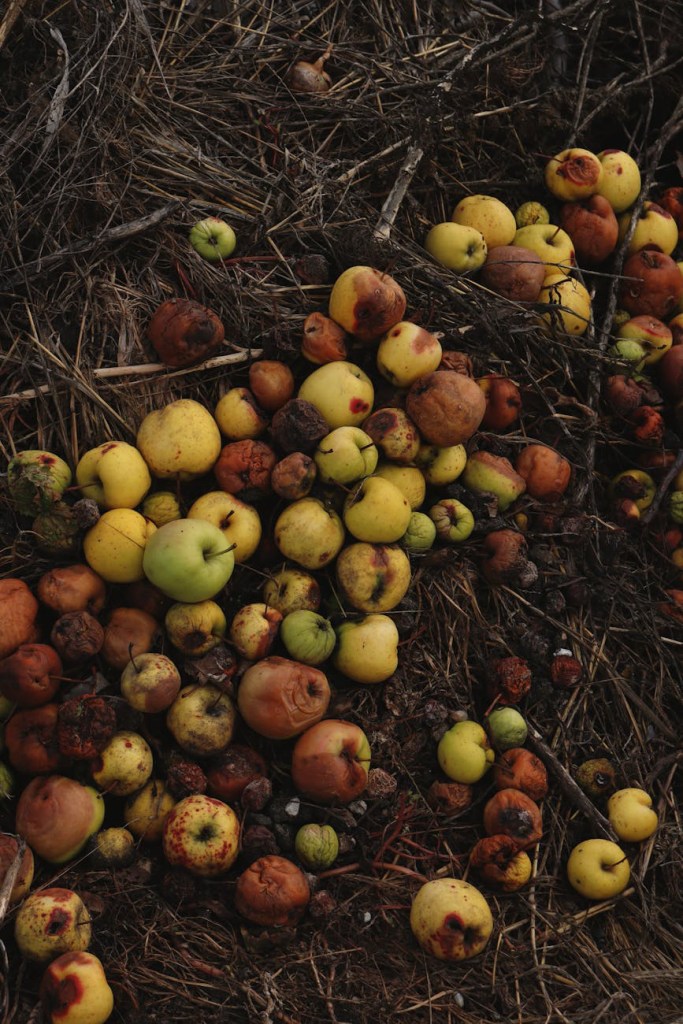
We’ve built nests, followed rivers, mapped underground networks, and sat with storms. Now we go somewhere darker and wetter and, honestly, a little more uncomfortable. We’re going to talk about the pile.
I have, at various points in my creative life, literally buried things in my garden.
Not metaphorically. Actually dug a hole, placed the thing inside it — a printed draft, a journal of notes, a folder of half-formed ideas — covered it with soil, and walked away. It probably looked unhinged from the outside. It felt, from the inside, like the most honest thing I could do with something I wasn’t ready to throw away but couldn’t keep carrying.
I’ll get to the list of what’s out there decomposing beneath my garden beds. But first, I want to make a case for the compost pile as one of the most underrated and misunderstood processes in a creative person’s life. Because what I’ve come to understand, slowly and with some resistance, is that the things I’ve buried weren’t failures.
They were ingredients.
The Necessary Rot: Why Decomposition Is a Creative Act
Here is what composting actually is, for anyone who has never maintained a pile: you take organic matter that is no longer useful in its current form — vegetable scraps, dead leaves, spent plants, coffee grounds, eggshells — and you put it in a contained space and let it break down. Bacteria, fungi, worms, and other decomposers go to work on it. The individual materials lose their original form completely. What remains, after weeks or months of this dark, warm, largely invisible process, is humus — one of the most nutrient-dense substances in the natural world. The richest growing medium that exists.
The key thing to understand about composting is that the rot is not incidental to the process. The rot is the process. You cannot skip it, rush it, or replace it with something more pleasant. The decomposition is what produces the fertility. The breakdown is the point.
Now think about what happens to a creative project when it stops working. When the draft isn’t coming together. When the idea that felt fresh six months ago now feels tired and overworked. When you’ve tried every angle you can think of and the thing still doesn’t live. When you finally, reluctantly, painfully, put it in a drawer or delete the file or stop working on it and call it, quietly, done.
What if that moment isn’t failure? What if it’s the beginning of decomposition? What if the project in its current form needs to rot before it can become something new?
I have written drafts that I abandoned for two years only to find, when I opened them again with fresh eyes, that the ideas inside them had broken down into something different. The original structure was unrecognizable. The specific argument I’d been trying to make had dissolved. But the underlying questions, the images that were actually alive, the one thread I’d been wrapping too much scaffolding around — those had survived the decomposition and become, if anything, more concentrated. More themselves.
The project hadn’t failed. It had composted. And what was left was ready to grow something new.
The forms that creative rot can take:
The abandoned draft.
The piece that went sideways somewhere in the middle and never recovered. You know where the rot started — the paragraph where the energy dropped, the section you kept rewriting without improvement, the ending you could never make true. Put it in the pile. The living parts will survive the breakdown. The parts that weren’t working will decompose into nutrients for the next attempt.
The exhausted concept.
The idea you’ve been trying to make work for so long that you’ve lost all sense of whether it was ever actually good or whether you just want it to have been good so the time spent on it meant something. Sometimes the most honest creative act is recognizing that a concept has been overworked. That it needs to be put down not with failure but with gratitude, and allowed to decompose into something you can’t yet imagine.
The research that didn’t land anywhere.
The notebooks full of observations, the bookmarked articles, the interview notes, the hours of reading that never coalesced into a piece. This is some of the most nutritious compost of all. It is full of specific, gathered material that your conscious mind couldn’t organize into a project but that your creative unconscious will spend years quietly metabolizing. Let it rot. It is becoming soil.
The version of yourself you’re growing out of.
This is the compost nobody talks about. Sometimes what needs to decompose isn’t a specific project but an entire phase of your creative identity. The aesthetic you outgrew. The voice you adopted because it seemed like what was expected rather than what was true. The version of the work you made when you were trying to be someone else’s idea of a creator. Letting that version rot is not abandonment. It is the most necessary clearing you will ever do.
The rot is necessary. It is not comfortable, and it is not quick, and it happens in the dark where you can’t see it. But without it, nothing new can grow from the same ground. The soil that has never composted eventually stops producing anything. It needs the breakdown to remain alive.
Trusting the Dark, Hot Process: Tending Without Forcing
A compost pile has two enemies: neglect and impatience.
Neglect means never turning it, never adding material, never checking its moisture. The pile goes cold. Anaerobic bacteria take over and it becomes a sour, matted, airless mass that barely breaks down at all. You’ve seen the creative equivalent of this: the abandoned project that gets so thoroughly ignored it loses even the potential it once had. The idea that sits untouched for so long that you can’t remember why you cared about it. Total neglect doesn’t produce compost. It produces stasis.
Impatience means pulling material out of the pile before it’s finished breaking down. You’ve done this too — I know because I’ve done it constantly. Returning to a project that needed more time in the dark and trying to make something from it before it was ready. Forcing a piece back into shape before the rot had done its necessary work. The result is always a little off — lumpy with half-decomposed material, heavy with things that haven’t broken down yet, not quite fertile.
The sweet spot is tending. Not leaving the pile completely alone, but not forcing it either. The work of tending a compost pile is occasional, light, and attentive: turn it now and then to introduce oxygen. Check its moisture. Add new material when you have it. Note how hot it’s running — an active pile generates real heat, which means decomposition is happening. And then, largely, leave it alone and trust the process you can’t see.
What tending a creative compost pile looks like in practice:
• Turn it occasionally with reflection. Every few weeks or months, open the folder, read the abandoned draft, look at the notes. Not with the intention of working on it — just to see how the decomposition is progressing. Notice what has already broken down and what is still intact. Notice what looks different with distance. This is the turn that introduces oxygen. It keeps the pile active without forcing it into premature use.
• Check the heat. An actively composting creative project generates a particular kind of mental warmth when you touch it — a sense that something is still happening in there, that the material is still alive and working even if you can’t see it yet. A cold pile that generates no feeling at all when you revisit it might genuinely be finished. A pile that still runs warm when you turn it needs more time, but it’s doing something.
• Add new material when it arrives. As you read and live and observe, you will occasionally encounter something that clearly belongs to the composting project — a piece of research, an image, an experience that resonates with the buried material. Add it to the pile. The fresh organic matter feeds the decomposition and enriches what the pile will eventually produce.
• Keep a record without requiring progress. A simple note each time you turn the pile: what you noticed, what seems to have broken down, what is still whole. Not a project update, not a progress report. Just an observation log. Over time, this record will show you the arc of the decomposition in a way that’s hard to perceive in individual visits.
• Resist the urge to declare it dead. A pile that looks finished and cold and inert on the surface is often still actively decomposing in its warm, dark interior. Some of the most valuable breakdown happens invisibly. Unless you’ve genuinely lost all feeling about a buried project — not frustration, not grief, not hope, but genuine indifference — it is probably still composting. Let it.
The tending is the practice. It asks for something harder than forcing and easier than abandoning: patient attention without demand. You are not working on the project. You are maintaining the conditions in which it can work on itself.
Knowing When It’s Finished Soil: The Intuitive Sense of Readiness
Finished compost has a particular quality that experienced gardeners describe in almost sensory terms. It is dark. It is crumbly and loose, not compacted. It smells like earth, like forest floor, like something that has been alive for a long time. It no longer contains recognizable pieces of its original ingredients — you can’t find the coffee grounds or the eggshell or the vegetable peel anymore. They are gone. What remains is something entirely new, made from everything that was put in but not resembling any of it.
And you know it when you hold it. There is no test required. Gardeners who have been doing this for any length of time simply know, by feel and smell and the particular way it crumbles in their hand, that the decomposition is complete.
The same intuitive knowing applies to creative compost. There is a feeling, when you return to a buried project after sufficient time, that is different from the feeling of returning too soon. It doesn’t feel like the original project anymore. It doesn’t feel like the weight it was when you put it down. It feels dark and loose and full of potential — like material that has been broken down and is ready to become something new.
It might not be obvious what that something new is yet. The finished compost doesn’t announce what it will grow. It just becomes available for growing. That availability is what you’re watching for.
Signs that your creative compost is finished:
• The original frustration or grief about the project is gone. Not replaced by enthusiasm necessarily — just genuinely absent. You can look at the buried material without flinching. The emotional heat that made it impossible to work with has dissipated into something cooler and more workable.
• You can no longer entirely remember what the original project was trying to do. This sounds like a problem but is actually the sign you’re looking for. When the original structure has broken down enough that you can’t reconstruct it from memory, the individual ingredients have finished composting into something new.
• Something from the buried project surfaces unexpectedly in new work. An image, a phrase, a question — not something you deliberately retrieved but something that arrived on its own, because the compost was ready and the new work was the ground it wanted to grow in.
• You feel curiosity rather than obligation when you think about it. Obligation is the feeling of unfinished rot — the pile that still smells sharp and acidic, that still feels like something you should be doing something about. Curiosity is the finished soil: open, available, alive with potential without demanding anything specific from you.
• You find yourself wanting to start something adjacent, not restart the original. Finished compost doesn’t suggest you replant exactly what was there before. It suggests the ground is ready for something new. If you find yourself drawn to a new project that feels like it grows from the territory of the old one — not a continuation but a new thing made possible by the decomposition — that’s your cue.
The finished soil doesn’t announce itself loudly. It just becomes available. And the best gardeners — the best creative people — develop a sensitivity to that availability over time. You start to know, without being able to fully explain how you know, when something has finished decomposing and is ready to become ground again.
An Honest List: What I’ve Actually Buried, and What I Learned
I promised you honesty on this one. So here it is.
This is a partial inventory of the projects I have, in one form or another — sometimes literally, always spiritually — put in the ground. Not deleted. Not published. Not given to anyone. Buried. With the specific intention of letting them rot into something I couldn’t yet imagine.
The travel memoir that was really a grief memoir in disguise.
I spent nearly two years on a book-length project about travel in the Philippines and Greece that I framed, very carefully, as being about place. About landscape and food and history and the particular quality of light in certain cities. What it was actually about — what I could not make myself write directly and therefore kept circling in travelogue form — was a loss that had happened the year before the first trip. The project collapsed under the weight of what it was refusing to say. I buried it, and I cried when I did. What composted out of it, eventually, was the understanding that my truest travel writing is never actually about the place. It’s about what the place reflects back. I’ve written from that understanding ever since, and it has made everything more honest.
The blog I tried to start three separate times about ‘intentional living.’
I cannot tell you why it never worked except that it felt, every time I tried, like I was writing for an imaginary audience who wanted a cleaner version of my life than I actually have. The aesthetic was right. The topics were ones I genuinely cared about. But the voice was off — performing a kind of serene clarity I don’t actually possess. Three attempts, three piles of drafts, three burials. What composted: the understanding that I write best when I include the mess, not around it. Every piece I’m proudest of has the compost still visible in the soil — you can tell something was buried here, that it went through something, that it didn’t start clean.
The essay about my mother that I’ve started eight times.
Eight drafts. Eight burials. I am not finished composting this one yet. I can tell because when I touch it, it still runs hot — there is still too much unprocessed feeling in the pile for it to be ready. I check on it sometimes. I add to it occasionally, a detail I’ve remembered or a sentence that belongs to it. I turn it when it feels necessary. I am not forcing it and I am not abandoning it. I am tending it. I believe that when it is finished, it will be some of the best soil I’ve ever grown anything in. I just cannot know yet what that thing will be.
The creative identity I had when I thought I knew exactly what kind of writer I was.
This is the hardest burial to admit because it wasn’t a project. It was a self. I had a very clear picture for a long time of what my creative work was: what genre it lived in, what its aesthetic was, what audience it was for, what it was and was not allowed to do. That certainty felt like strength for years. And then it started to feel like a cage. The composting of that fixed identity — allowing it to break down into something less defined and more alive — was the most disorienting thing I’ve been through creatively. And the richest soil I’ve ever had to work with. Everything I make now grows from ground that that decomposition prepared.
The parenting pieces I wrote in my head but never to the page.
There are things I have witnessed and felt as a parent that I have never known how to write about. Not because they aren’t worth writing — they are the most worth-writing things I’ve ever known. But because the love is too unmediated, too close to write from without it going saccharine or becoming protective performance. These pieces live in the pile in a particular way: not as written drafts but as held material, composting in me rather than in a document. What I know is that they’re still working. The heat is there. When they’re ready, they will arrive whole in a way that nothing I forced would have.
I share these not because my pile is particularly interesting but because I think most creative people have a pile they’ve been half-ashamed of. The accumulation of not-finished, not-published, not-quite-ready things that they can’t bring themselves to delete but can’t seem to use. I want you to look at your pile differently. Not as evidence of failure or incompletion. As a compost heap. As fertility in process.
What the Rot Is Really For
Every gardener knows this: the most productive beds are the ones that have been composted. The soil that has been enriched by what decomposed in it grows things differently than soil that has never been through that process. It is darker. It holds water better. It is alive with organisms that aerate it and process nutrients and make the growing conditions incomparably richer than anything you could engineer from the outside.
You cannot have that soil without the rot. There is no shortcut. The fertility is made from the decomposition, not in spite of it. The thing that breaks down is not wasted — it becomes the ground for everything that grows next.
So: what’s in your pile? What have you been half-ashamed of carrying that might be ready to go in the ground? What failed project, exhausted concept, or outgrown version of yourself might be more valuable as compost than as the unfinished thing you keep feeling guilty about?
Put it in the pile. Tend it without forcing it. Check on it when you can. And trust the dark, hot, largely invisible process that is, right now, turning what you couldn’t finish into the richest soil you’ve ever had.
Something extraordinary is going to grow there.



 Platnumkitty
Leave a comment