Part 9 of The Geology of Ideas series

We’ve composted, built nests, followed storms, and mapped mycelial networks. Now we’re stepping back far enough to see the whole year — and the ancient rhythmic intelligence that’s been trying to tell you something about when to create and when to go underground.
I used to think January was when I was supposed to be most productive.
New year, new output. Fresh calendar, fresh content calendar. Everyone around me seemed to arrive in January full of the sharp energy of resolution, and I arrived… hollowed out. Quiet in a way that felt like failure. Unable to produce at the rate I’d produced in October. Sitting with ideas that wouldn’t quite ignite yet, staring at drafts that felt like they needed more time in the dark, feeling vaguely behind on a race I couldn’t see the course of.
It took me an embarrassingly long time to realize: I wasn’t failing at January. I was experiencing winter.
And winter, as it turns out, is not the enemy of creativity. It is one of its most essential phases. The problem was never the season. The problem was that I was trying to bloom in February and wondering why nothing was flowering.
This post is about recognizing the season you’re actually in — and building a creative life that works with it instead of constantly, exhaustingly against it.
Creative Hibernation: Winter’s Gift Is Not Death, But Deep Root Work
A deciduous tree in winter is not a dying tree. This is a distinction that sounds obvious and yet is one most of us do not apply to ourselves.
The tree has pulled its resources down and inward. The energy that was driving leaf production, flowering, and fruiting all summer has been redirected to the roots. Below the surface, root systems are extending, consolidating, strengthening their hold in the ground. The tree is not resting in the sense of doing nothing. It is doing the deep work that the urgency of summer never allowed for.
Cut a dormant tree at the root in winter and it will bleed sap. There is life there. There is movement. There is a great deal happening that the bare branches give no evidence of.
Your creative winter looks like this: low output. High interior activity. A drawing-inward of energy from the visible surface of your work toward the less visible depths of your thinking, your reading, your questioning, your rest. It does not produce much that is shareable. It produces everything that the coming seasons will grow from.
Winter is when you read without agenda. When you revisit old notebooks and feel the threads in them without forcing them into new structures. When you have the long, wandering conversations that don’t produce content but rearrange something in you. When you sleep more, move slower, and stop measuring your creative worth by what you’re putting out.
What winter is asking of your creative life:
• Stop performing productivity in a dormant season. The tree does not apologize for its bare branches in February. You are allowed to be between productions. The roots are working even when the canopy isn’t.
• Read widely and without purpose. Winter is the season for input without output pressure. Read the books that have nothing to do with your current projects. Follow the threads that interest you for no professional reason. Let your root system expand into new territory.
• Tend your creative relationships. The low-energy intimacy of winter is actually ideal for the conversations that shape your thinking over years. The unhurried meal, the long phone call, the exchange of ideas without a deliverable at the end.
• Practice creative dormancy without calling it failure. If you genuinely need a fallow period — if your creative soil has been producing for seasons without a break — winter is the season’s permission to rest it. Fallow is not empty. Fallow is preparing.
• Note what persists. In winter, the things that remain green — the evergreens, the mosses, the living things that don’t go dormant — are highly visible against the bare landscape. What creative interests are still alive in you even in your lowest-energy season? Those are your deepest roots. They will outlast everything else.
Winter is not the absence of the creative year. It is its foundation. Everything that flowers in spring grew its roots in winter’s dark, patient, apparently empty quiet.
The Sap Rise of Spring: Managing the Overwhelming Surge
Spring is the most dangerous creative season. Not because it’s bad — it’s extraordinary. But because it is overwhelming, and we almost always mishandle it.
The sap rising in a maple tree in early spring is one of nature’s most powerful surges. After months of dormancy, the tree mobilizes its stored sugars upward with extraordinary force — so much force that you can tap the tree and collect the sap in buckets. The energy that was held underground all winter is moving, fast and sweet and generative, toward new growth.
Creative spring is that surge. It is the season when ideas arrive faster than you can hold them. When you wake up with three concepts before your feet hit the floor. When you start four things in a week, feel electrified by all of them, and then get disoriented by the sheer volume. When the energy that was quietly building all winter comes rushing upward and you are suddenly, dizzyingly full.
I have blown more good projects in spring than in any other season. The surge is so strong and so exciting that I mistake quantity for readiness. I start too many things, split my attention across all of them, and end up with a field of stunted seedlings instead of a few strong plants.
Working wisely in creative spring:
• Capture everything, commit to little. Spring is the season for filling your midden heap, not for building your nest. Write down every idea, start every sketch, save every thread — but resist the urge to fully commit to any single direction until the surge settles enough for you to see which ideas still have energy after the first wave.
• Plant deliberately, not prolifically. A gardener who plants every available surface in spring exhausts the soil and overwhelms themselves come summer. Choose two or three ideas to actually develop. Let the others remain as seeds in the midden, ready for a later season.
• Use the energy for beginnings. Spring’s energy is perfect for first drafts, opening chapters, exploratory pieces. It is terrible for revision, structural work, or finishing. Don’t fight this. Use the surge for what it’s built for.
• Expect overwhelm and plan for it. The surge of spring ideas is always more than you can handle. This is normal. It is not a problem to solve — it is a condition to work within. Build overflow systems: a running list of ideas you’re not pursuing right now, a place where spring concepts can live without pressure until you have the capacity to tend them.
• Notice what survived winter. The ideas that were alive in you even during the low-energy dormant season are your strongest plants. When spring arrives, give them the first water. They’ve been waiting.
The sap rise is not asking you to do everything at once. It is asking you to notice the volume of what’s available, choose with care, and let the rest wait in the ground for another season. Not every idea needs to be this year’s project.
Full-Bloom Summer: The Focused Energy of Production and Sharing
Summer is the season most creative culture is designed for. Long light. High energy. Maximum output. The world in its fullest visible expression, producing and sharing with the confident extroversion of peak season.
This is the season of making and showing. The draft that gets finished. The project that gets published. The work that goes out into the world and begins doing what work does — finding the people it was meant for, starting the conversations it was designed to start, growing past the private interior life of its creation into something shared.
Summer’s creative gifts are real and worth celebrating. But summer also has its particular dangers, and the main one is this: the pressure to sustain summer-level output across all four seasons. To be always in full bloom. To always be producing, always sharing, always at peak visibility. To treat summer as the only valid creative state.
A tree that bloomed year-round would exhaust itself to death. The bloom is extraordinary precisely because it is not permanent.
Working well in creative summer:
• Produce with focus, not frenzy. Summer’s energy is high but it is not infinite. Use it for the projects you committed to in spring, not for every new idea the season generates. The focus of summer is what distinguishes it from spring’s proliferating surge.
• Share generously. Summer is the season for putting work into the world. Not hoarding it in the waiting-until-it’s-perfect place you’ve been storing it. The tree doesn’t keep its flowers to itself. Share the work. Let it find its people.
• Stay connected to the roots. The most common summer creative failure is losing touch with the winter’s interior depth in the rush of production. Keep some portion of your practice private and nourishing even in your most productive season. The roots need water even when the canopy is full.
• Watch for signs of mid-summer drought. Even in the most productive seasons, there are dry patches. When the energy dips mid-project, don’t interpret it as a sign that the season is over. It’s a sign that the project needs water: a conversation, a walk, a piece of new input, a deliberate return to the root question of why this work matters.
• Plan for the turn. Summer doesn’t end suddenly. It fades. The light starts shifting in August in ways you can feel before you can see. Start thinking about what you want to finish before autumn arrives, and what you’re willing to let go of before the harvest.
Celebrate your summers. They are real and they are earned. Just don’t mistake them for the only form your creative life is allowed to take.
The Harvest and Letting Go of Autumn: Curating, Finishing, Releasing
Autumn is the most emotionally complex creative season, and I think it’s the one we understand least.
It is simultaneously the season of harvest — gathering and completing and releasing what has been growing all year — and the season of letting go. The tree in autumn is not dying. But it is deliberately, actively releasing what it no longer needs to carry through winter. The leaves aren’t falling accidentally. The tree is letting them go. The abscission layer — the layer of cells at the base of each leaf stem — is formed deliberately, gradually cutting off the leaf’s connection to the branch until it releases.
The letting go is as intentional as the blooming.
Autumn asks you to do two things that feel contradictory but are actually the same thing: finish what’s worth finishing, and release what you’ve been carrying that was never going to be worth finishing. Both are forms of curation. Both are necessary before the dormancy of winter.
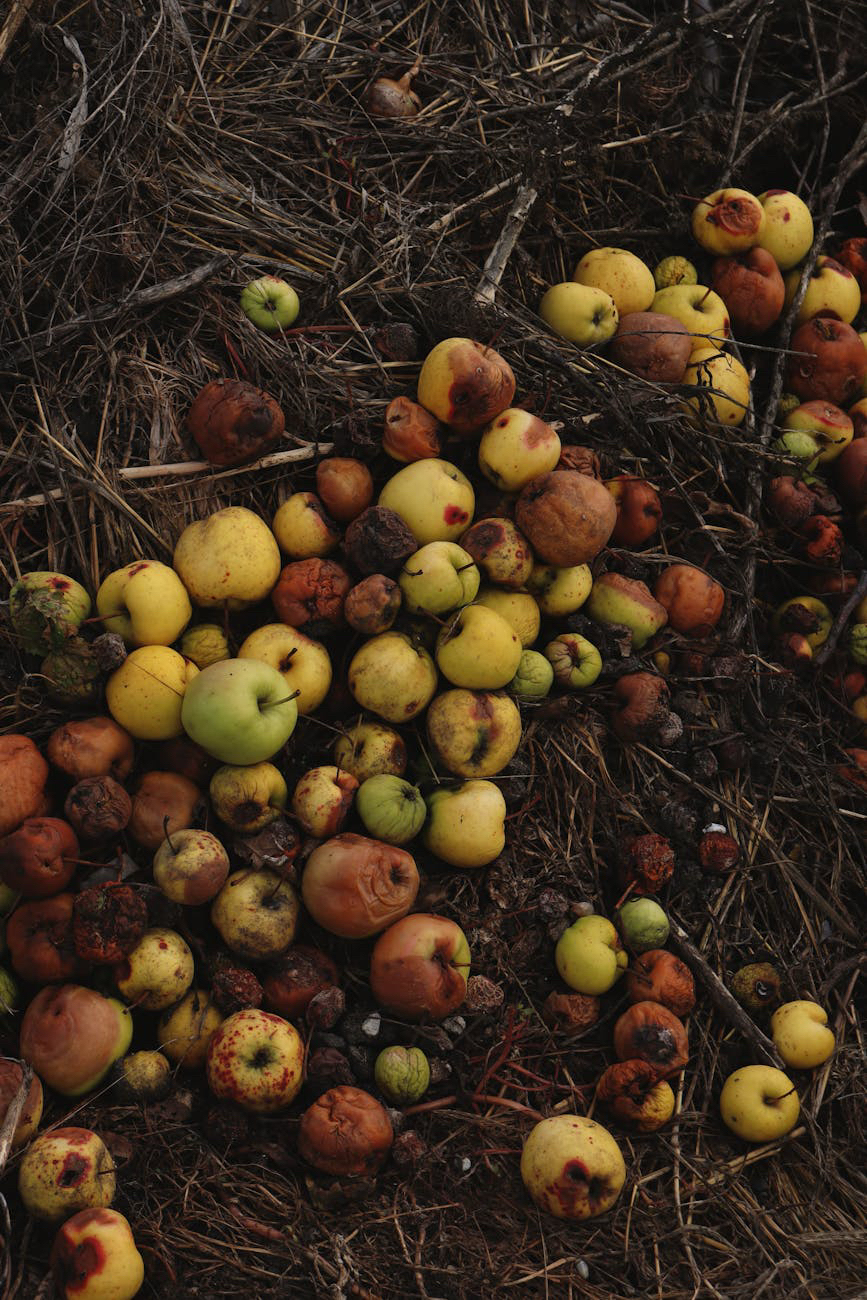
I always know when I’m in creative autumn. There is a particular quality of clarifying energy that arrives — a sense of wanting to complete, to close, to gather what was good and let the rest go. I want to finish the draft that’s been lingering. I want to organize what accumulated all summer. I want to release the piece I’ve been overthinking and let it find its people before the season turns. And I want to decide, honestly, which things I’m going to put in the compost pile rather than carry them, dead weight, into winter.
Working well in creative autumn:
• Finish the finishable. Autumn’s energy is perfect for the drafts that need one more pass, the projects that are ninety percent done and have been waiting for the last ten percent. The clarifying light of autumn is ideal for seeing what a piece actually needs to be complete — not perfect, complete.
• Curate ruthlessly. Not everything from summer’s production is worth keeping. Autumn is the season to look at what you’ve made and decide honestly: what is worth carrying forward, and what should be released into the compost pile? This curation is not failure. It is taste.
• Release what you’ve been hoarding. The finished piece you haven’t published because you’re still not sure. The project you completed months ago but can’t quite let go of. Autumn is the season of release. The tree lets the leaves go. Let your finished work go.
• Acknowledge what didn’t grow this year. With gentleness and without judgment, look at the seeds you planted in spring that didn’t become anything this cycle. Some of them were wrong for this year’s soil. Some needed a different season. Some will be back. Note them without shame, and let them go into the ground for next year.
• Prepare the compost pile. The material you’re releasing in autumn — the unfinished, the outgrown, the abandoned — is going into the pile. Autumn is when you add to it with intention, knowing that winter’s quiet dark will continue the decomposition that makes next year’s spring possible.
The most beautiful autumns are the ones where the letting go is complete. Where the tree releases cleanly, without clutching, and stands bare and clear and ready for what the dark will bring. That readiness is not emptiness. It is the most open and available creative state there is.
The Wheel of the Year: Charting Your Creative Cycles
This exercise requires a pen, paper, and about thirty minutes of honest reflection. It is one of the most clarifying things I’ve done for my creative life, and I return to it every year.
Step 1: Draw the wheel.
Draw a large circle. Divide it into twelve sections for the months of the year. Label them. This is your wheel of the year — the full cycle of your creative life laid out as a single visual field.
Step 2: Map your actual energy.
Going month by month through the past year, mark your creative energy level in each section. Not how productive you were — how alive your creative energy felt. High, medium, low. Use different markings or shading if it helps.
Then, in a different color, mark what you were actually trying to produce in each month. What were you publishing, launching, outputting? What was the external creative demand you placed on yourself?
Step 3: Find the misalignments.
Where do the two colors diverge? Where were you trying to produce in a low-energy month? Where was your energy high but your output demand low, leaving the surge with nowhere to go? These divergences are your misalignments. They are the places where you were fighting your season.
Common patterns to look for:
• Pushing for high output in January and February (classic winter fight — the new year pressure against the body’s actual dormancy).
• Scattering spring energy across too many projects and finding yourself depleted by June with nothing completed.
• Taking on new commitments in autumn when the season is calling for completion and release, not new beginnings.
• Treating a winter of low output as a creative failure rather than a root-growth period, and depleting yourself further by adding shame to dormancy.
• Producing prolifically in summer without the restorative input that feeds the next cycle — burning the canopy without tending the roots.
Step 4: Map the next year in alignment.
Using what you’ve learned from your misalignment map, sketch the next twelve months. Not a content calendar — a seasonal intention. Where will you allow dormancy? Where will you capture without committing? Where will you focus on production? Where will you prioritize completion and release?
This is not a rigid plan. It is a seasonal orientation. The details of what you make in each season will be determined by what arrives. But the quality of attention you bring to each season — the willingness to work with its energy rather than against it — will change the quality of everything you make across the entire year.
The natural world has been doing this for four billion years. Every organism on Earth times its cycles to the planet’s rhythms. You are the only one that needs a reminder that you’re allowed to.
You Were Always Meant to Have Seasons
There is a version of creative life that insists on producing at the same pace, in the same volume, with the same quality of energy, regardless of season, regardless of circumstance, regardless of what the natural world around you is doing. It treats consistency as the same thing as constancy. It mistakes rest for laziness, dormancy for failure, and seasonal variance for inconsistency.
That version of creative life eventually exhausts its own roots. The canopy keeps being asked to bloom without the underground work that makes blooming sustainable. And at some point, the tree that tried to be in permanent summer runs out of what it needs to keep going.
You were always meant to have seasons. The quiet of your winter is not a problem to fix. The overwhelming surge of your spring is not a failure of focus. The high productivity of your summer is not the only season that counts. And the releasing clarity of your autumn is one of the most sophisticated creative acts you will ever perform.
The year is the whole practice. All four seasons are the practice. You don’t get to skip any of them without paying for it somewhere else in the cycle.
Work with the year. All of it.

 Platnumkitty
Leave a comment