Part 10 of The Geology of Ideas series — the final installment.
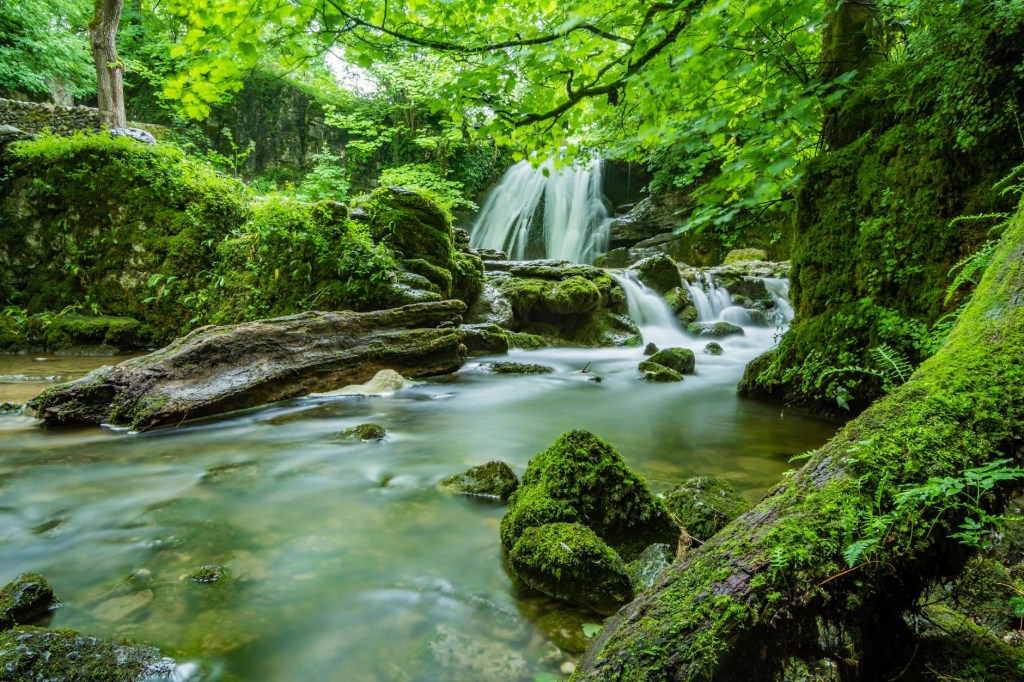
We’ve come from the bedrock all the way through the seasons. This is where we surface, look at the whole landscape we’ve made, and ask the most important question of all: what do we want our creative work to do in the world?
There is a principle in wilderness ethics called Leave No Trace.
It asks that you move through a natural environment in a way that preserves it for those who come after: pack out what you pack in, minimize impact, leave the landscape as close to how you found it as possible. It is a philosophy of presence without extraction. Of being in a place without depleting it.
But here is what I’ve always found interesting about the wilderness: it doesn’t actually want you to leave no trace. The wilderness wants you to leave the right kind of trace. The seed carried on your jacket that becomes a plant somewhere new. The story you take home that makes someone else want to protect a wild place they’ve never seen. The way a landscape changes you, and how that change ripples outward through everything you make afterward.
The goal is not invisibility. The goal is to move through the world in a way that gives more than it takes. To leave the ecosystem healthier, more diverse, more generative for your having passed through it.
This is what I want to close this series talking about. Not just the how of creative work — we’ve covered that across nine installments of geology and fungi and rivers and moss. But the why. The ethics. The question of what our creative work is actually doing to the ecosystem of thought, culture, and connection that it moves through.
Creating from Enoughness: The Alternative to Extraction
Extraction is the dominant creative model of our time, and most of us have internalized it so thoroughly that we don’t even recognize it as a choice.
Extractive creativity asks: what can I take from this experience, this landscape, this person, this culture, this trend — and convert into content? It treats the world as raw material and the creator as processor. It produces a lot. It also depletes the sources it draws from, homogenizes what it touches, and tends to leave the creative ecosystem poorer than it found it.
The alternative is creating from enoughness. It starts from a different premise: that you already have what you need to make something true. That the world is not raw material to be processed but a living system to be in genuine relationship with. That the creative act is not extraction but exchange.
Creating from enoughness doesn’t mean making less. It means making from a different orientation — from abundance and genuine attention rather than from scarcity and strategic positioning. It means asking not “what can I get from this?” but “what does this want me to say about it?” Not “what will this do for my reach?” but “what does this add to the conversation that isn’t already there?”
What creating from enoughness looks like in practice:
• Making things because you have something genuine to say, not because the algorithm rewards a particular format or frequency. The creative ecosystem doesn’t need more content. It needs more things made from real necessity.
• Being honest about your sources. When your work is fed by a place, a person, a culture, a community that is not your own — say so. The extraction model takes without attribution. The enoughness model acknowledges what it received and from where.
• Resisting the urge to monetize every creative impulse before it has had time to develop into something true. Some things need to exist outside the economy for a while. Not everything you make needs to be a product.
• Making things that take genuine time and care, even when that pace is invisible to an audience. The quality of attention you bring to your work is part of its ecological impact. Rushed, extractive work generates noise. Careful, sufficient work generates signal.
• Giving back to the ecosystems you draw from. If a place has given you material, what have you given back to it? If a community has shaped your thinking, are you supporting it? Enoughness is not just about how you make things. It’s about the reciprocity of the whole system.
The most enduring creative work is almost never extractive. It is made from genuine exchange with the world — from a place of having truly looked, truly listened, truly stayed long enough to receive something real. That receiving is what makes it worth passing on.
The Dandelion Model: Offering Work Freely, Letting It Seed Where It Will
The dandelion is one of the most misunderstood plants in the world. It is classified as a weed in most lawn-care literature. It is chemically eradicated from parks and gardens with an enthusiasm that borders on the personal. And it is, ecologically, one of the most generous and useful plants in any temperate ecosystem.
The dandelion’s seed head — the white puff that children have been blowing into the wind for as long as there have been children and dandelions — is a masterpiece of dispersal engineering. Each seed is attached to a tiny parachute structure called a pappus, designed to catch the slightest breeze and carry the seed as far as possible from the parent plant. The dandelion does not control where its seeds go. It does not choose its audience. It simply makes the seed available and trusts the wind.
This is one of the most radical things a creator can do.
We are conditioned, in the economy of attention, to want to control where our work goes. To target, to optimize, to funnel our creative output toward the specific audience that will convert, engage, return. The platform rewarding this behavior has shaped an entire generation of creators into marketers of their own work before that work has fully become what it needs to be.
The dandelion model asks something different: make the seed as good as you possibly can, give it the best possible structure for travel, and then release it. Trust the wind. The work will find the ground it was meant for. You cannot know, from where you’re standing, which seed will land in fertile soil. The dandelion doesn’t know either. It makes thousands of seeds and releases them all.
• Write the piece that is true before you write the piece that is strategic. The seed that is most fully itself travels the furthest and germinates in the most unexpected places.
• Release work without demanding a particular response from it. Put it out, let it go, stop checking on it as if your attendance is required for its germination. The dandelion does not follow its seeds.
• Trust that the person who most needs what you made is out there. You may never know who they are or where your seed landed. That is fine. The dandelion has no idea which of its thousand seeds became the plant growing in the crack of a sidewalk three miles away. It doesn’t need to know.
• Make enough seeds. Generosity at scale is part of the model. Not every piece will land somewhere that matters. Make more pieces. Release more seeds. The ecosystem benefits from the abundance.
• Be the dandelion, not the greenhouse orchid. The orchid is beautiful and controlled and requires specific, managed conditions to survive. The dandelion grows in parking lots. Grieve less about the perfect conditions and release more into the actual world.
The dandelion is considered a weed because it cannot be controlled. Your most alive creative work will also, by the standards of the optimization economy, look like a weed. It will go where it wants. It will refuse to stay in the designated container. It will germinate in the most unlikely places and be completely indifferent to whether those places were on the content strategy.
Your Work as a Keystone Species: Supporting an Ecosystem of Thought
A keystone species is one whose impact on its ecosystem is disproportionately large relative to its abundance. Remove the keystone species, and the ecosystem collapses or transforms beyond recognition. Wolves in Yellowstone. Sea otters on the Pacific coast. The African elephant on the savanna. These are not necessarily the most numerous or the most visually dominant species in their ecosystems. They are the ones whose presence creates the conditions for everything else to exist.
The question I want you to sit with is this: what would the intellectual and cultural ecosystem around you look like if your work were removed from it?
Not whether it would be smaller in quantity — that’s less interesting. But whether it would be different in quality. Whether there are conversations that happen because of your work that wouldn’t happen otherwise. Whether there are people who think differently because of something you made. Whether there is space being created by your presence in a conversation that would close without you.
Keystone creative work is not always the most popular or the most viral. Often it is the work that holds space for a particular kind of thinking — a particular quality of attention, a particular way of being honest about experience — that the broader ecosystem needs but that the attention economy undervalues. It is the work that makes other work possible. The essay that gives someone permission to write their own. The photograph that teaches a way of seeing. The piece that names something that was unnamed and, in naming it, opens the conversation.
Questions for thinking about your work as a keystone:
• Does your work create space for other voices, or does it crowd them out? Keystone work tends to be generous — it leaves room for responses, for disagreement, for the perspectives it hasn’t considered. It opens rather than closes.
• Does your work model a quality of attention or a way of engaging with experience that others can learn from, even if they never consciously analyze it? The wolf teaches the elk where to graze by creating fear. Your work teaches your readers something about how to see by showing them how you see.
• Does your work acknowledge its own ecosystem? Does it cite its sources, name its influences, credit the thinking it builds on? Keystone species don’t exist in isolation. They exist in relationship. Work that pretends to come from nowhere impoverishes the ecosystem it draws from.
• What would need to exist in the broader conversation if your work didn’t? That gap is the shape of your contribution. Fill it. Not because it’s strategic, but because the ecosystem genuinely needs it filled.
• Is there work you’re not making that the ecosystem around you is missing? Sometimes the keystone contribution isn’t the work you’re already making but the work you’ve been putting off because it feels too big or too vulnerable. The work that makes you most afraid is often the work the ecosystem most needs.
You don’t have to be famous to be a keystone. You have to be genuine, and you have to show up consistently in the specific place where your particular quality of attention is most needed. The ecosystem knows what it’s missing. Often, so do you.
The Final Reflection: Your Creativity as a Force of Nature
We have spent ten installments of this series learning the language of the natural world and applying it to the interior landscape of creative work. We have drilled into bedrock and learned to photosynthesize. We have mapped mycelium and let rivers move. We have sat with moss, channeled storms, built nests, composted failures, and aligned ourselves with the seasons.
Now, one final question. And I want you to take it seriously, because I think it is the most important one in the series.
If your creativity were a force of nature — not a metaphor for a force of nature, but actually one — what would it be? A gentle mycelial network, quietly connecting what was separate and feeding what is struggling? A reforming glacier, slow and enormous and reshaping everything it moves across? A pollinating wind, carrying fertility between things that couldn’t reach each other on their own? A river that carves new channels? A storm that clears the air? A slow moss, covering everything with patient, inevitable thoroughness?
There is no right answer. But there is your answer, and it matters more than any other question in this series, because it is the answer that tells you how your creativity wants to move through the world.
Not how you think it should move. Not how the algorithm rewards movement. Not how the market values it or how the industry categorizes it. How it actually wants to move. The pace of it. The scale of it. The quality of contact it makes with everything it touches.
Because once you know what force of nature you are, you stop trying to be a different one. You stop trying to move at glacier speed when you’re actually a pollinating wind. You stop trying to generate the dramatic visible impact of a storm when your nature is the slow, invisible, underground work of mycelium. You stop being ashamed of your pace, your scale, your particular way of making contact with the world.
You just become what you already are. More completely. More faithfully. More without apology.
And then you move.
A note on this series.
The Geology of Ideas began as an attempt to find a language for the creative process that felt truer than the usual vocabulary of productivity and hustle and output. I wanted a language that honored the slowness, the darkness, the seasonal variance, the underground work, the necessary decomposition, the patient and invisible growth that I know from my own experience is most of what creative life actually is — even though almost none of it is the part we talk about publicly.
What I found, in the process of writing it, is that the natural world has already built the entire vocabulary I was looking for. It has been doing the work of creation, decomposition, transformation, and renewal for four billion years, in every climate and condition imaginable, with a patience and intelligence that makes our anxious human productivity culture look like what it is: very new, very noisy, and not particularly well-adapted to the actual rhythms of a life lived in genuine creative alignment.
I hope something in these ten installments gave you permission for the particular force of nature you already are. I hope it named something you already knew but hadn’t had words for. I hope it made you a little less afraid of your winter, a little more trusting of your compost pile, a little more willing to let your river find its own channel.
Go make something. In your own season, at your own pace, with your own particular quality of attention.


 Platnumkitty
Leave a comment