
Is it in movement, monotony, or mild panic?
Identifying the unique conditions where your mind unlocks.
There is a version of you that thinks clearly. That makes connections no checklist could manufacture. That arrives at the exact right word, the precise solution, the idea that makes everything else click into place.
You have met this version of yourself before. Maybe briefly. Maybe rarely. But you know the feeling — time loosening, the inner critic going quiet, thoughts arriving faster than you can catch them. That is your flow state. And it has a home address.
The question worth sitting with isn’t whether you can access that state. You already have. The question is: what were the conditions? What was the weather of your mind right before it opened?
Flow isn’t a reward for discipline. It’s a response to the right environment — and that environment is different for every person.
Most of us have been told, implicitly or explicitly, that good creative work happens at a desk, on a schedule, with the right apps open. We’ve inherited a model of productivity that treats the brain like a machine: input focus, output results. But that’s not how insight actually works. It never was.
What follows is an honest look at the three most common “flow territories” — the inner landscapes where creative minds tend to unlock. Not to prescribe which one is yours, but to help you recognize it. Because once you know your flow’s zip code, you can start spending more time there.
The First Territory: Movement
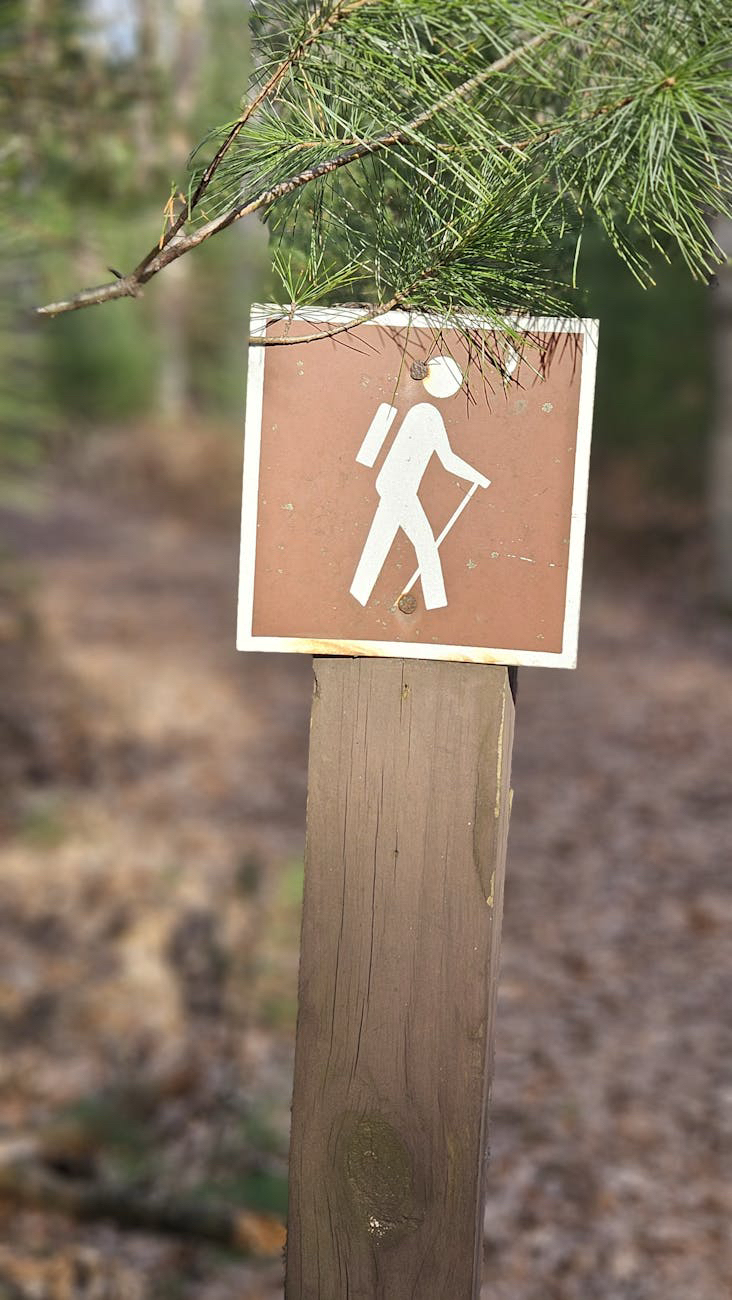
For some people, the body has to be in motion before the mind will truly open.
This isn’t metaphor. There’s a real neurological relationship between physical movement and divergent thinking — the kind of associative, free-ranging thought that produces novel ideas. Walking, in particular, has been studied extensively, and the findings are consistent: it frees up cognitive resources that sitting quietly somehow doesn’t.
If you’ve ever solved a problem on a run that resisted every attempt at your desk, you know this firsthand. The movement isn’t a distraction from the thinking. It is the thinking. Your legs are doing the ordinary work so your brain can do the extraordinary kind.
I’ve found this to be true in my own life — some of my clearest moments have come mid-walk, mid-hike, sometimes mid-wander in an unfamiliar city where I wasn’t trying to go anywhere in particular. The lack of destination seemed to matter. The body was occupied. The mind was free.
You don’t find flow by chasing it. You find it by putting yourself in the conditions where it’s been known to appear.
If movement is your territory, pay attention to what kind. Is it rhythmic and familiar — a regular route, a known trail? Or do you need novelty — a new neighborhood, a path you haven’t walked before? The type of movement matters almost as much as the movement itself.
A few things worth trying if you suspect movement is your key:
— Take a walk before you sit down to work — not as a warm-up, but as the actual creative session. Bring something to capture thoughts: voice notes, a small notebook.
— If you’re stuck on something specific, don’t try to solve it at your desk. Take it outside. Hold the question loosely and let your feet do some of the work.
— Notice whether you think better moving alone or with someone else. The presence of another person changes the mental frequency entirely.
— Try varying your pace deliberately. Sometimes the insight comes when you slow way down, almost to a stop. Other times, it arrives when you pick up the rhythm.
The Second Territory: Monotony
This one surprises people. We tend to think of monotony as the enemy of creativity — deadening, flat, the thing we’re trying to escape. But for many creative minds, a certain kind of low-demand repetitive task is the exact conditions under which the deeper brain goes to work.
Washing dishes. Folding laundry. Driving a route you could navigate in your sleep. Long showers. Pulling weeds. Kneading dough. The task occupies just enough of your conscious attention that the inner critic — that relentless evaluator — gets distracted. And in that opening, something else slips through.
This is why so many people report their best ideas coming in the shower. It’s not the water. It’s the combination of mild sensory engagement and absolute cognitive freedom. You’re not expected to produce anything. You’re not being watched. The task has a rhythm and a finish line and zero stakes. Your mind, released from performance, goes exploring.
Monotony, in the right dose, is not the absence of thought. It’s the condition that allows the best thinking to surface.
There’s something almost countercultural about claiming this. We live in an era that pathologizes boredom and glorifies hustle. The idea that the secret ingredient might be doing something completely unremarkable — folding laundry, walking in circles — doesn’t fit the narrative of the heroic creator grinding away at their desk.
But it’s real. And if monotony is your territory, the implication is significant: you may need to protect time for low-demand tasks, not eliminate them. That drive you’ve been thinking about automating? That repetitive chore you’ve been trying to outsource? It might be earning its keep in ways you haven’t accounted for.
Some ways to work with this:
— Keep a voice recorder or small notebook near the places where you do repetitive tasks. Your best ideas will start showing up, and you’ll want to be ready.
— Before a creative session, do ten to fifteen minutes of something simple and physical — not to relax, but to prime. Think of it as clearing the cache.
— Notice whether the monotony needs to be familiar or whether novelty disrupts it. Some people need the exact same task every time. Others just need something low-stakes and new.
— Resist the urge to fill every idle moment with a podcast or scroll. Sometimes the gap between tasks is where the real work happens.
The Third Territory: Mild Panic
This is the one nobody wants to admit to, but here it is: for some of us, a little bit of productive discomfort is the key that unlocks everything.
Not real danger. Not the kind of stress that floods your system with cortisol and shuts down higher thinking. But the particular sharpness that comes from being slightly over your head — a tight deadline, a new environment, a challenge that’s just beyond the edge of what you’re certain you can do.
Travel tends to produce this naturally. You’re in a place where the language isn’t yours, the streets don’t follow the logic you’re used to, the menu requires guessing. You’re navigating without the usual scaffolding. And there’s something about that state — alert, present, adaptive — that generates a kind of creative clarity that comfort rarely produces.
The edge of your competence is not a dangerous place. It’s a generative one — if you can learn to stay there without tipping into overwhelm.
The reason mild panic works has to do with attention. When everything is familiar, the brain downshifts into pattern-matching mode — efficient, but not particularly imaginative. A little unfamiliarity forces genuine engagement. You have to actually look. Actually think. Actually respond rather than react from habit.
For people in this territory, the creative work tends to be better under some version of constraint or urgency. A deadline that has some teeth to it. A problem that has no obvious solution. A setting that disrupts the usual comfort.
This can be both a gift and a trap. The gift is that you know where your sharpness lives. The trap is that you can start to manufacture crises — real or imagined — as a creative crutch. The goal is to find the right dose: enough novelty and edge to activate your attention, not enough to send you into shutdown.
Some ways to work with mild panic as a territory:
— Give yourself a creative constraint before you start: a time limit, a word count, a single tool, an unusual angle. Constraints narrow the field and sharpen focus in ways that open-ended freedom often doesn’t.
— Work in new environments occasionally — a coffee shop you’ve never been to, a different city, even a different room. The slight unfamiliarity can activate the same sharpness as travel.
— Take on a project that is genuinely slightly beyond your current skill. The stretch is the point. Comfort produces competence; mild discomfort produces growth.
— Notice the difference between productive edge (engaged, alert, slightly stretched) and real overwhelm (frozen, scattered, shut down). They feel similar at first, but one opens you and one closes you.
So Which One Are You?
Probably some combination. Most people have a dominant flow territory and a secondary one that activates under different circumstances. You might be a movement person on ordinary days and a mild-panic person when the stakes are high. You might find that monotony works for a certain kind of creative work and novelty for another.
The point isn’t to put yourself in a box. It’s to get honest about the patterns that are already there.
Think back over the last several months. When did you feel most mentally alive, most creatively present, most like yourself but turned up slightly? Were you moving? Were you doing something repetitive and unremarkable? Were you navigating something unfamiliar?
Your answer is data. It’s pointing somewhere specific. And the beautiful, practical implication is this: you don’t have to wait for flow to find you. You can start engineering the conditions where it has already proven it will show up.
The most creative thing you can do right now might not be to work harder. It might be to pay closer attention to where you’ve already been brilliant — and go back there on purpose.
Your flow has a zip code. You’ve visited before. You know the neighborhood.
It’s time to move in.
Before you go —
I’d love to know: which territory resonates most with you right now? Are you a movement person, a monotony person, or someone who secretly does their best thinking on the edge of mild chaos? Leave a comment below — I read every one, and these conversations always teach me something.


 Platnumkitty
Leave a comment