Curating your pre-creative ritual like you’d pack a daypack.

Let’s be honest. Most of us already have a pre-creative ritual. We just haven’t named it yet — which means we can’t use it on purpose.
Maybe it starts with coffee: the ritual of the grind, the warm mug, the first slow sip. Maybe it’s a certain playlist, a particular chair, the specific angle of morning light through the window you always face when you open your notebook. You do these things almost without thinking, but deep down you know: they’re not incidental. They’re the on-ramp — the quiet signal your brain and body have learned to recognize as permission to begin.
But what happens when the coffee isn’t enough? When you sit down to write or paint or create, and the blank page just stares back — unmoved, unimpressed, utterly unbothered?
What if you’ve been packing your creative daypack on autopilot, and it’s time to get intentional about what actually goes in?
A good ritual isn’t a superstition. It’s a conversation with your own creative nervous system — and like any good conversation, it works better when you’re paying attention.
Reflect: When was the last time your pre-creative ritual genuinely worked — when you sat down and something just opened? What was different about that day?
The Daypack Metaphor
Think about the last time you packed for a day hike or a long day of exploring somewhere new. You didn’t just throw random things in your bag and hope for the best. You thought about what you’d need — water, a snack, something for the unexpected. You considered the terrain. You made intentional choices, because you knew the day ahead would ask something of you.
Your pre-creative ritual deserves the same deliberate care.
The items in your creative daypack aren’t all physical objects. They’re conditions — sensory, emotional, environmental — that help your creative mind shift into gear. And just like hiking, what works for someone else’s trail might be completely wrong for yours. The novelist who does her best work in a buzzing coffee shop is packing a very different bag than the illustrator who needs cathedral-quiet before the first mark on the page.
Reflect: What does your creative ‘terrain’ actually look like? Are you attempting a mountain trail with gear built for the beach?
What Goes in a Creative Daypack?
Here are the five most overlooked — and most powerful — gear categories to consider. These aren’t prescriptions. They’re prompts for self-discovery.
🌿 Sensory Anchors
Smell is the fastest route to a particular mental state — neuroscientists call it the most direct sensory pathway to memory and emotion. Many writers and artists keep a specific candle, essential oil, or hand lotion they use only when creating. Over time, the scent becomes a Pavlovian cue: your brain starts to anticipate the work before you’ve written a word. Sound operates the same way — a specific playlist, brown noise, rain on a window, or a particular quality of silence.
Try this: This week, notice which sensory input already nudges you toward your creative self. Then use it on purpose — before you even open the laptop or pick up the brush.
📓 The Entry Object
Some creatives keep a dedicated object they touch before beginning — a smooth stone, a beloved pen, a well-traveled notebook. The object itself is irrelevant. What matters is the micro-ritual of reaching for it, which signals a transition: from ordinary self to creative self. It’s a physical full stop on whatever came before, and a quiet opening parenthesis on what comes next.
Try this: If you don’t have an entry object, spend five minutes this week choosing one. Handle it. Put it somewhere visible near your creative space. Then use it — every single time.
🚶 Movement or Stillness (Your Version)
For some creators, a short walk before sitting down is non-negotiable — it’s where the ideas start loosening, where the morning’s mental clutter shakes free. For others, it’s five minutes of stillness, eyes closed, intentionally letting the noise of the day settle before asking the creative mind to speak. Neither approach is more legitimate. The question is which one your nervous system needs to arrive at the page genuinely ready — not just physically present.
Try this: Tomorrow, try the opposite of your default. If you usually dive straight in, walk first. If you always walk first, try sitting in stillness. Notice what shifts.
📖 A Reading Warm-Up
Many writers swear by reading a page or two of something they love before writing a word of their own — not to imitate, but to remember what language can do. To feel the rhythm of a sentence that really works before attempting their own. Painters might spend a few minutes with an image that moves them. Musicians listen before they play. The principle is the same across every discipline: feed the creative self before asking it to produce.
Try this: Choose one paragraph from a piece of writing you deeply admire. Read it slowly, out loud if possible. Then open your own work. Notice if the quality of attention has changed.
🗺️ Place (The Most Underrated Variable)
Where you create matters far more than most of us admit — and it’s rarely about the aesthetics of the space. It’s about what a particular place asks of you. A coffee shop creates pleasant ambient pressure. A studio signals permission. A kitchen table carries a different weight than a writing desk. The chair you’ve written in for years holds a kind of muscle memory. And some of the most productive creative sessions happen somewhere entirely unexpected — which brings us to the most interesting question of all.
Try this: Before your next session, pause before you sit down. Ask: is this the right place for what I’m trying to make today? If something feels off, try changing one thing — the chair, the room, the direction you’re facing. Pay attention to what happens.
Your Eureka Locations: Mapping Where the Magic Lives
Here’s something every creative discovers eventually, usually with a mixture of delight and mild frustration: the best ideas almost never arrive at the desk.
They arrive in the shower. On the bus. In a foreign market where you don’t speak the language and all you can do is look. On a run when your mind finally stops trying. In the half-awake blur just before sleep. At the kitchen sink. Somewhere between the car door and the front door, when you’ve already stopped thinking and haven’t yet started doing anything else.
These aren’t flukes. These are your Eureka Locations — the specific conditions and places where your subconscious finally gets a word in.
Your best ideas have a geography. Most creatives never stop to draw the map.
Neuroscience offers a partial explanation: during low-demand, rhythmic, or slightly boring activities, the brain’s default mode network activates — the same network associated with creative insight, pattern recognition, and the connecting of apparently unrelated ideas. The shower isn’t magic. But the disengagement it offers absolutely is.
Think of the writer who stops forcing the plot problem mid-errand and suddenly, somewhere between the market stall and the bus stop, finds the answer she’s been circling for a week. The artist on the overnight train who sketches an idea she couldn’t quite visualize in her studio. The blogger on her morning walk who finally hears the right opening line. These moments feel like gifts, but they’re also data — and data you can use.
Reflect: Where do you do your best thinking? Not your best working — your best thinking. Are those two places the same? Should they be?
YOUR QUIRKY PROMPT // MAP YOUR LAST AHA! MOMENT
Think back to your most recent creative breakthrough — the idea that finally clicked, the line that unlocked the whole piece, the image that suddenly made everything make sense. Now trace it back to its origin.
1. Where were you physically? Be specific — not just “outside” but the quality of the light, whether you were moving, what you could hear.
2. What were you doing — and critically, what were you NOT doing? Were you off-task, bored, mid-routine, half-asleep?
3. What time of day was it? How long had you been awake? Had you eaten? Been in conversation with someone?
4. Now do this for the three creative breakthroughs before that. Write them down. Look for the pattern.
5. Ask yourself: What conditions do these moments share? And how many of those conditions could you engineer deliberately into your pre-creative ritual?
The challenge: This week, before one creative session, recreate the conditions of your most recent Eureka Location as closely as you can. Walk the route. Sit in the chair. Create the specific kind of disengagement that opens the door. Then sit down to work — and see what arrives.
Your Action Plan: Build the Ritual This Week
You don’t need to reinvent your entire creative life. You need to get curious — and then take small, specific steps. Here’s a four-part action plan to start this week.
01 Do a Daypack Audit
Spend ten minutes writing down every element of your current pre-creative routine, including the things you do unconsciously. Then ask honestly: which of these actually helps? Which are habit without purpose? Which might be actively working against you? Cross out what isn’t earning its place. Keep what is. Add one deliberate new element — just one — and try it for five consecutive sessions before judging whether it works.
02 Map Three Eureka Locations
Think back over the last month. Identify three moments when a good idea arrived unexpectedly. Write down where you were, what you were doing, and what the common thread is. You’re not looking for a magic formula — you’re looking for a pattern you can return to deliberately. Then ask: can you build even fifteen minutes of these conditions into your routine before you create?
03 Design a Transition Ritual
The hardest creative problem isn’t sustaining flow — it’s entering it. Create a deliberate three-part transition that moves you from ordinary life into creative mode: something physical (a walk, a stretch, touching your entry object), something sensory (a scent, a specific sound), and something symbolic (opening a particular notebook, making a specific drink). The sequence matters less than the consistency. Do it the same way every time, and your nervous system will begin to learn.
04 Create a ‘Conditions Card’
On an index card or a note on your phone, write down the specific conditions under which you do your best creative work: the time of day, the environment, the sensory inputs, the state of mind, the kind of preparation that helps. Keep it somewhere you’ll see it before you create. On days when creative work feels impossible, check it before you blame yourself — you might simply be attempting the wrong terrain with the wrong gear.
Pack with Intention
The goal isn’t a perfect ritual. It’s an honest one — built from real self-knowledge about how your particular creative mind works, not from what looks good on someone else’s productivity blog.
Start where you are. Notice what shifts you. Name it. Build from there.
Your daypack doesn’t have to be elaborate. It doesn’t have to look like anyone else’s. It just has to be genuinely, specifically yours.
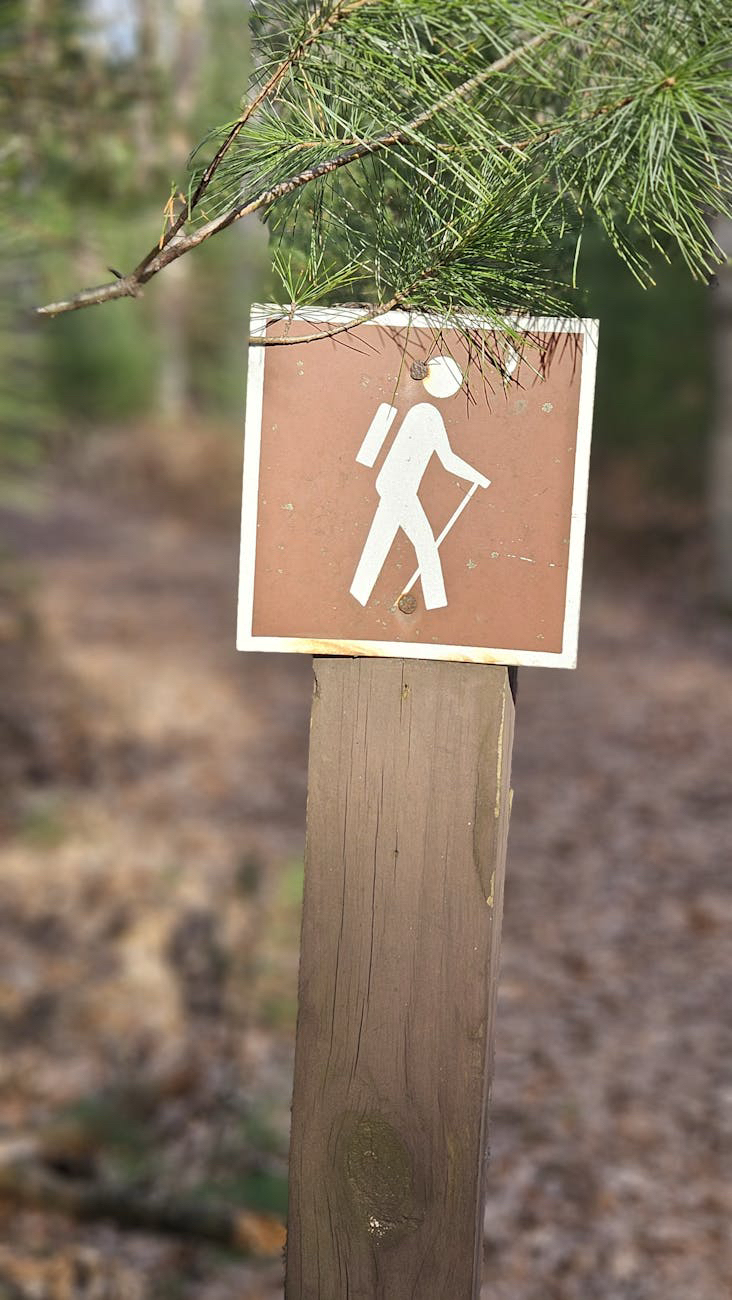
The ritual is not the destination. It’s the trailhead. And the trailhead you build with care is the one you’ll actually return to.
Until next time — pack light, create often, and keep following the map. 🌿
— The Collecting Moments Project

 Platnumkitty
Leave a comment