Why Some People Seem to Age Faster Than Others
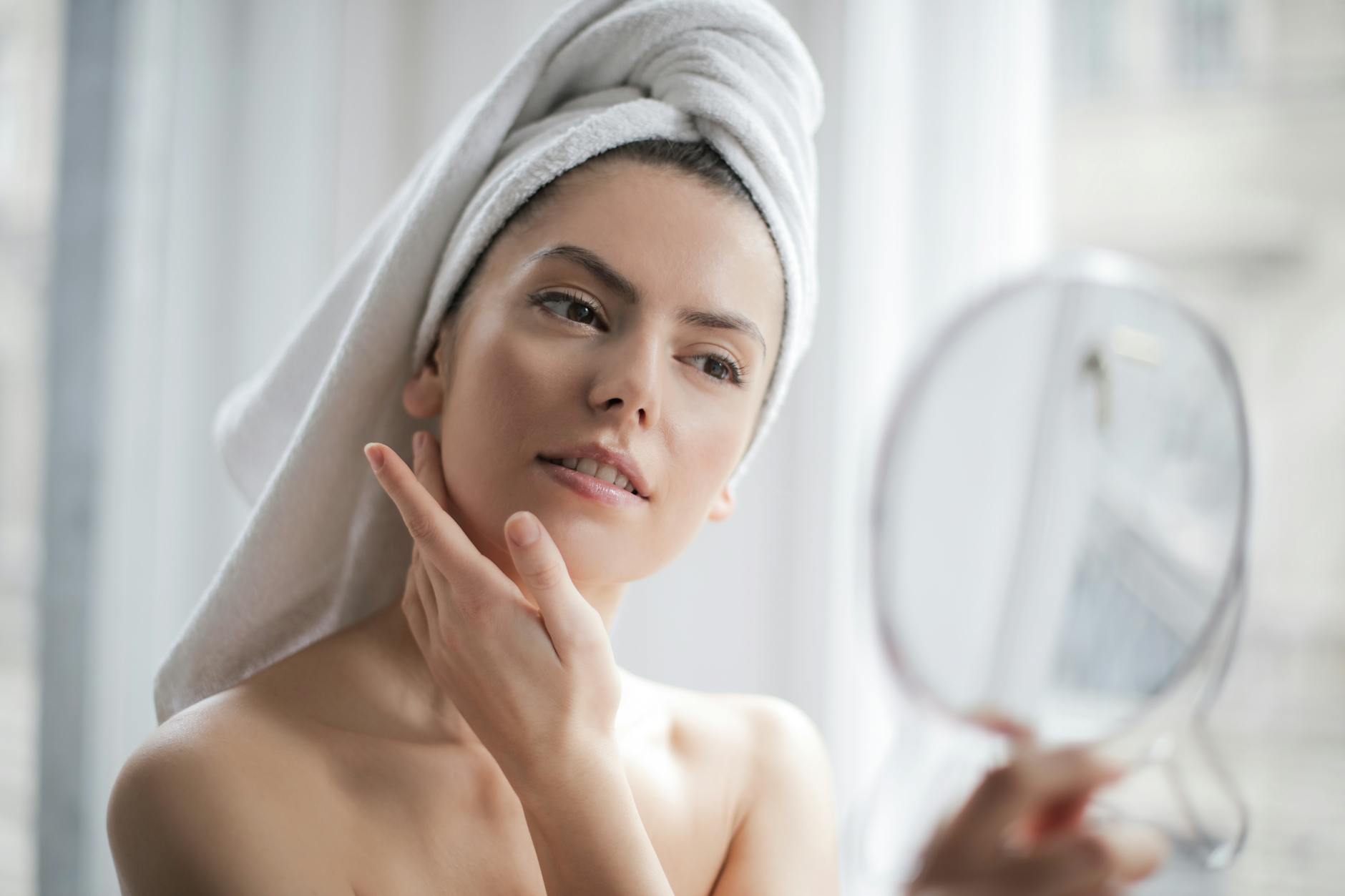
There’s a woman I know who is in her late sixties. She hikes, laughs loudly, travels, and carries this undeniable energy that makes you want to sit next to her at every dinner table. And then there are people half her age who move through life with a heaviness — tired eyes, tight shoulders, a kind of quiet resignation that has settled into their face and their posture.
We’ve all noticed it. The gap between people who seem to age and people who seem to live. And the older I get, the more I find myself wondering: what’s actually happening there? Is it genetics? Is it luck? Or is something else entirely going on beneath the surface?
The answer, it turns out, is beautifully complicated — and far more within our influence than we’ve been led to believe.
Your Body Keeps Time, But Not in the Way You Think
Here’s something that stopped me cold when I first learned it: your chronological age — the number of candles on your birthday cake — is almost irrelevant to how your body is actually aging.
What matters more is something called biological age, and researchers can now measure itby looking at your DNA. Specifically, they look at epigenetic markers — chemical tags on your genes that accumulate or shift based on how you’ve lived: what you’ve eaten, how much you’ve slept, whether you’ve carried chronic stress, whether you’ve felt loved and purposeful.
One of the most studied measurements is called the Horvath Clock, developed by UCLAbiostatistician Steve Horvath. It can estimate a person’s biological age based on these DNA markers — and the difference between someone’s chronological age and their biological age can span decades.
That woman who hikes and laughs at 68? Her biological age might be closer to 52. And the 44-year-old who feels perpetually exhausted and depleted? Her cells may be aging far ahead of schedule.
This isn’t about vanity. It’s about the accumulated story your body tells — of how you’ve been living.
The Usual Suspects (And Why They’re Not the Whole Story)
Yes, genetics play a role. We all know that person who smoked for 40 years and lived to 97. But research increasingly shows that genes account for only about 25% of longevity outcomes. The rest? Lifestyle and environment.
The usual list shows up in every wellness article: eat more vegetables, exercise regularly, sleep eight hours, reduce stress. And those things matter — they genuinely do. But I think we’ve reduced aging to a checklist when it’s really more like a weather system: complex, interconnected, and deeply personal.
What the research is revealing — especially through the lens of Blue Zones and psychological science — is that the things we tend to overlook are often the ones doing the most damage. Or the most healing.
What the Blue Zones Actually Teach Us (It’s Not About Kale)
The Blue Zones — the five regions of the world with the highest concentrations of centenarians — have been studied extensively by researcher Dan Buettner. The places: Sardinia, Italy; Okinawa, Japan; Nicoya Peninsula, Costa Rica; Ikaria, Greece; and Loma Linda, California.
Yes, their diets are mostly plant-based. Yes, they move regularly. But when you dig deeper, the most consistent threads across all five zones are not what you’d put on a grocery list:
They have a reason to get up in the morning. In Okinawa, they call it ikigai — your reason for being. In Nicoya, it’s called plan de vida. Research consistently shows that people with a strong sense of purpose live longer and show slower cellular aging. Purpose isn’t a luxury. For your biology, it’s fuel.
They belong to something. Every Blue Zone population has tight-knit social structures — whether it’s faith communities, multigenerational households, or the moai of Okinawa (small groups of lifelong friends who support each other through everything). Loneliness, by contrast, has been shown to be as damaging to health as smoking 15 cigarettes a day. We were not built for isolation.
They experience stress differently. Blue Zone communities have built-in stress rituals — prayer, naps, ancestor veneration, happy hour with neighbors. They don’t eliminate stress; they metabolize it. There’s a difference.
They don’t hustle. In Sardinia and Ikaria, life moves slowly by design. There’s a reverence for rest and celebration. The Ikarians have a saying that roughly translates to: “Why would I hurry? I’m just going to live longer anyway.”
They eat together. The social act of sharing meals — not eating alone in front of a screen — is its own form of medicine.
None of this is complicated. But in a culture that worships productivity and independence above all else, most of it is quietly radical.
The Grief and Trauma Nobody Talks About
Here’s the part of the aging conversation that almost never makes it into wellness content, and I think it’s one of the most important.
Unprocessed grief ages us.
I don’t mean this metaphorically. I mean it physiologically. Research on adverse childhood experiences (ACEs) and adult trauma consistently shows that unresolved emotional wounds accelerate biological aging, increase inflammation, and shorten telomeres — the protective caps at the end of your chromosomes that are one of the best markers we have for cellular aging.
Think about the people in your life who have seemed to age dramatically after a devastating loss — a spouse, a child, a sense of self. That’s not just sadness. That’s biology responding to a broken heart.
The reverse is also true: people who have processed grief, who have found meaning in loss, who have learned to carry sorrow alongside joy rather than being buried by it — they often carry an unusual kind of vitality. They’ve been cracked open and put back together, and something in that process seems to make them more alive, not less.
This isn’t about toxic positivity or “good vibes only.” It’s about the profound importance ofactually feeling your life — the hard parts too — rather than numbing, rushing past, or white- knuckling through it.
The Inflammation No One Sees Coming
If there is a villain in the aging story, it’s chronic inflammation — not the kind you feel after you twist your ankle, but a low-grade, systemic smoldering that goes on for years without obvious symptoms.
Researchers now call it inflammaging — a portmanteau of inflammation and aging — and it’s implicated in nearly every age-related disease: heart disease, Alzheimer’s, type 2 diabetes, cancer, even depression.
What drives it? The list is long, but some of the most overlooked drivers are:
- Chronic loneliness (yes, again — it’s that significant)
- Poor sleep — not just quantity, but quality
- Chronic low-grade stress — the kind that never fully resolves
- A gut microbiome out of balance — emerging research links gut health to inflammation in ways we’re only beginning to understand
- Feeling like your life lacks meaning or direction
That last one surprises people. But psychological research has shown again and again that a sense of purpose and coherence in your life is genuinely anti-inflammatory at the cellular level. Your mind and body are not separate systems wearing the same outfit. They are one.
Joy Is Not Frivolous — It’s Biological
I want to say something that I think gets lost in every conversation about healthy aging: Joy is medicine.
Not happiness — happiness is a mood, and it’s fleeting. Joy is something deeper. It’s the feeling of being fully present in a moment that matters to you. It’s laughter with people you love. It’s standing somewhere beautiful and feeling it in your chest. It’s creating something with your hands, or your words, or your kitchen. It’s the particular satisfaction of a life that feels like yours.
Research on positive affect — the science of experiencing positive emotions — shows that people who regularly experience joy, awe, gratitude, and connection have measurably lower levels of cortisol, lower inflammation markers, and longer telomeres than those who don’t.
The women in Sardinia who gather in doorways to talk and laugh well into the evening aren’t just having fun. They’re doing something deeply protective for their biology.
This is why I believe so strongly in the practice of collecting moments — not as a sentimental hobby, but as an act of radical self-care. When you train your attention to notice what’s beautiful, what’s meaningful, what’s worth savoring — you are literally changing the chemistry of your aging.
The Slow Living Connection
There’s something the Blue Zones and the research keep circling back to, and it connects deeply with the way I try to live and travel: slowness is not laziness. It’s longevity.
Slow travel — the kind where you stay long enough to feel a place, to learn the rhythm of a morning market, to make friends with the woman who runs the bakery — does something to your nervous system that a rushed itinerary simply can’t. It drops you into presence. It signals safety to your body. It allows the kind of deep rest that actually restores you.
The same is true of slow living in general. Not every day has to be optimized. Not every season has to be productive. There is biological wisdom in fallow periods — in rest, in wandering, in meals that last for two hours.
The cultures that live longest have not figured out how to do more with their time. They’ve figured out how to do less — and mean it more.
Five Things Worth Reflecting On
Rather than handing you a checklist (because I don’t think that’s what this needs to be), I want to leave you with five questions that I’ve been sitting with myself:
1. What gets you out of bed in the morning — and do you believe it matters? Purpose is not something you find once and keep forever. It shifts. It needs tending. If your answer to this feels thin or uncertain, that’s not a failure — it’s an invitation.
2. Who are your people, and are you actually showing up for each other? Not followers. Not connections. The humans who would answer the phone at 2am. Research suggests that the quality of your close relationships is one of the strongest predictors of how well you age. Tend them like a garden.
3. Is there grief you’re carrying that you’ve never really allowed yourself to feel? This one is worth sitting with gently. Not to tear yourself open, but to ask honestly: is there something unprocessed that’s costing you more than you know?
4. When did you last feel genuine, full-bodied joy? Not contentment. Not satisfaction. Joy. The kind that makes you feel grateful to be alive. If it’s been a while, that’s information.
5. Are you moving through your days, or actually inhabiting them? There is a difference between consuming your life and living it. The former exhausts you. The latter sustains you.
A Final Thought
Aging is not something that happens to you. It’s something that happens through you — through every choice, every grief, every moment of connection or disconnection, every time you let yourself be still long enough to actually feel your life.
The people who age with grace aren’t the ones who found the perfect supplement or the perfect diet. They’re the ones who found something worth getting up for. They’re the ones who stayed close to the people they loved. They’re the ones who allowed themselves to feel both the sorrow and the joy of being alive, and didn’t spend their years running from either one.
We can’t stop time. But we have far more influence over how we move through it than we’ve been taught to believe.
So here’s my invitation to you: stop optimizing your aging and start living your life. Fully. Slowly. In the company of people who matter. In places that make you feel something. In moments that are worth collecting.
That, it turns out, is the whole secret.
What resonated with you in this post? I’d love to hear your thoughts in the comments — especially what you’re doing (or want to start doing) differently when it comes to how you’re living your one life.
The Collecting Moments Project
Travel. Intention. The life you’re living right now.


 Platnumkitty
Leave a comment